A razor recast as a Jedi comlink
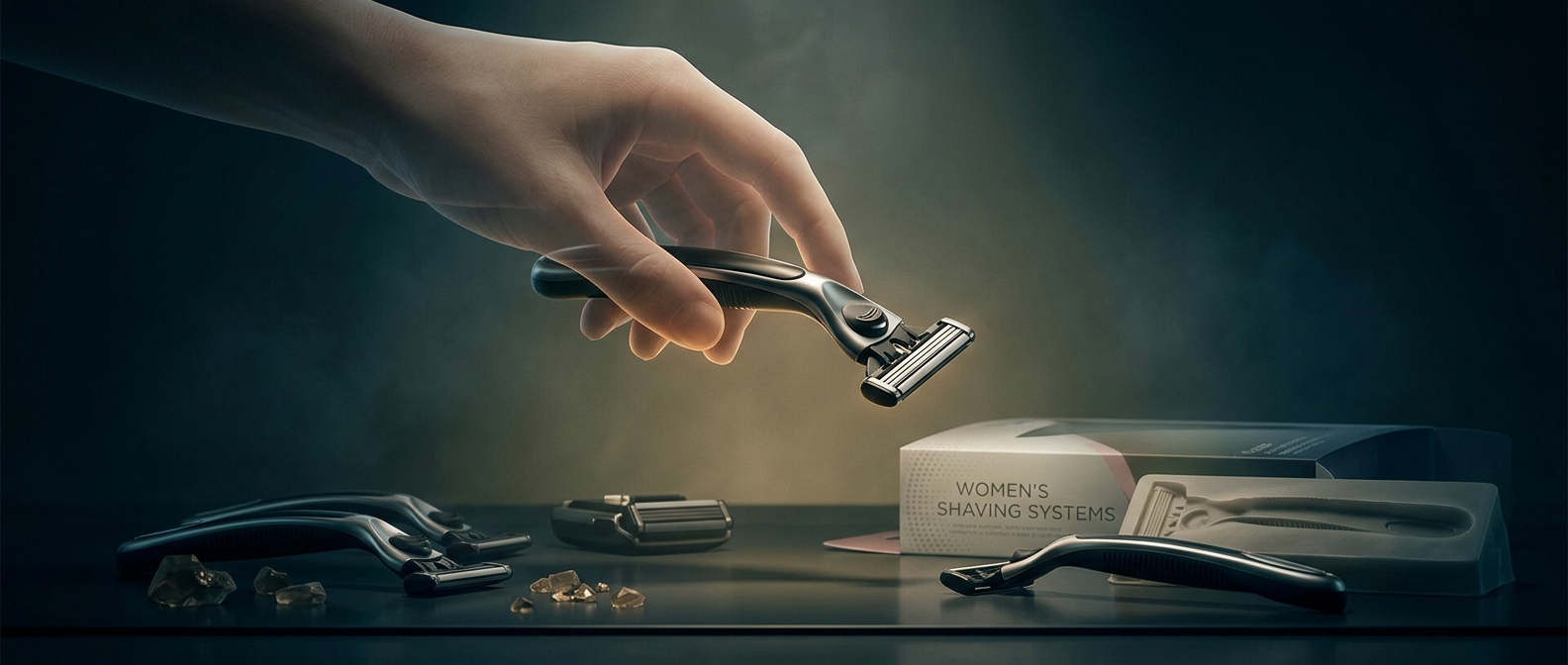
Qui-Gon Jinn’s comlink began as a Gillette Sensor Excel razor marketed for women. The prop was not simply a razor painted over: it was a painted resin cast, a molded copy of the original object. That distinction matters on a film set. A cast can preserve an object’s shape while giving the crew a purpose-built prop rather than a working personal-care item.
Turning an everyday product into science-fiction equipment is a form of “found-object” prop design: filmmakers adapt a familiar manufactured object so it can serve a new role on screen. The original’s identity need not survive the transformation. In the Star Wars world, the prop is read as a comlink because of how the story and character use it—not because its source shape resembles a communication device in any literal way.
Why the disguise works
A prop has two jobs: it must be usable by an actor, and it must make sense to an audience in the scene. A recognizable object can supply intricate contours without requiring every detail to be designed from scratch; paint and performance then help redirect attention toward its fictional purpose. Here, the surprising part is the gap between the prop’s real-world origin and its on-screen meaning.
That gap is also a useful reminder of how movie worlds are built: not every futuristic object starts as a futuristic design. Sometimes an ordinary consumer product, copied in resin and given a new finish, becomes part of the visual language of a galaxy far away.