Why the One Ring Grew to Six Inches
A ring that looks ordinary on a character’s hand is tiny trouble for a camera. To fill the frame with its inscription or engraved details, a lens has to focus very close—a technique called macro photography. At that scale, the area that stays sharp can become extremely thin, making focus difficult to control and leaving little room to position the ring and camera.
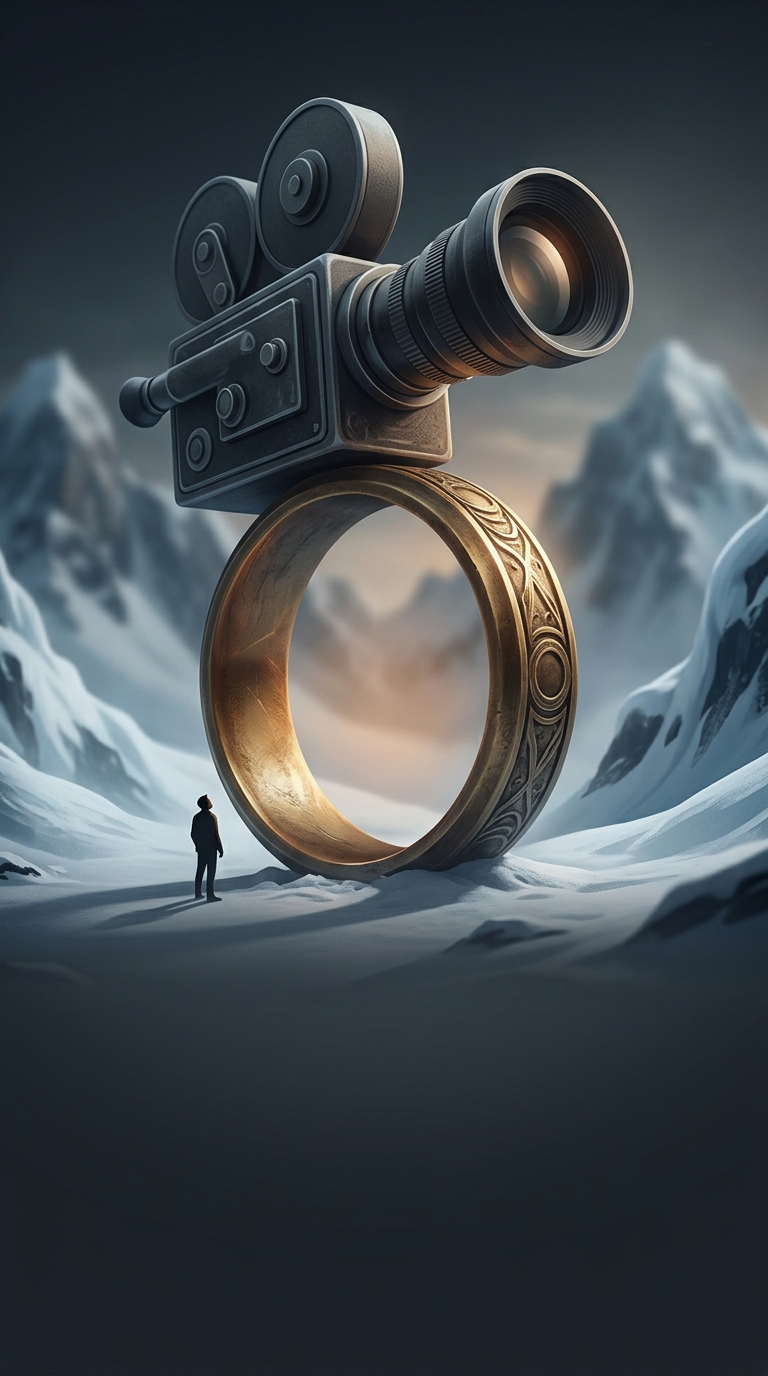
For some close-ups in The Lord of the Rings trilogy, prop makers sidestepped that problem with a brass version of the One Ring about six inches across. The enlarged prop let the camera capture a tight view without treating a finger-sized object as a true macro subject.
A Bigger Prop, More Control
The size change also affected the background. With the camera framed on the enlarged ring, the set behind it could fall out of focus, helping the ring stand apart in the shot. Background blur depends on several choices—including focus distance, lens, and aperture—but enlarging the prop gave the filmmakers another way to shape the image rather than relying on an extreme close-focus setup.
The trick is a practical movie-making trade: the object need not be the right size in every shot, only the right size for the camera’s view. When the film cuts from a character holding a normal ring to an intimate detail shot, the audience sees the same object, while the production can quietly swap in a version built for the lens.