A mask found while scouting in Santa Rosa
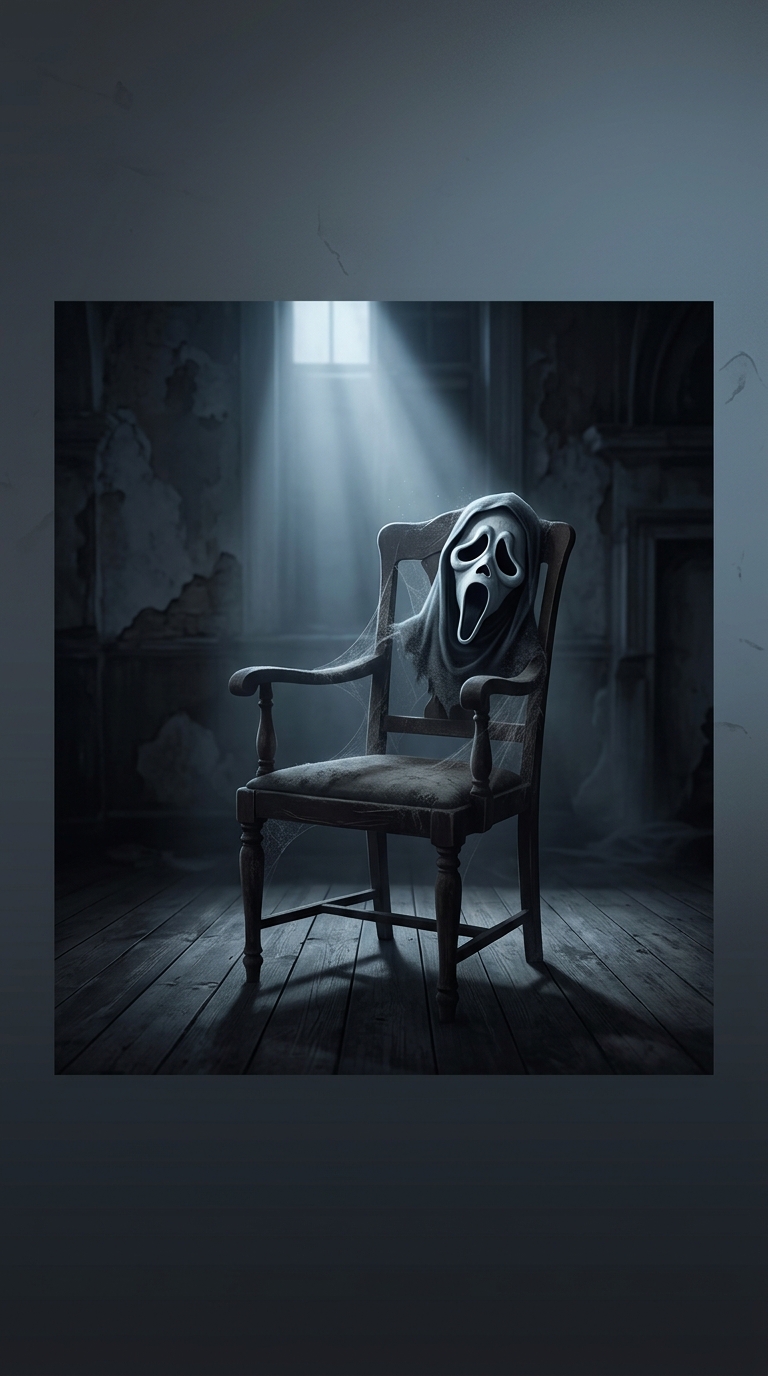
The mask that became Ghostface turned up during location scouting in Santa Rosa, California. Producer Marianne Maddalena spotted it in a house the production was considering for the film. It was not a prop made for the script: it was already a commercial Halloween mask, sold by the costume company Fun World.
That chance discovery gave the filmmakers a striking face for their killer, but it also created a practical problem. Because the mask belonged to an existing product line, the production had to secure permission to use it on screen rather than simply treating it as an original design. The find connected the movie’s visual identity to a real object—and a company that controlled its use.
From costume-shop item to movie image
The filmmakers could have commissioned a new mask, but the found one had an immediate advantage: its stark, elongated face was unsettling and easy to recognize. Its familiar, mass-produced quality also made the horror feel close to everyday life. Ghostface did not look like a creature from a distant fantasy; he wore something a person might actually buy for Halloween.
Once the rights were arranged, the mask became part of the film’s central visual language. Its blank expression could not reveal who was underneath, letting the same recognizable face conceal different people. A mask noticed in an ordinary house during scouting thus became an especially useful piece of movie design: it was eerie, affordable-looking, and built around anonymity.### Sources: - -