The Accidental Mask That Defined Scream
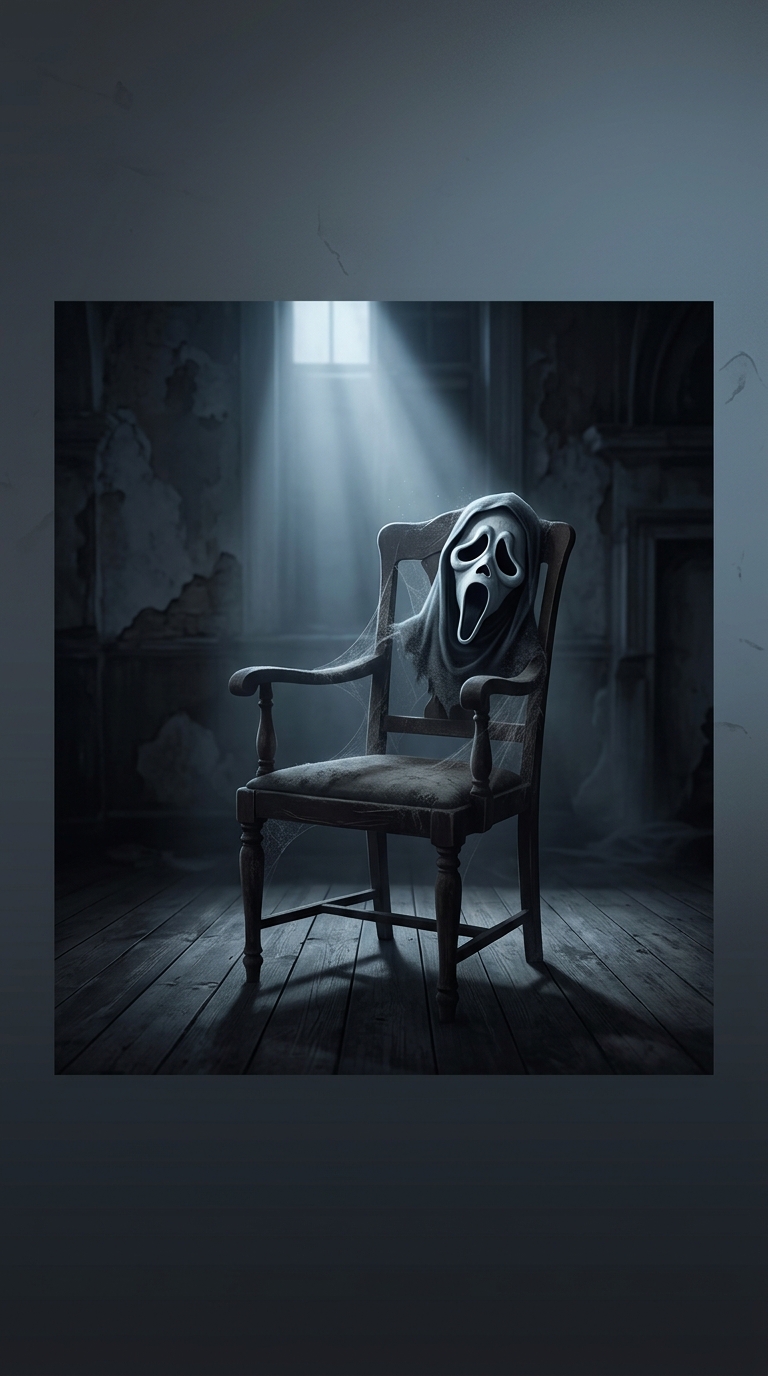
A costume can become a character before anyone has planned for it. While scouting an abandoned California house, Wes Craven’s crew came across a mass-produced mask sitting on a chair. Its simple, stretched face—dark, hollow-looking eyes and a wide open mouth—already carried the visual language of a nightmare. The discovery offered something the art department’s cheaper alternatives did not: a look Craven was willing to keep.
Why the Ordinary Object Worked
The mask’s mass-produced origins gave it an unsettling everyday quality. It did not look like an elaborate creature made for a movie; it looked like something a person could find and put on. That plainness suited Scream, where horror comes not only from a masked figure’s appearance but from the possibility that an ordinary person is behind it.
Its strong silhouette also made the face easy to recognize at a glance. In a dark scene, viewers do not need to study fine details to identify the threat. The mask’s exaggerated expression remains legible even when the person wearing it is partly hidden—a practical advantage that also turns the image into a memorable emblem.
From Find to Film Identity
The mask was called the Peanut-Eyed Ghost, and using it was not simply a matter of taking it from the house. Its owner initially demanded a licensing fee, while Craven rejected the art department’s less expensive substitutes. That decision meant the production had to pursue the found design rather than quietly replace it with a cheaper imitation.
The result linked the film’s killer to an object that had existed outside the story as a retail product. A chance find became a carefully chosen screen image—and an example of how a small production decision can give a horror film a face audiences recognize instantly.