Why fear can come out as laughter
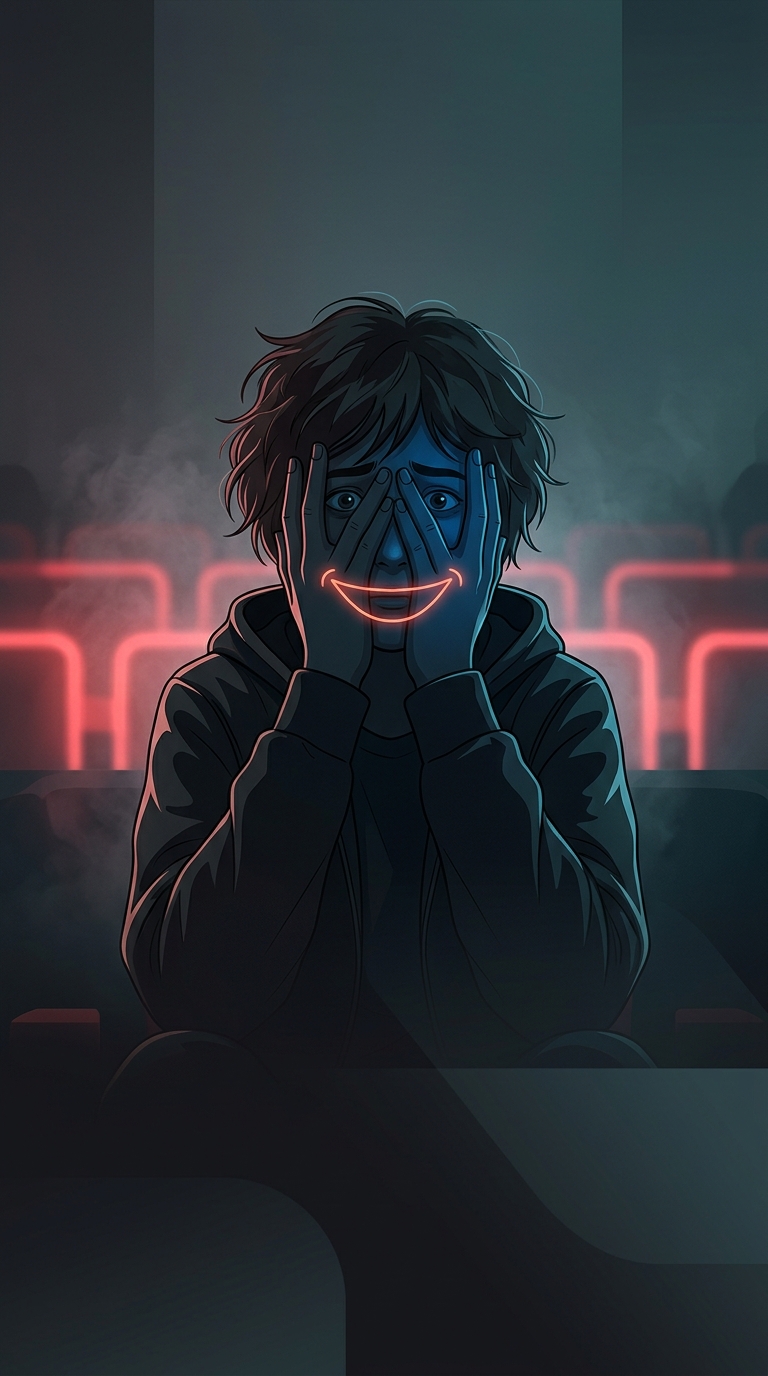
A terrifying scene can leave a viewer with two competing reactions: the body gears up for danger, while the mind recognizes that the danger is fictional and socially safe. That mismatch can produce nervous laughter. It is less a sign that someone finds the scene funny than an awkward way of responding when strong feelings collide.
Horror films deliberately build that collision. A sudden threat can trigger a jolt of arousal—faster breathing, tense muscles, a racing pulse—then the scene may pause or reveal that the characters are still safe for the moment. Laughter can spill out as that tension shifts. It may also help a viewer manage embarrassment or unease without having to say, “That scared me.”
Why it can spread through a group
In a theater or living room, laughter is also a social signal. One person’s giggle tells others that the frightening moment can be met with playfulness, and their laughter can make the first person laugh harder. Teenagers may be especially alert to how friends are reacting, so a giggle can become a way to show nerves, defuse tension, or keep from looking frightened. That is a plausible social pressure, not a rule about all teenagers.
The response is not a single, neatly switched-on “defense mechanism.” It can mix bodily arousal, surprise, discomfort, and group dynamics. A viewer may laugh at an over-the-top effect, at a friend’s reaction, or simply because the scene has pushed their nerves high. The giggle can be the body’s release valve—and the group’s cue that everyone can breathe again.