Why a Bass Drop Feels Bigger Than It Sounds
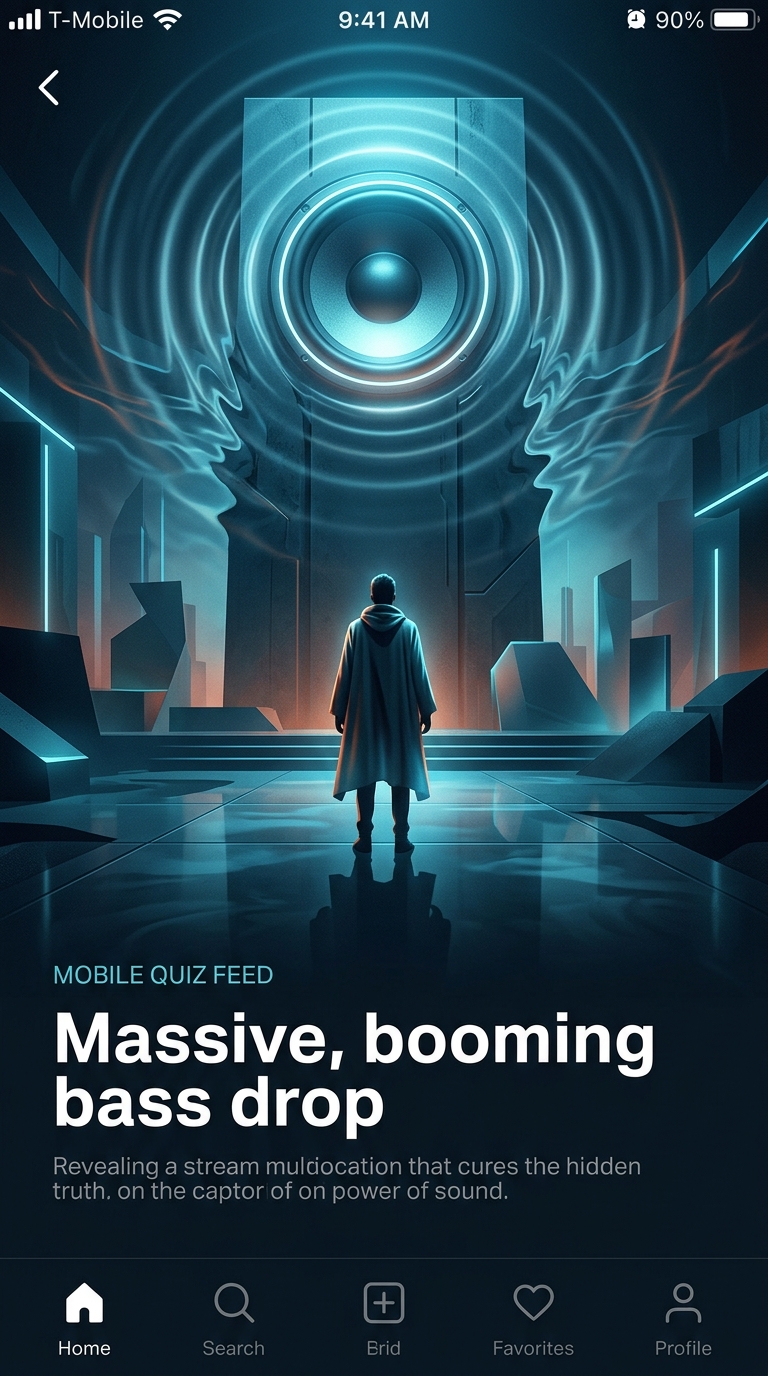
A trailer’s bass drop works through a combination of low-frequency vibration and sudden contrast. Deep bass can be heard as a low pitch, but at high playback levels it can also be felt as vibration in the room, seat, or body. That physical sensation gives the sound a scale that a high, thin tone usually cannot match.
The impact depends just as much on what comes before it. A trailer may thin out the music, pause, or hold a quieter sound before the bass arrives. The sudden change makes the entrance feel especially forceful: the drop is not merely loud, but startlingly larger than the moment preceding it.
Making the Impact Survive Different Speakers
Movie theaters can reproduce very low frequencies with dedicated subwoofers, speakers built to handle bass. But trailers also play on televisions, laptops, and phones, many of which cannot reproduce the deepest notes. Sound designers therefore often layer the low end with higher-frequency elements—such as a sharp hit, a rough rumble, or a brief whoosh. Those sounds preserve some sense of the impact even when a device cannot produce the deepest bass.
The result is not a special bodily switch that makes every viewer feel fear. It is a carefully shaped sound that combines vibration, timing, and contrast to make a moment register as consequential. In a theater, the drop can announce itself not just in the soundtrack, but in the seat beneath you.