How a Living Room Becomes an Underwater Set
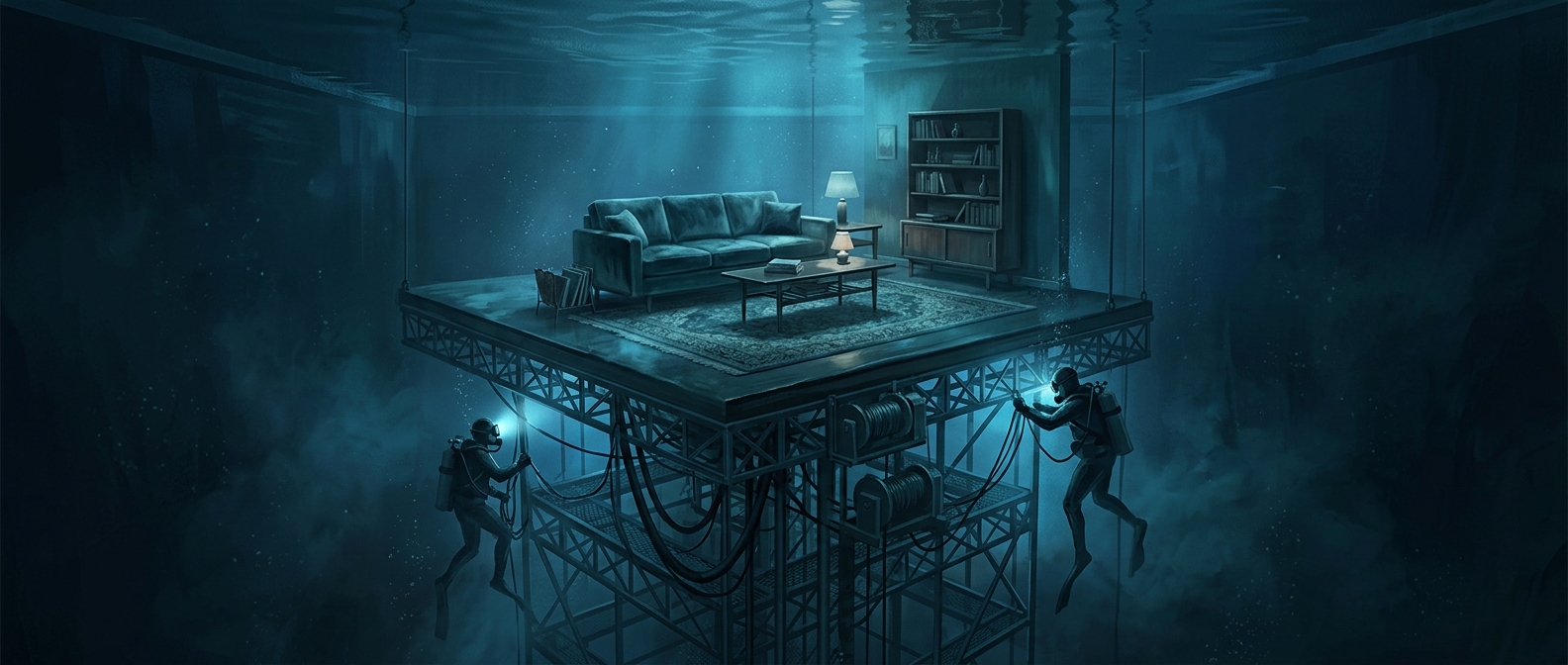
A convincing flooded-room scene has to show more than water covering the floor. It must let the camera see water moving through a recognizable space—past a sofa, around a table, and through hanging curtains—while actors and equipment remain under control. A large indoor pool provides that controlled environment.
The room is built as a film set rather than as a sealed, ordinary house. Its walls, floor, and furnishings can be arranged for the camera and secured against the force of the water. The set is then lowered into the pool with an industrial crane. That makes it possible to film a room filling or disappearing beneath the surface without flooding a real location.
Why Use a Crane and a Pool?
A crane lets the crew move a heavy, awkward structure slowly and deliberately. Once submerged, the set can be filmed with underwater cameras as water flows around its contents. Because the pool is contained, the crew can control the setup, reset it between takes, and keep the action away from the hazards of an actual building flood.
The water changes how everything behaves. Loose objects may drift or turn; fabric billows; bubbles catch the light. Even familiar furniture can look strange when the water removes its usual weight and orientation. Securing the set and its contents helps keep those movements within the scene’s planned limits.
The Set Has to Work for the Shot
A room designed to look complete from the camera’s angle may need compromises elsewhere. Practical needs such as access, rigging, and clear views for filming can shape how the set is assembled. The result is a carefully staged illusion: a domestic space made to seem suddenly overwhelmed, while the pool and crane keep the water’s movement manageable enough to capture on camera.