How One Room Can Become Two Sets
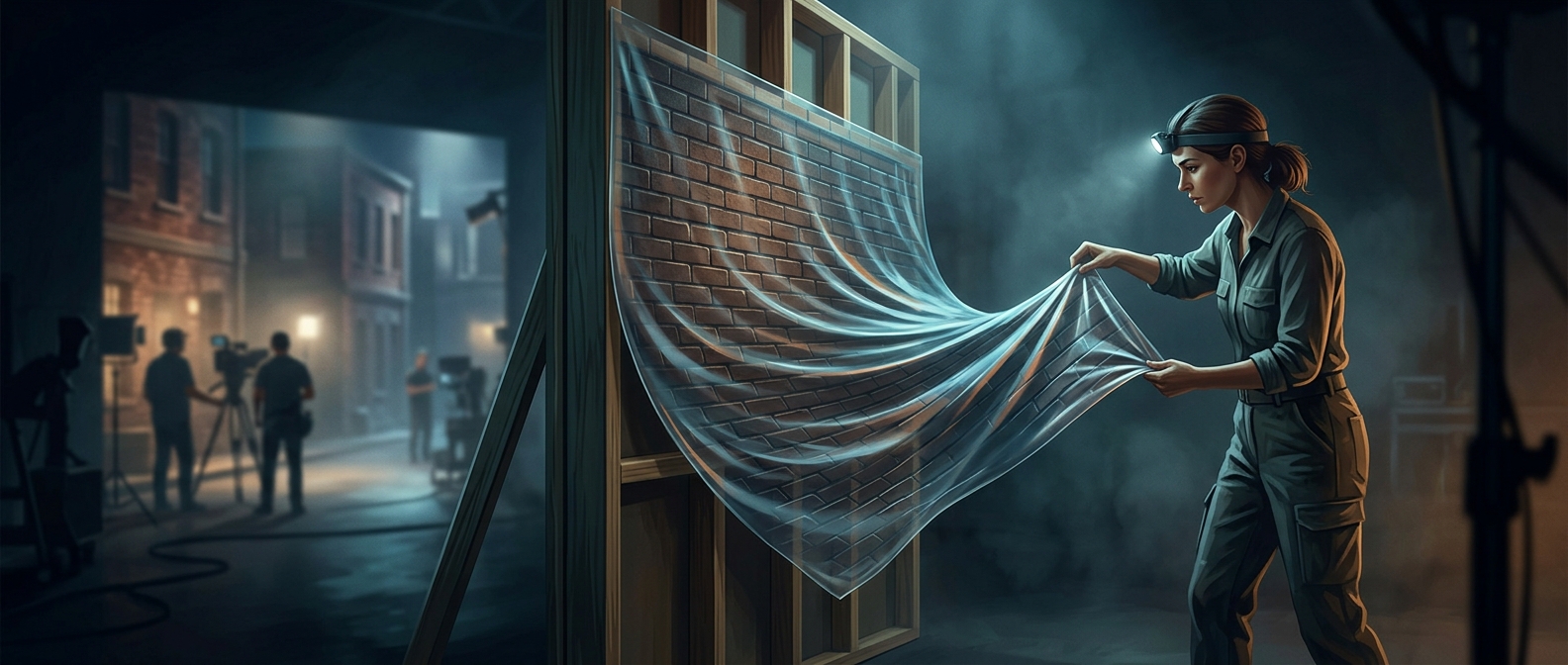
A television room is not just a collection of walls. It is a repeatable production space: cameras need clear sightlines, actors need room to move, and lights and microphones must work from familiar positions. That makes an existing room valuable even when the scene’s story location changes. Instead of constructing a hotel suite from scratch, a crew can alter the details the camera reads first.
The Economics of a Fast Changeover
The savings come from reusing the expensive, fixed parts of a set. Walls, doors, and the underlying layout can stay put while movable furniture, surface treatments, and lighting shift the room’s apparent identity. A bed and clinical lighting suggest a hospital; different furnishings and warmer light can cue a guest room. The change is partly physical and partly visual: a camera shows only the angles needed for the scene, so the set does not have to function like a fully built real-world space in every direction.
On a production making episodes at a high pace, rebuilding for each new location would consume time and materials that could otherwise support filming. Redressing lets crews prepare a familiar space for its next use while keeping production moving. The tradeoff is that changes must be planned around the room’s fixed features and the camera’s view; a doorway or wall that cannot move may limit what the new setting can convincingly become.
Continuity Is Part of the Craft
Every visible detail has to fit the scene, and the room must be ready again when filming calls for it. That makes a set less like a permanent place and more like a flexible stage. The same physical room can carry several story locations—not because the transformation is elaborate, but because carefully chosen details do enough work on screen.