A Plush Hobbes Could Have Settled the Comic’s Central Ambiguity
In Calvin and Hobbes, Hobbes is both a stuffed tiger and, in Calvin’s imagination, a lively companion. The comic lets those versions coexist: to Calvin, Hobbes can pounce, argue, and share adventures; to other people, he is a toy. That shift is part of the joke—and part of the bond between the characters.
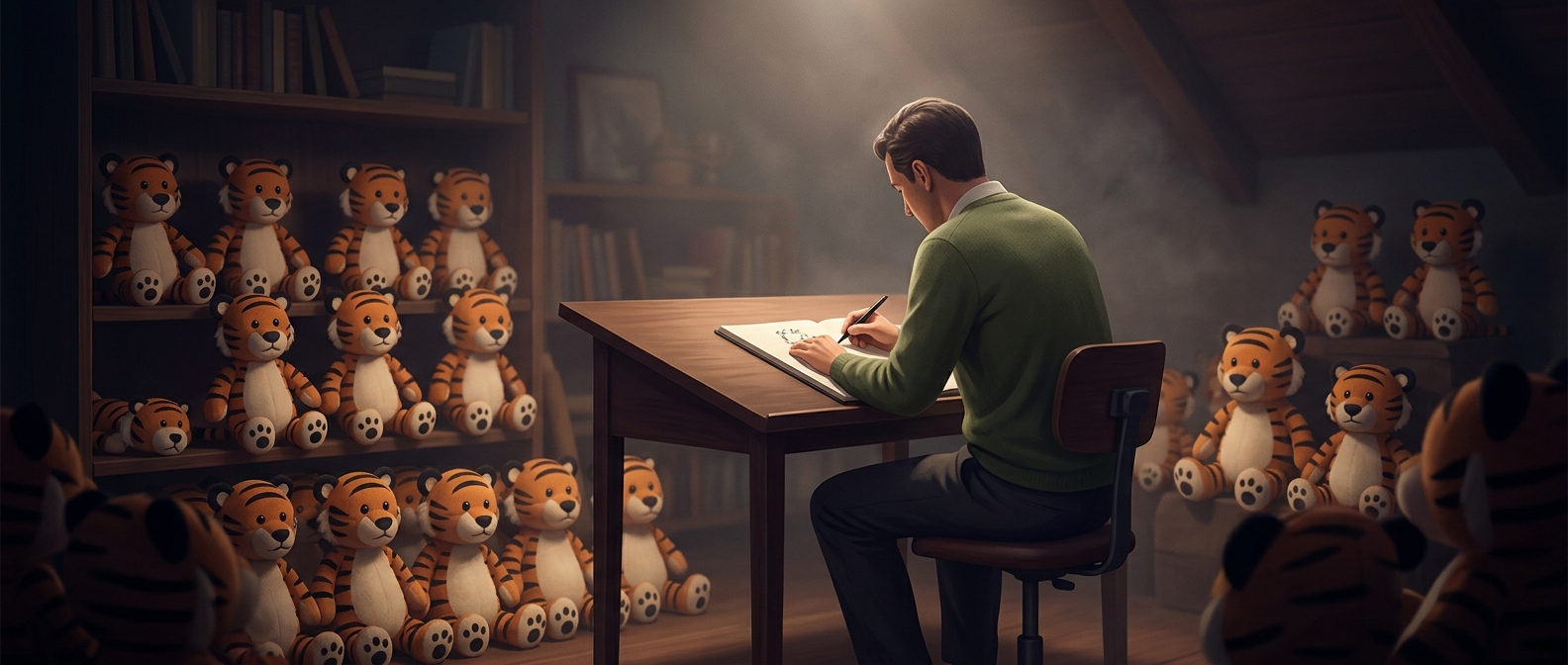
An official plush would have made one version tangible outside the strip. It would give Hobbes a fixed shape, pose, and expression, turning a character whose aliveness depends on the reader’s perspective into a standardized object. Watterson believed that mass-produced toys would weaken the comic’s magic, so he declined to license them.
The Tradeoff Was Control for Commercial Reach
Licensing a character means allowing a company to reproduce it on products, usually in exchange for payment. A plush line could have brought substantial merchandise income, but it would also have put Hobbes into a retail world of product designs and sales. Watterson chose to keep that world at a distance rather than let the strip’s characters become part of a broad merchandising campaign.
That refusal did not mean the characters vanished from print: the comic’s books and collections could still be published. The distinction was between presenting the work itself and turning its characters into consumer products.
The choice left fans without an official Hobbes toy to buy. It also preserved a small but important uncertainty: Hobbes could remain a tiger in a child’s arms, a stuffed animal to everyone else, and somehow both at once.