The painted landscape behind the actors
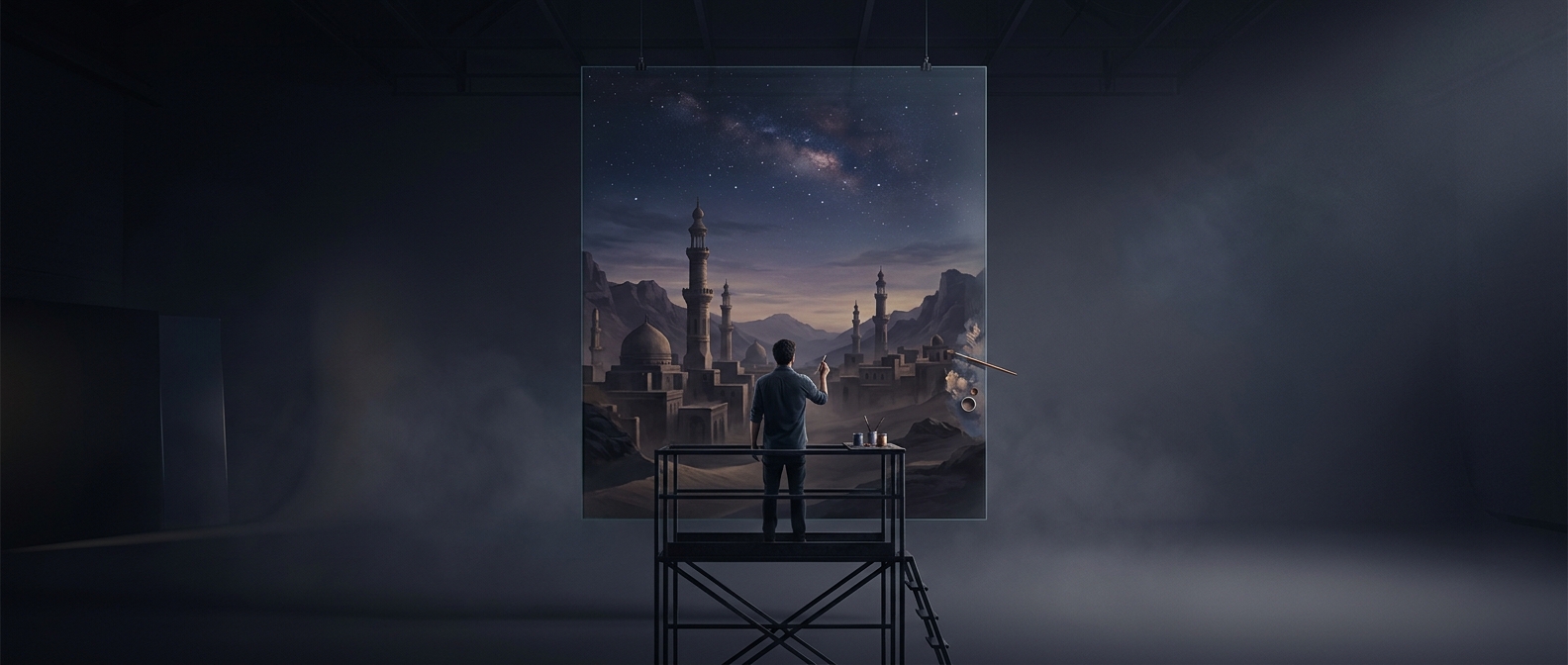
Before computer-generated imagery, filmmakers could extend a set with a painting on a sheet of glass. The technique, called a matte painting, let a modest stage appear to open onto a vast city, mountain range, or imagined planet.
The artist painted the parts of the view the production could not build. Areas that needed to show actors or physical scenery were left transparent; the glass was positioned between the camera and the scene so the real action showed through those openings. The painting and the live-action image were then photographed together, making them appear to belong to one continuous world.
Why the trick depended on the camera
The illusion worked only from a carefully chosen viewpoint. The painted architecture had to line up with the set, and its perspective, scale, colors, and lighting had to match what the camera recorded. If the camera moved, the painting could seem to slide against the actors or scenery, exposing the join. Glass reflections and differences in focus or exposure could also give the composite away.
That constraint shaped the filmmaking: directors and cinematographers often planned a matte shot around a fixed camera position. A painted castle could tower over a few real walls, but the shot could not be treated like an ordinary view of a fully built location.
A world made from two kinds of evidence
The technique was not simply a backdrop placed behind the action. Because the glass sat in front of the camera, painted and physical elements shared the same photographed frame. The best results made it difficult to tell where the real set ended and the artist’s work began.
That division let productions suggest immense places without constructing them. A small patch of stage, a carefully framed performance, and a painter’s imagined skyline could combine into a single convincing view—provided the camera stayed where the illusion held.