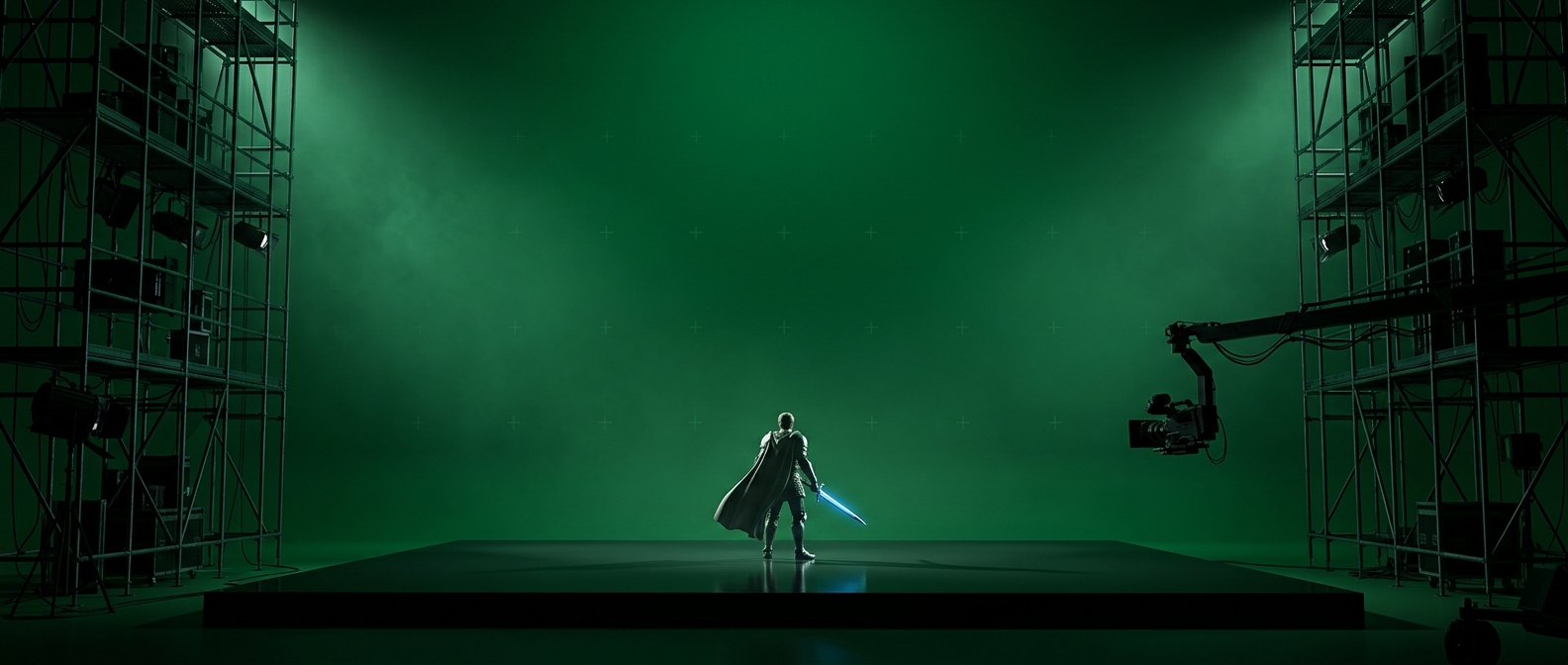
How actors make a scene with nothing in front of them
A green screen gives filmmakers a clean background to replace later, but it does not give an actor a monster to react to. On a creature-heavy production, performers may spend long stretches on a mostly bare stage, relying on the director and crew to make an imagined scene precise enough to play.
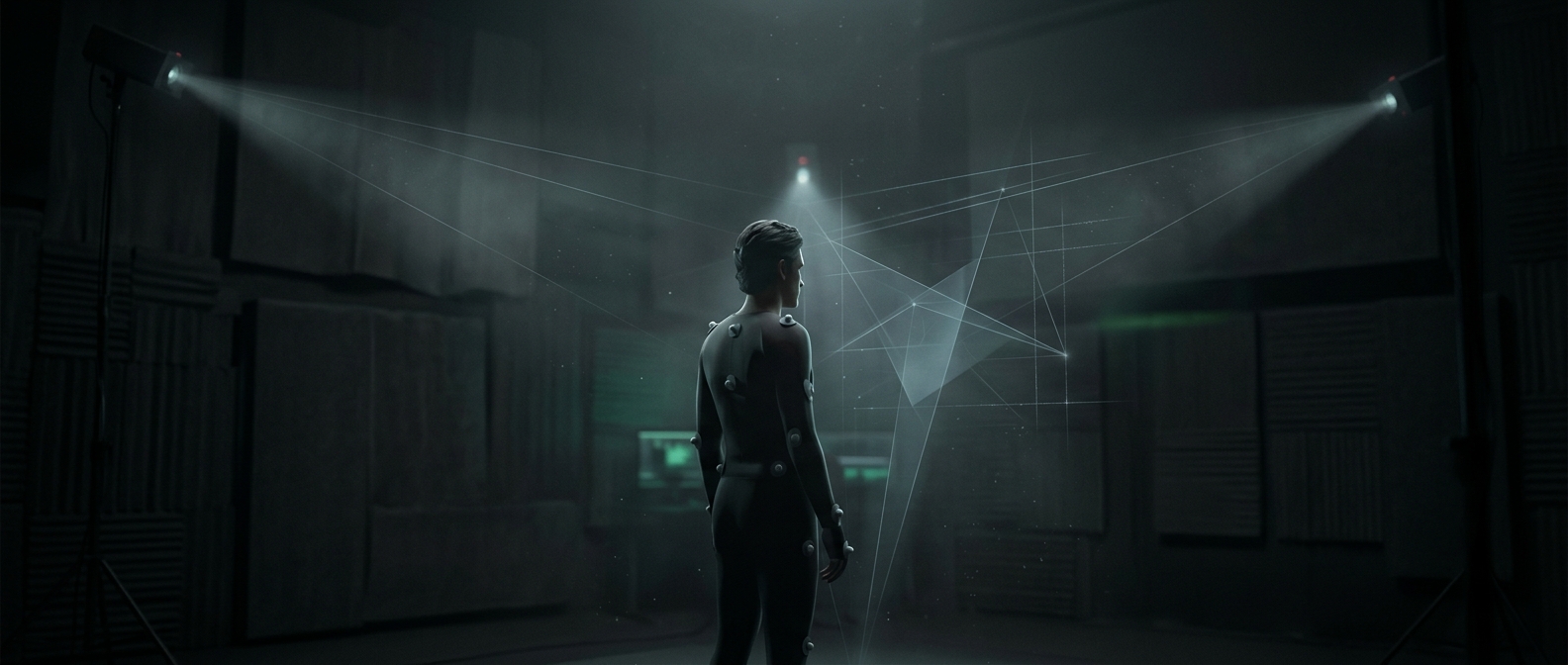
Before filming, artists often create previsualization—rough animated versions of planned shots. These previews help the director decide where a creature will move, how large it will appear, and where the camera must be. On set, floor marks can indicate where an actor should stand or where an unseen creature is supposed to be. A stand-in, prop, or simple marker may provide a target for the actor’s gaze; sometimes there is no useful physical reference at all.
The performance has to fit a future image
The actor must respond to more than an idea. Timing matters: a flinch has to land when the creature lunges, and a line may need to finish before an animated movement changes the scene. The performer also has to keep eyelines—the directions of their gaze—consistent with the creature’s planned position. Small mismatches can make a later composite feel as if the characters are not sharing the same space.
That means the finished effect depends on choices made long before the digital creature appears. Directors give actors descriptions and cues; camera and effects teams track positions, lighting, and movement so the added image can fit the photographed scene. Some productions use stand-ins or film other performers separately, so “alone” does not describe every shot. But months of work can still mean repeatedly building emotion and physical reactions around cues rather than a visible scene partner. The audience sees a monster; the actor may have been reacting to a mark on the floor.