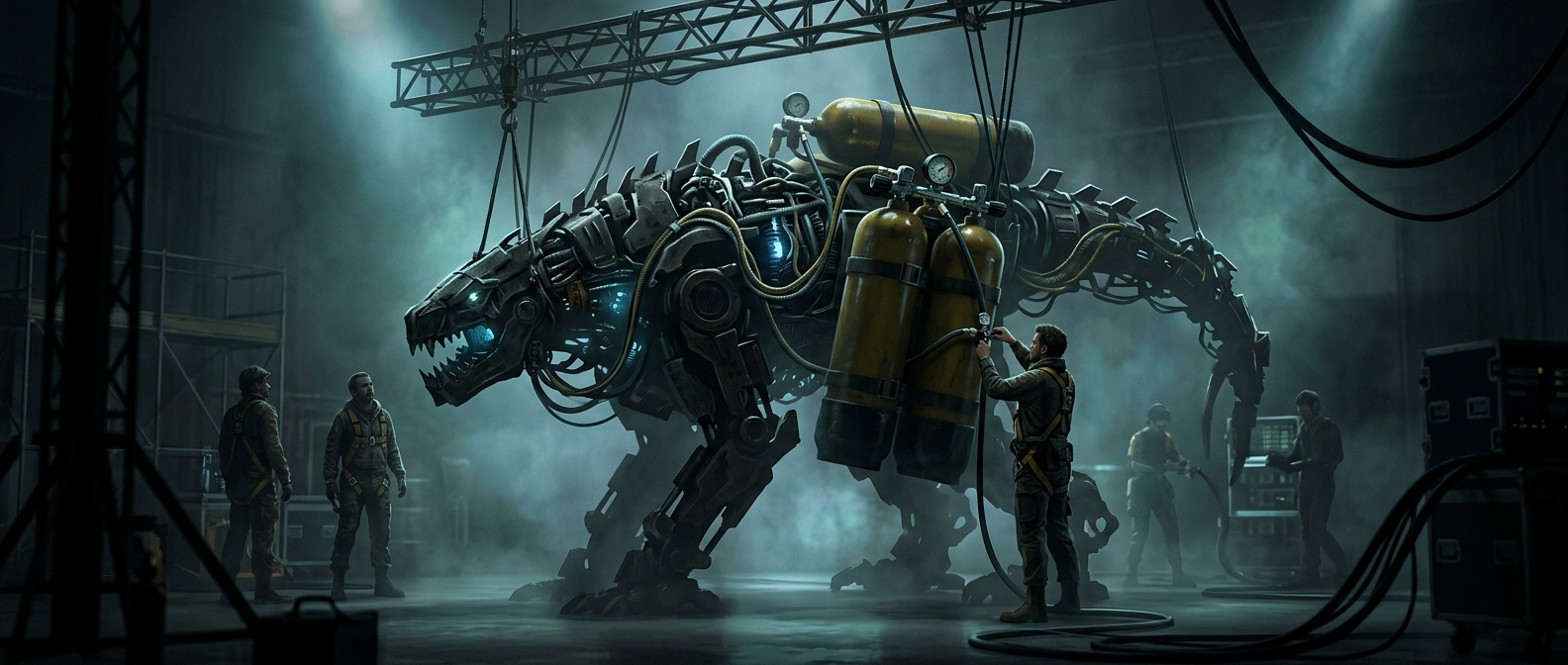
Scuba valves gave movie creatures a controlled breath
A monster’s breathing can make a costume feel alive—but a performer’s own chest movement may not be enough when the creature has a rigid mask, oversized features, or parts that need to move visibly. In some film effects, compressed air supplied that motion. Valves salvaged from scuba equipment controlled when air entered the system and how it flowed, helping effects crews create a deliberate breathing action rather than an uncontrolled blast.
A valve is a movable gate in a pipe or air line. Open it, and air can pass; restrict or close it, and the flow changes. That simple control matters in a practical effect: a mechanism needs air at the right moment and in a manageable amount if it is to make a creature’s body or facial features appear to rise and fall convincingly.
Why repurpose diving gear?
Scuba equipment is built to handle compressed air and regulate its delivery. That made its valves useful components for an effects system, even though the film application was different from helping a diver breathe. Rather than build every part from scratch, a crew could adapt a piece of equipment already designed to control airflow.
The result connected two very different kinds of performance: the actor inside the creature suit and the machinery shaping its visible breath. The valve itself was hidden, but its timing could help sell the illusion. A small, practical component could turn a static monster mask into something that seemed to inhale and exhale.