How a Painted Page Became a Star Wars Starfield
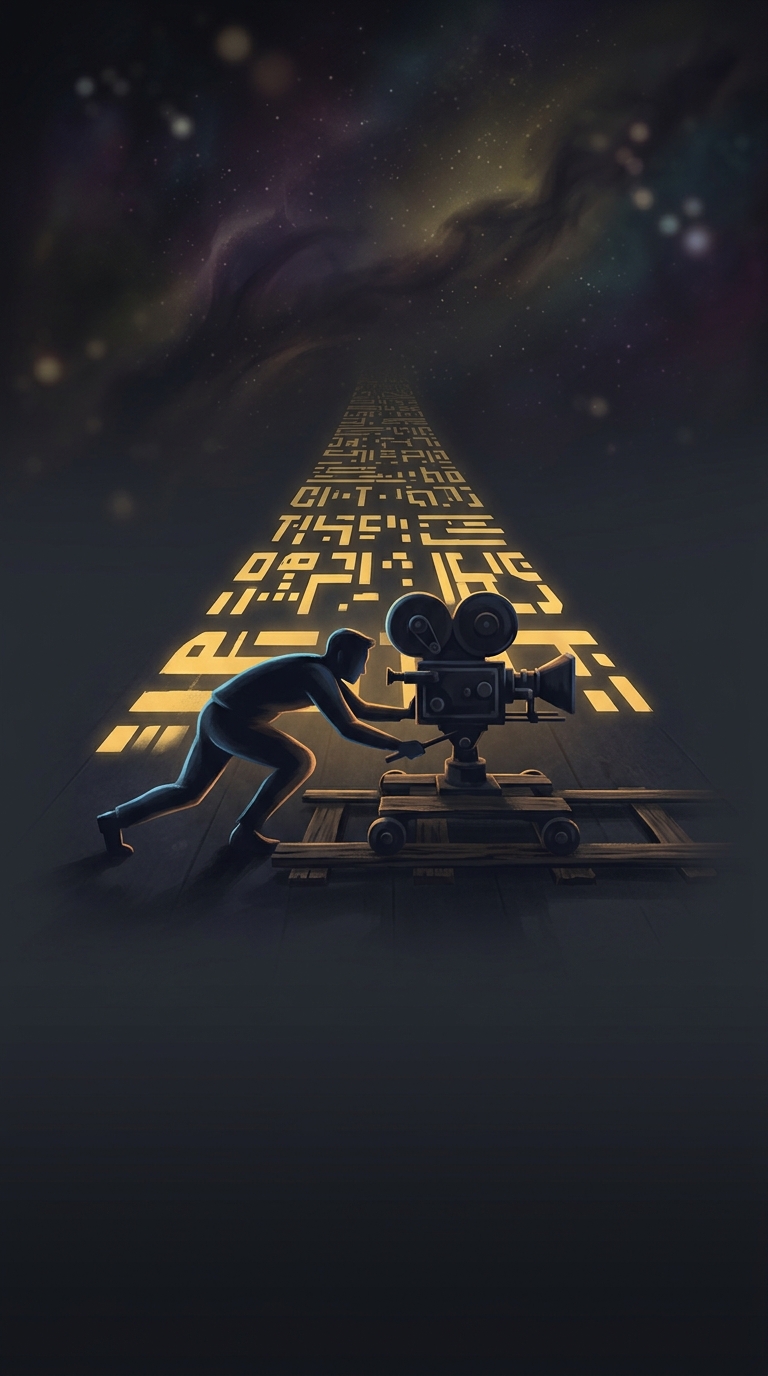
The opening crawl had to do two jobs at once: make the audience feel as if the story were stretching away into space, and remain easy to read. The original film’s effects team created that illusion with a simple physical setup: yellow lettering painted on black paper, photographed from above as the camera moved along it.
The paper model was about two feet wide and laid flat on the floor. As the camera traveled over the lines of text, the letters grew smaller in the frame, creating the perspective of words receding toward a distant point. The black surface blended into the surrounding darkness, while the painted letters stood out like luminous marks against space.
Why the Camera Had to Move
A static photograph could show the text at an angle, but it would not produce the same steady sense of forward motion. Moving the camera gave the crawl its progression: one line after another entered view, crossed the frame, and dwindled toward the far end. The physical arrangement also let the filmmakers control the lettering and its spacing directly, rather than relying on a computer-generated perspective effect.
The trick depended on careful alignment. If the camera drifted sideways or changed angle, the lines could skew or become harder to read. The crawl’s familiar appearance came from making this hands-on miniature behave like a vast plane in space—an ordinary sheet of black paper transformed by perspective, motion, and the frame around it.