How a performance becomes a digital creature
A tracking suit gives postproduction a moving skeleton to work from. Cameras record markers on the performer’s body, and software uses their changing positions to estimate how the actor’s joints and limbs move. Animators can then apply that motion to a digital character—often adjusting it to fit a creature with different proportions, such as a dragon with a long tail or wings.
The suit does not capture a finished character. It records movement data; artists still build or refine the creature, shape its expressions, and make its motion fit the scene. They also add the visual cues that make it feel present: shadows, reflections, texture, and the way its body reacts to light.
The empty space still has to be staged
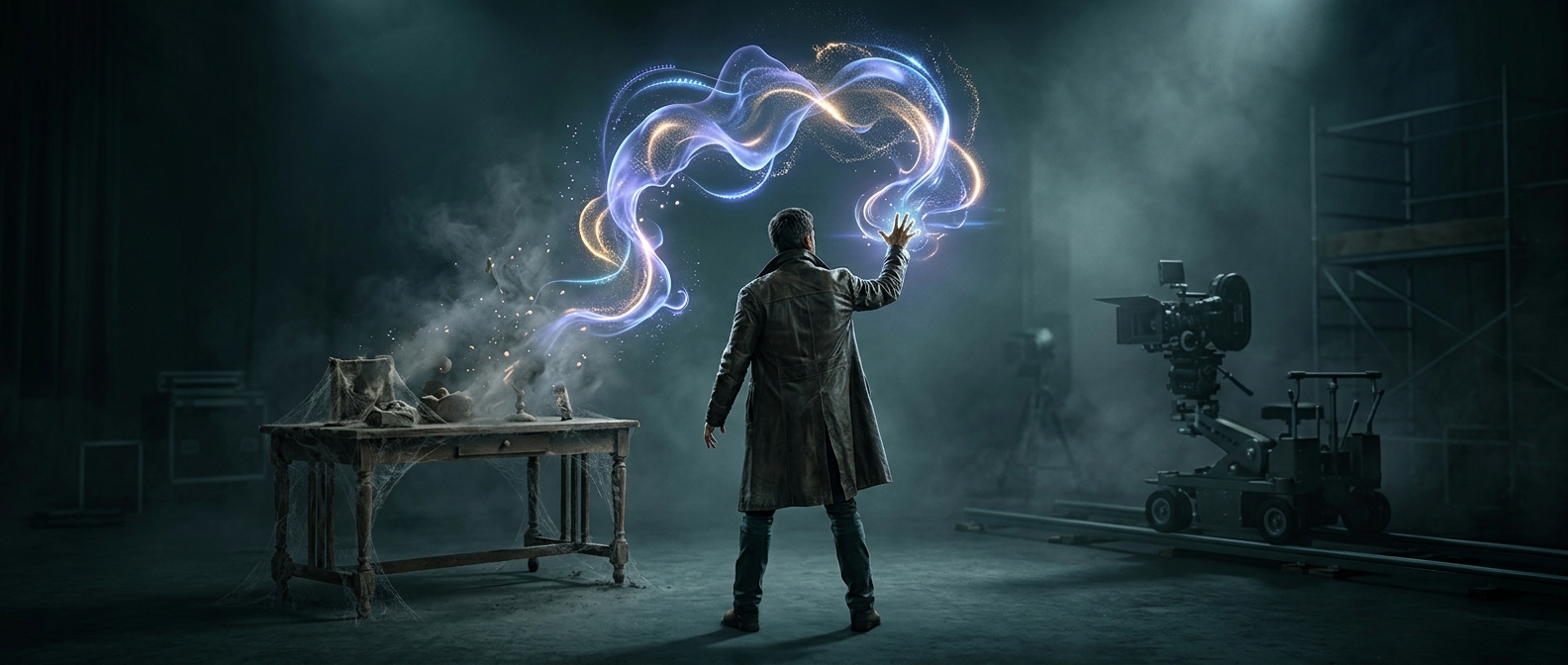
Actors need something to respond to even when the creature will be added later. A performer might look toward a stand marking the dragon’s height, or react to a scene partner’s timing and movement. Those references help preserve eyelines, distance, and rhythm—the small physical relationships that would otherwise be difficult to recreate after filming.
The setup can also constrain performance. A real creature cannot crowd an actor, cast a shadow on them, or move through the space during the take. The production must plan those interactions so the digital addition can plausibly occupy the same spot.
Why the work is split this way
Filming the actor’s performance separately gives the production control over the creature’s final appearance and movement. If the dragon needs a broader gesture or a different silhouette, artists can revise the digital character without asking the performer to wear a heavy physical costume. But the result depends on the recorded action and the scene’s visual references: the more clearly the actor’s movement, gaze, and timing define an interaction, the easier it is to make an added creature seem like a real partner rather than an image placed beside the actor.