How a human performance became Gollum
Gollum had to feel like a character with weight, balance and intention—not a cartoon pasted into a live-action scene. Andy Serkis supplied that foundation by acting out the role physically and vocally. His movements gave the effects team a practical guide to how Gollum shifted his weight, reached for things and reacted to other characters.
What motion capture actually captured
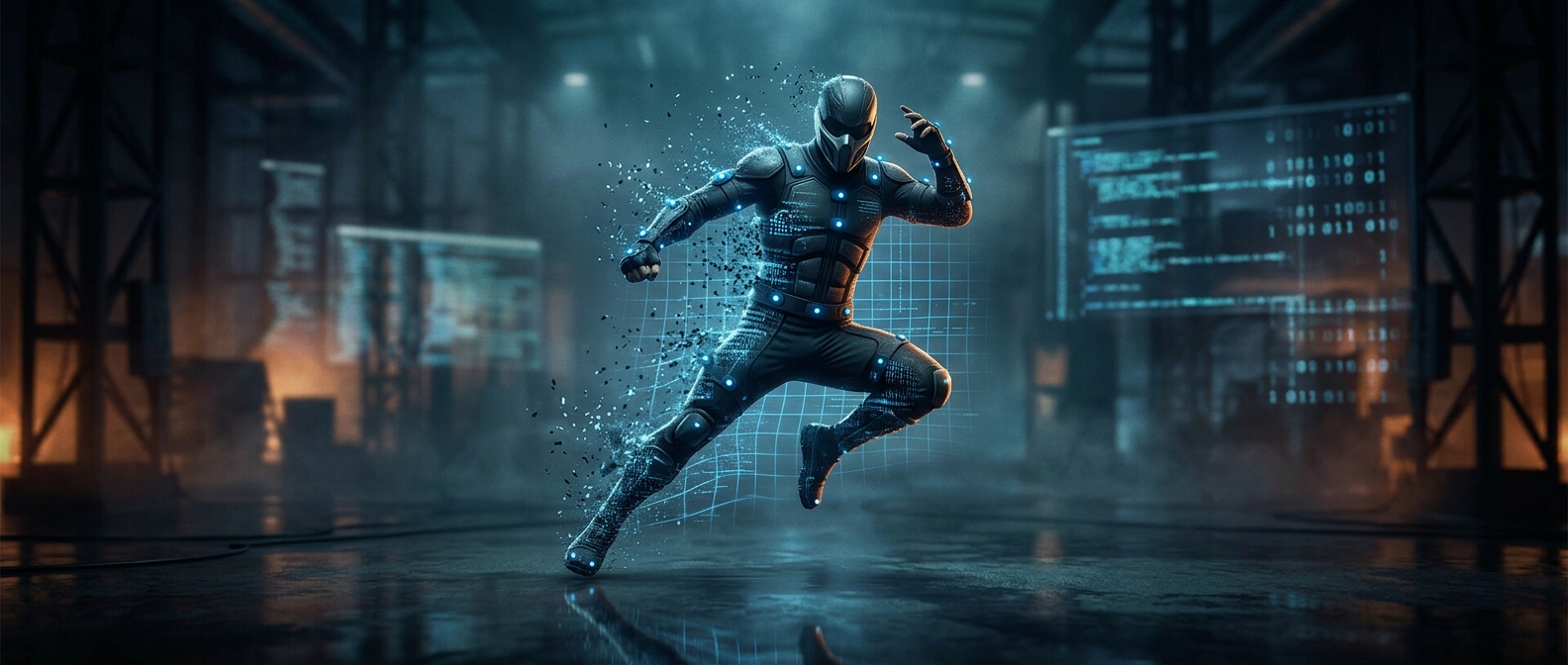
In motion capture, markers on a performer’s suit help cameras track movement. The resulting data can guide a digital character’s animation, but it does not automatically create a finished performance. Artists still have to shape the movement, build the character’s expressions and make the result fit the lighting, camera angle and scene.
Serkis’s work mattered because it gave those artists more than a set of poses to imitate. His acting conveyed changes in mood and intention that could inform Gollum’s animated behavior. The finished character was therefore neither simply a computer-generated creature nor a direct copy of a performer: it emerged from a close exchange between acting and animation.
Why the collaboration mattered
Before Gollum, audiences could readily associate digital characters with spectacle or caricature. A role anchored in a recognizable human performance helped show how visual effects could carry subtle characterization. The demanding voice and physical work were part of Serkis’s approach, not a technological requirement or a guarantee that an actor had to damage his voice.
The lasting shift was in how filmmakers could think about digital roles: the actor did not have to disappear when the character became pixels. Serkis’s performance gave animators a human source to interpret—and gave viewers a reason to care about the creature they saw on screen.