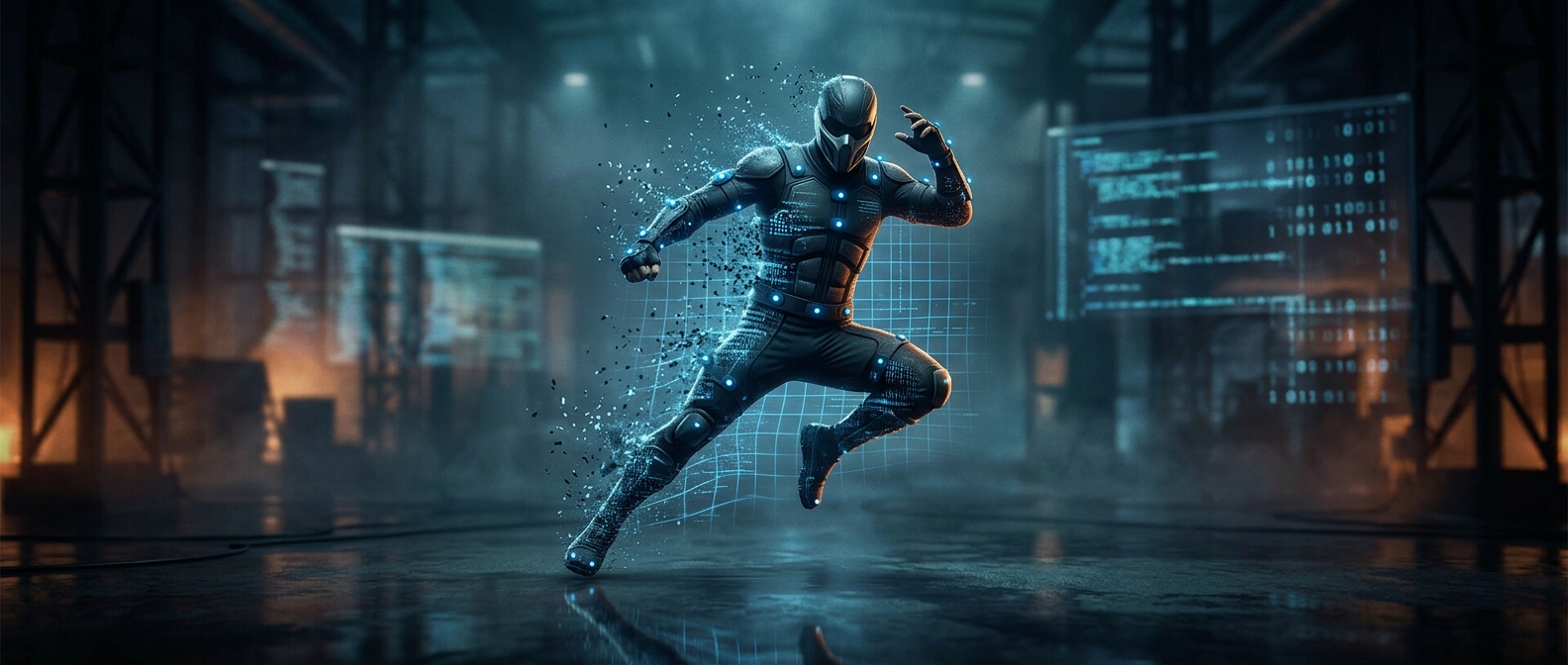
From a performer to a pixelated fighter
Mortal Kombat’s fighters began as people, not drawings. The developers filmed martial artists performing attacks and poses, then converted selected frames of that footage into the game’s character images. This technique is called digitization: real-world images are captured and adapted for use on a computer.
The footage could not simply be dropped into the game. Each pose had to be reduced to a small, fixed grid of colored pixels. The team also had to choose which moments to include, because a game displays a sequence of separate images to make a character move. A punch therefore became a handful of sampled poses rather than the continuous motion of the original performance.
Realism with a sharp edge
That conversion created the look that set Mortal Kombat apart. The fighters carried recognizable human proportions, costumes, and gestures, but their movement appeared in crisp, blocky steps. The effect was not just a technical compromise: live-action imagery made the combat feel closer to a staged martial-arts performance than to a conventional cartoon brawl.
It also shaped how players read the action. A clearly captured pose could make a kick or reaction feel forceful, while the limited frames gave each move a deliberate, almost theatrical rhythm. The same process that preserved the performers’ physical presence also made the game’s visual roughness part of its identity. Its fighters looked like people frozen, one impact at a time, into the arcade’s pixel grid.