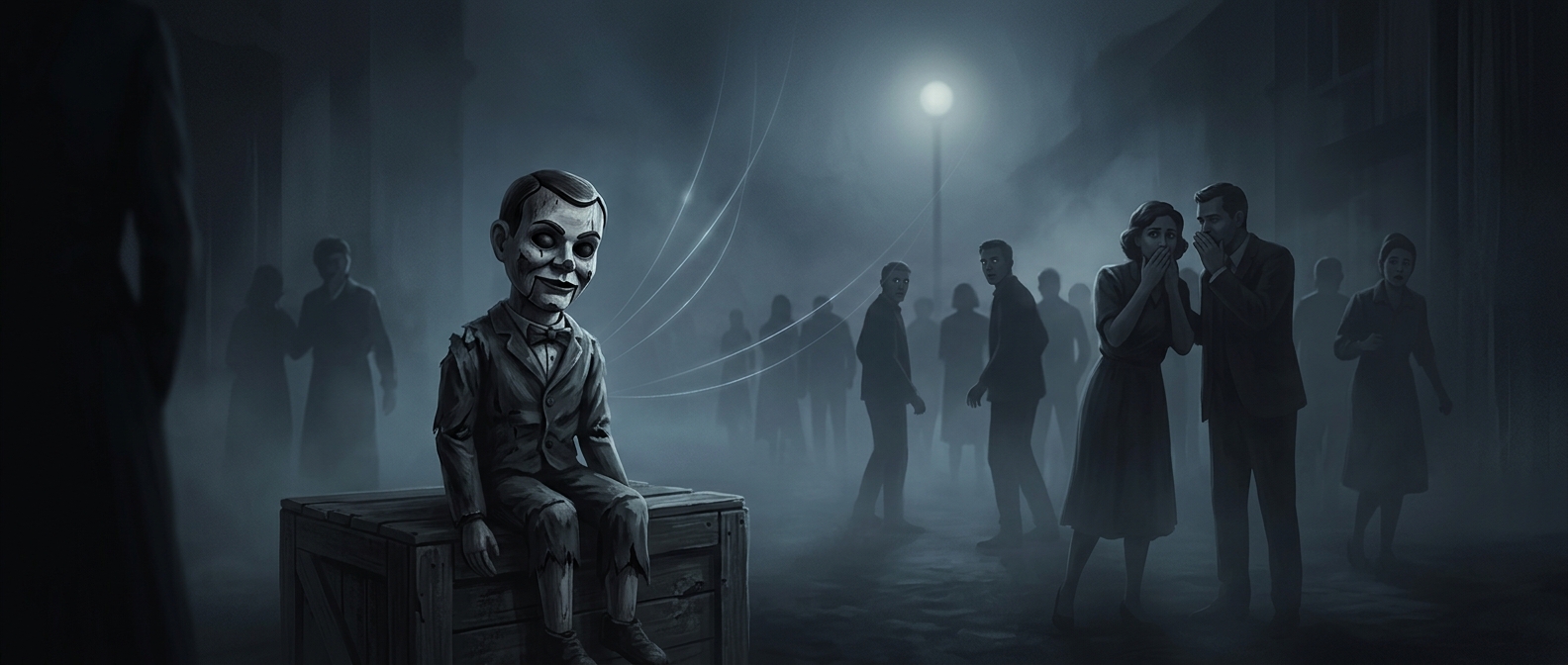
How a Voice Made a Wooden Dummy Feel Present
Radio left listeners with no picture to correct what they heard. A wooden dummy’s voice could therefore seem to come from a character with its own presence, rather than from a visible performer manipulating a prop. The listener had to supply the face—and the mind tends to build one around a voice.
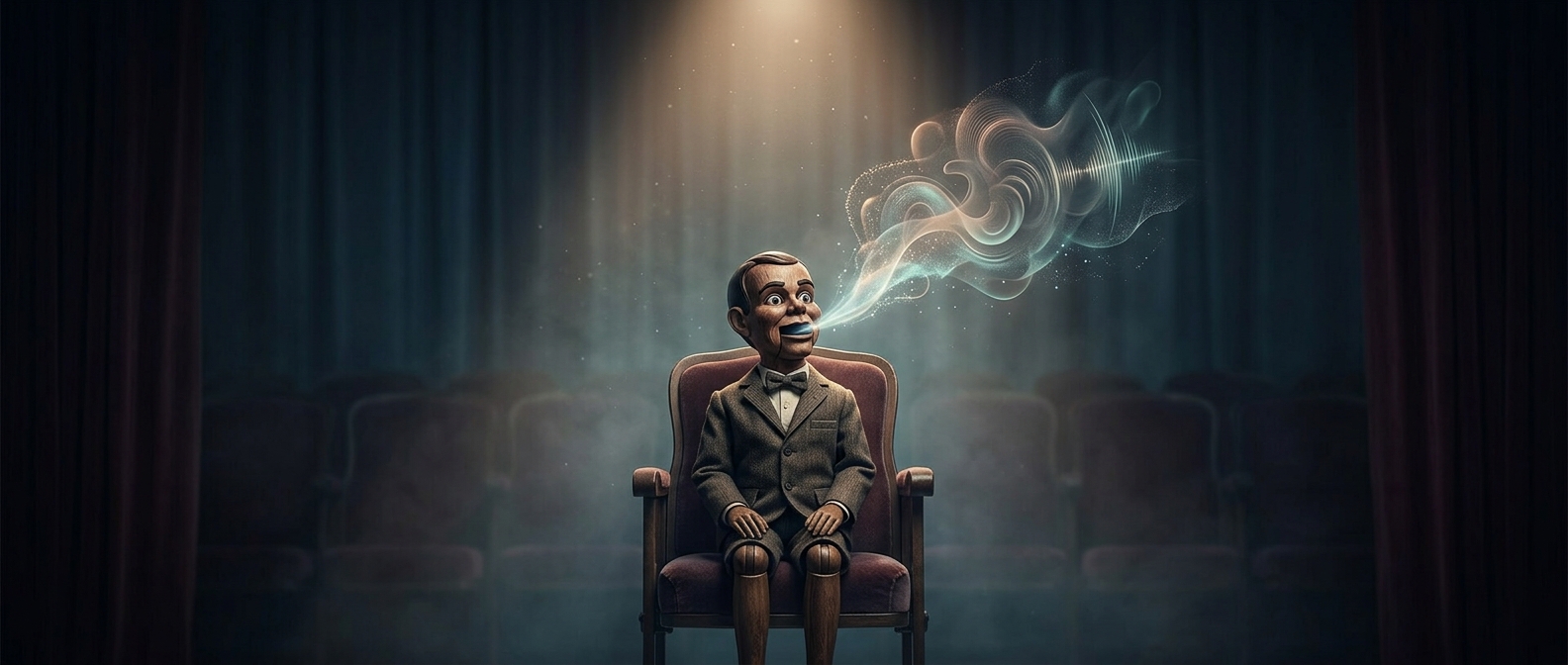
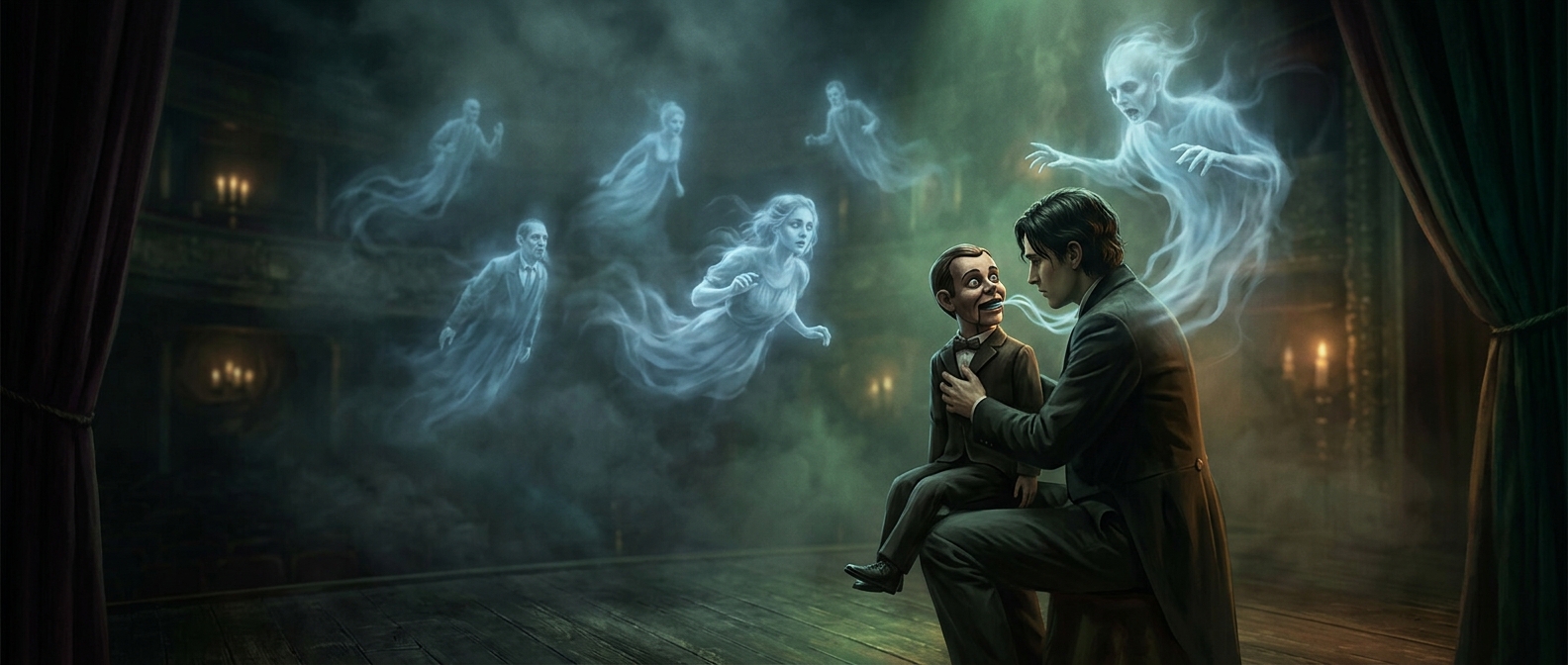
That effect depended on contrast. A performer could give the dummy a sharper pitch, clipped phrasing, or an oddly timed pause, making its speech feel distinct from the human voice beside it. Because listeners could not watch the performer’s mouth or hands, the exchange sounded less like a trick being demonstrated and more like two characters sharing the air.
The Listener Did the Visual Work
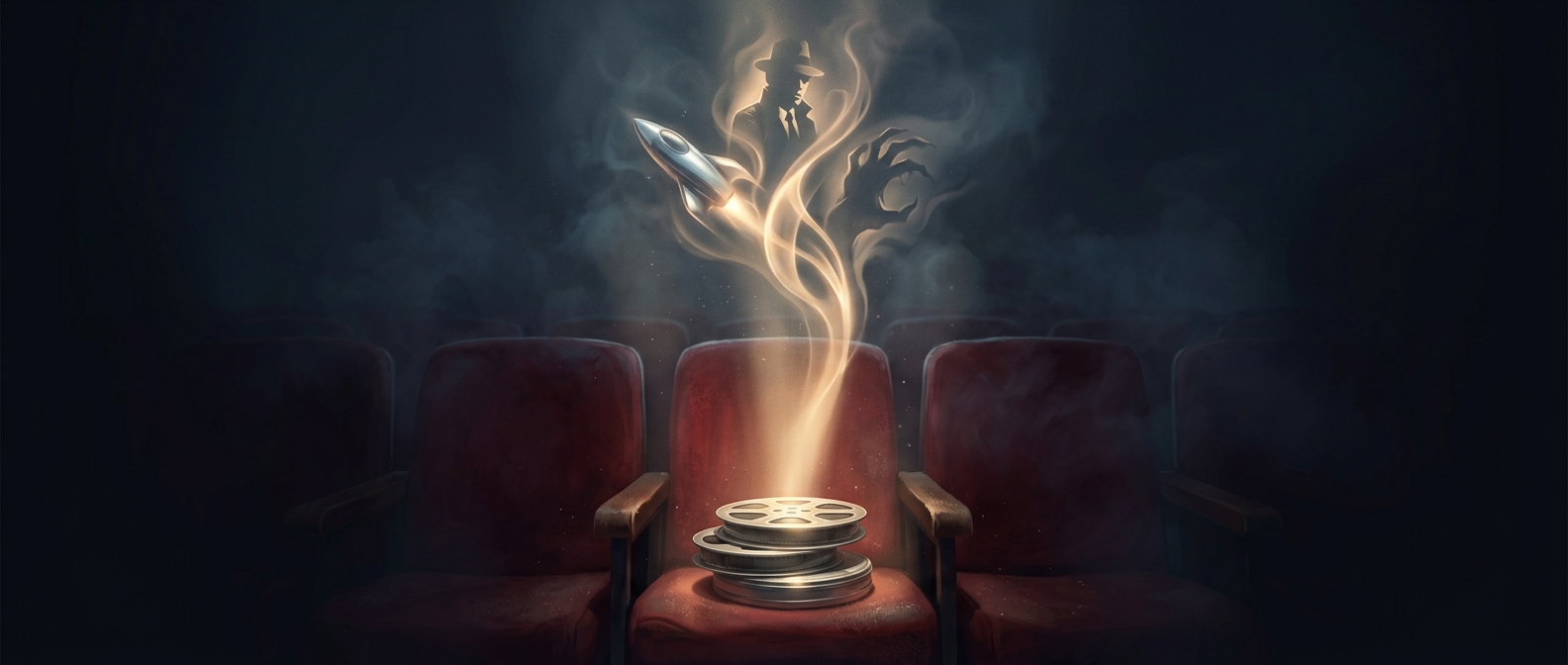
A dummy’s wooden face can look unsettling in person, but on radio its stillness was irrelevant: sound had to do the work. A voice that seemed to belong to an object, especially one delivered with an unexpected rhythm or tone, invited listeners to imagine what they could not see. Their own mental picture could make the character more vivid—and more frightening—than a screen image might have been.
That is the peculiar power of radio performance: withholding a face did not make the dummy less real to the audience. It gave each listener room to imagine one.