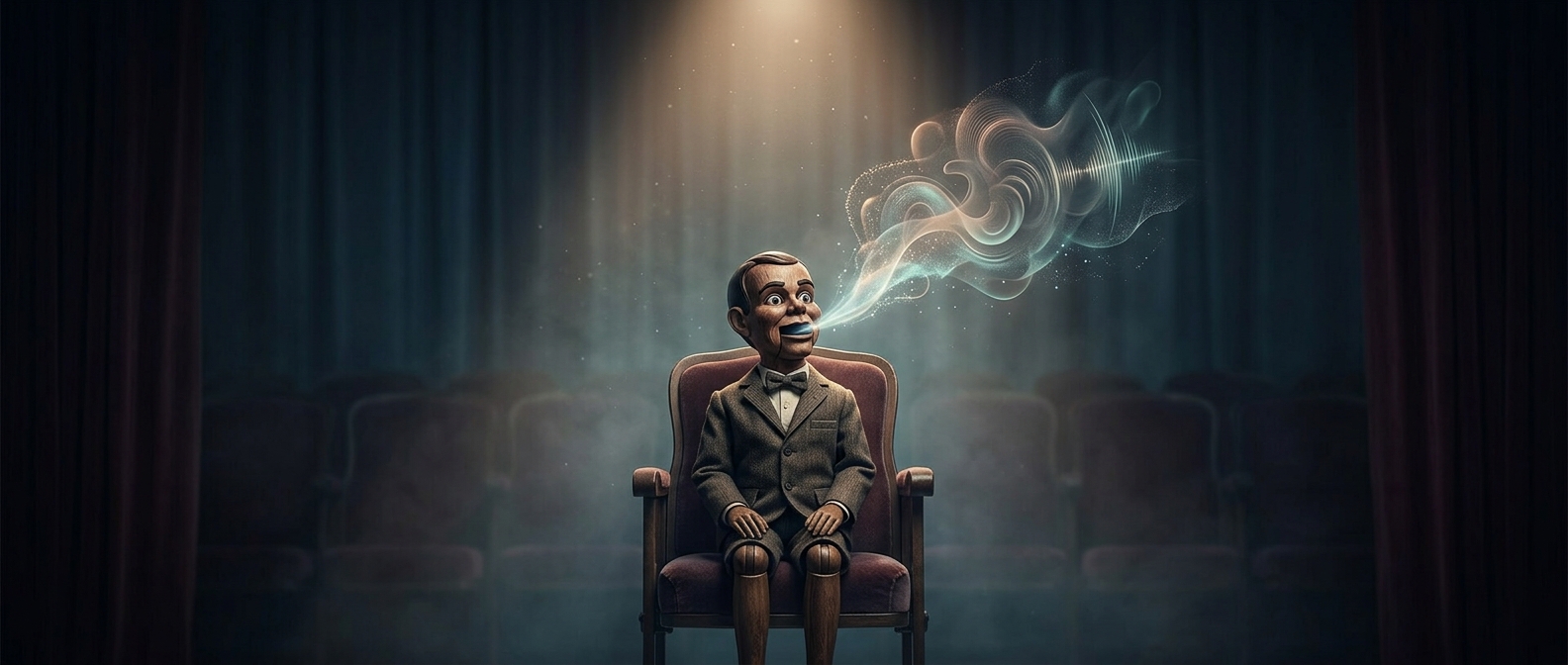
The audience follows the mouth it can see
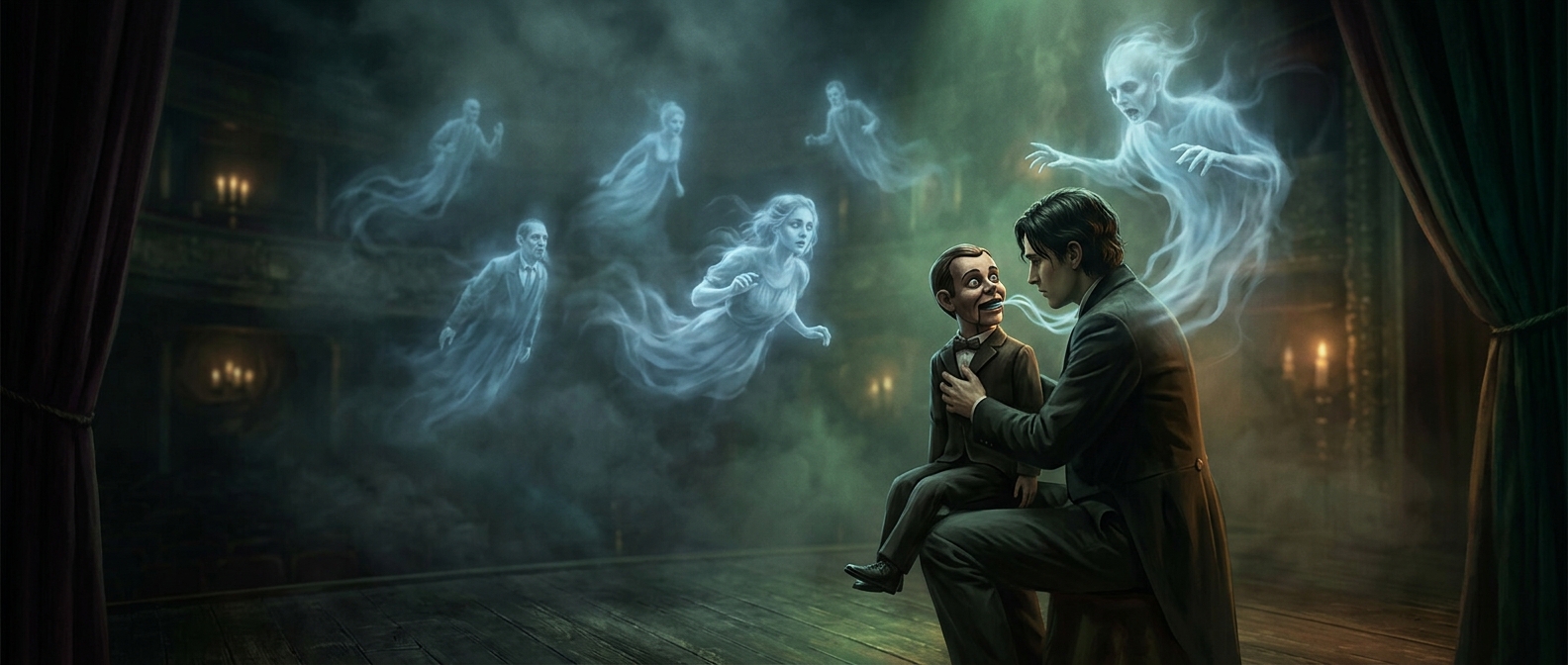
A ventriloquist does not send sound across the room from the dummy. The voice still comes from the performer, but the audience has two clues about where it seems to originate: the sound and the visible mouth movements. When those clues disagree, the moving dummy’s mouth can pull attention—and the perceived voice—toward the puppet. This is an example of the brain combining sight and sound to judge where an event is happening.
That illusion works best when the dummy’s mouth opens and closes in time with the speech. A perfectly synchronized puppet can seem to be answering; a mouth that flaps at the wrong moment quickly looks like a prop being operated by someone else. Small gestures and shifts in the performer’s gaze help make the puppet feel like a separate conversational partner, giving viewers a reason to watch it rather than the speaker.
Speech has to be shaped around the trick
The performer still needs clear words, but many ordinary speech sounds rely on the lips. Sounds such as p, b, and m are formed by bringing the lips together, which would expose the act. Ventriloquists keep the lips relatively still and use careful tongue and jaw movements to make speech understandable; they may also choose or rephrase lines to avoid especially difficult sounds.
The tradeoff is practical: the more natural the speech sounds, the less obvious the performer’s effort should be. Meanwhile, the puppet needs just enough movement to look responsive, not so much that every word becomes a mechanical flap. The convincing moment is not a wooden figure literally speaking, but a coordinated performance in which voice, mouth, and attention all point the audience toward the same imaginary speaker.