When a voice seemed to come from inside the body
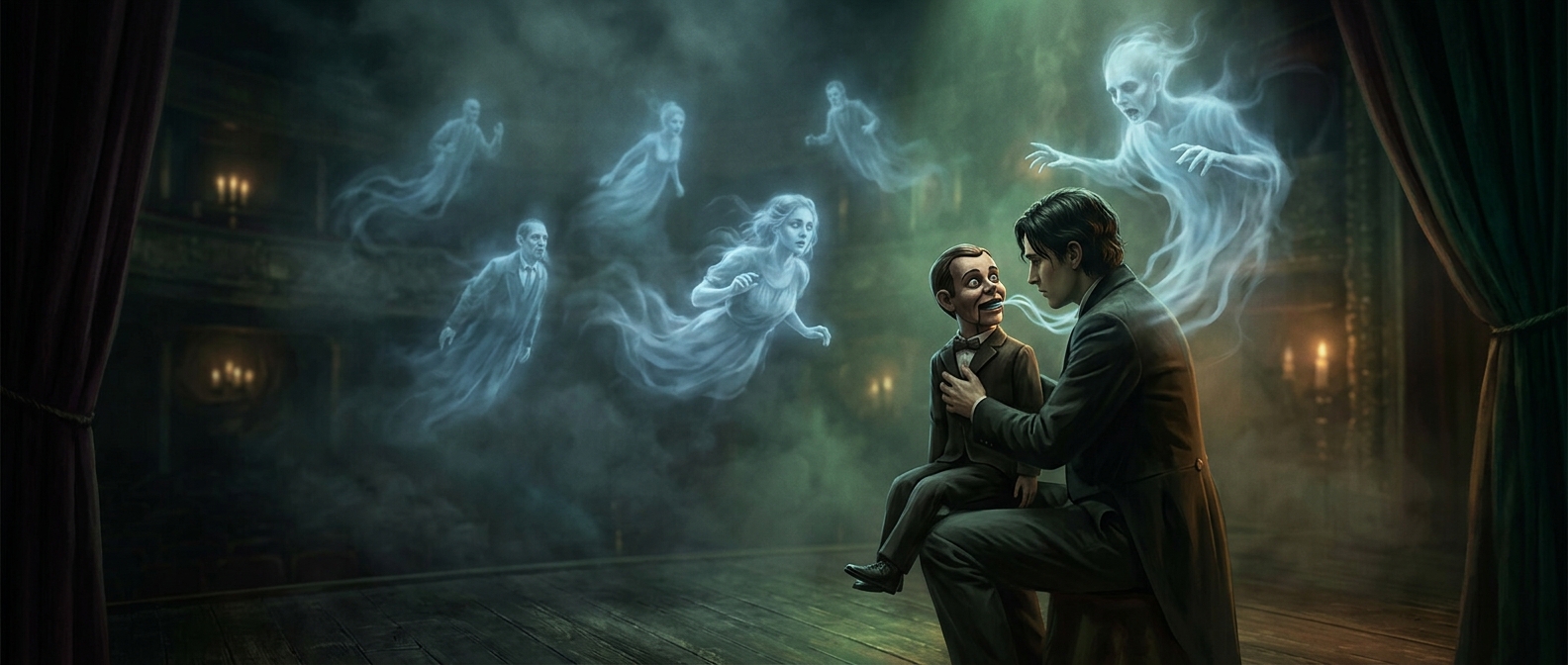
Early ventriloquists were called gastromancers, a name built from Greek roots meaning “belly” and “divination.” They presented unusual, muffled voices as messages from the dead or from spirits, making a performance seem like contact with an unseen world rather than ordinary speech.
The stomach itself cannot make a voice: speech comes from air passing through the larynx, or voice box. A performer could speak with little visible movement, alter the sound’s tone and clarity, and direct listeners’ attention toward a belly, a nearby object, or an apparently empty space. In a dim room or before an audience already expecting supernatural signs, that combination could make the voice’s source seem mysterious.
From spiritual claim to stage effect
The term gastromancer captures how the act was framed: the performer appeared to divine or channel a voice from within. That framing mattered. A sound that might otherwise be a curious trick could carry the weight of a revelation, especially when listeners could not see how it was produced.
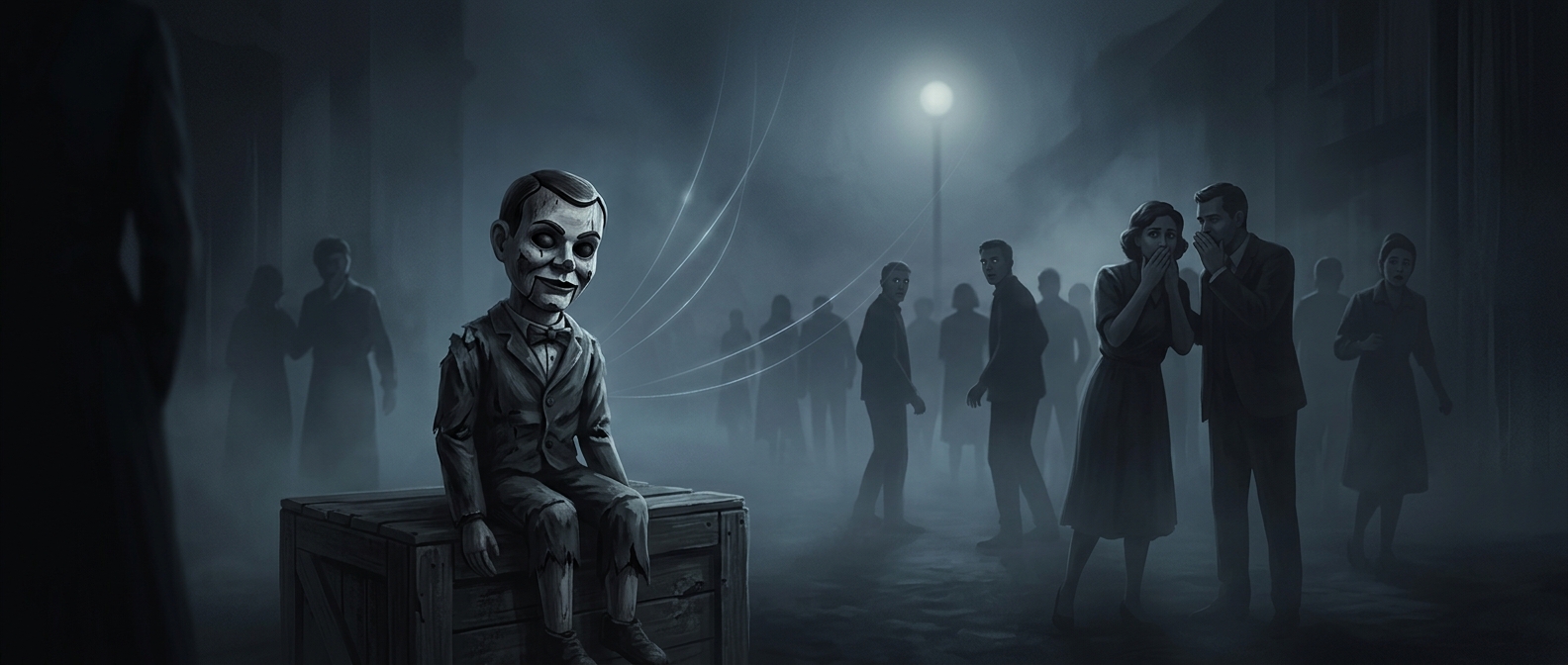
Ventriloquism later became familiar as entertainment, but its basic appeal remained the same: the voice seems detached from the person speaking. The old spiritual claim turned that gap between sound and visible speaker into a source of authority—and, eventually, into a stage illusion.