A royal procession became a floating concert
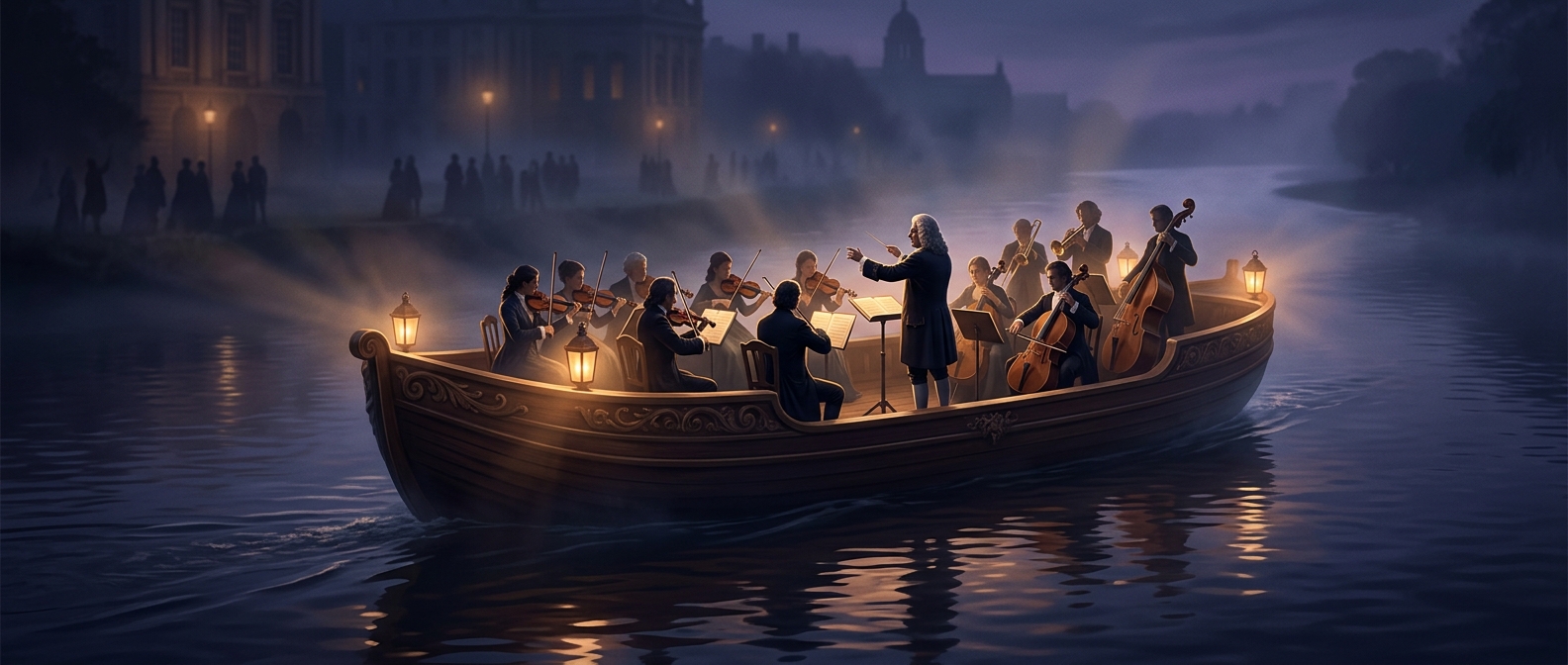
On a summer evening in 1717, George I traveled by royal barge along the Thames from Whitehall toward Chelsea. Handel’s musicians played from a separate barge that kept pace with the king’s party. The river was not just a picturesque backdrop: it was the route, the audience space, and part of the spectacle. Other boats gathered alongside, turning a royal outing into a public performance on the water.
The setting shaped what listeners heard. An orchestra playing outdoors could not rely on the close, controlled acoustics of a concert room. Handel’s Water Music uses bright, projecting instruments—including horns and trumpets—alongside strings, giving the music enough presence for an open-air procession. The work is made up of dance movements rather than one uninterrupted symphony, so different sections could suit the changing pace and atmosphere of the journey.
The king asked to hear it again
Accounts of the evening say George enjoyed the music enough to request repeated performances during the trip. That meant the musicians had to keep playing as the boats moved along the river, rather than deliver a single set and leave the scene. The reported ensemble of about 50 players was a substantial force for a performance that had to carry across water and compete with the noise of a crowded flotilla.
The episode also shows how music served the monarchy: it entertained the king while making his progress visible and memorable to everyone watching from the riverbanks and nearby boats. Handel’s score outlasted the occasion, but its original setting was unusually concrete—a royal journey accompanied, movement by movement, by an orchestra afloat on the Thames.