Why Tarzan’s branch rides feel like skateboarding
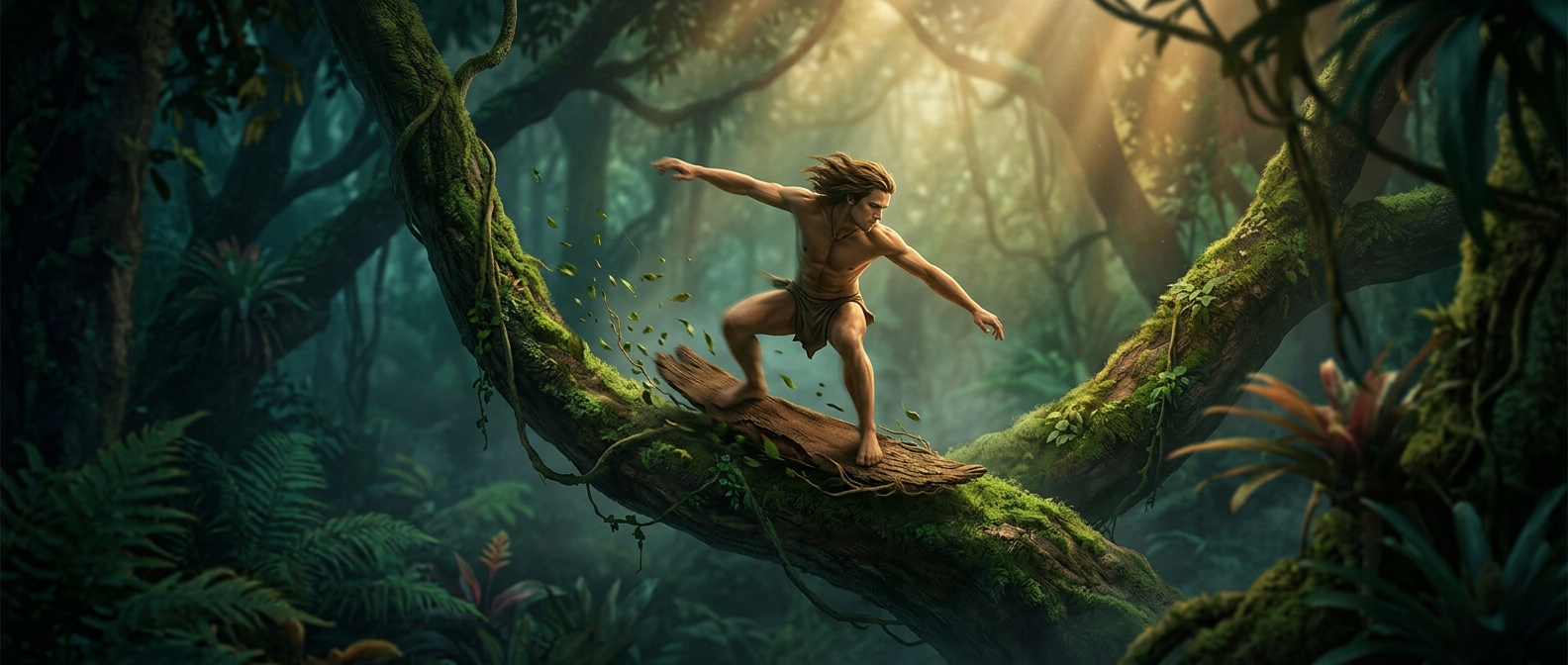
A branch is not a smooth rail or a skateboard ramp. It bends, narrows, and shifts under a rider. To make Tarzan’s slides feel balanced rather than weightless, Disney animators studied footage of skateboarder Tony Hawk—not footage of apes.
The useful clue was how a skilled rider keeps moving when the surface changes. A skateboarder continually adjusts posture: leaning into a turn, shifting weight, and using the arms to counterbalance. Those visible corrections make the ride feel like a physical negotiation with the surface, not simply a character gliding through the air.
Translating a human skill into animation
Hawk’s movements gave animators a reference for the timing and shape of those adjustments. They could observe how balance changes from one instant to the next, then adapt that motion to Tarzan and the curved, irregular paths of branches. The goal was not to show Tarzan literally skateboarding; it was to borrow the bodily logic that makes a slide look controlled.
That choice also reveals a practical truth about character animation: the best reference is not always the closest match in species or setting. For this particular movement, a skateboarder offered a clearer model of balance in motion than an ape would. The result is a Tarzan who seems to read each branch as he rides it, correcting his body as the path carries him onward.