Why Ariel’s hair needed its own movement
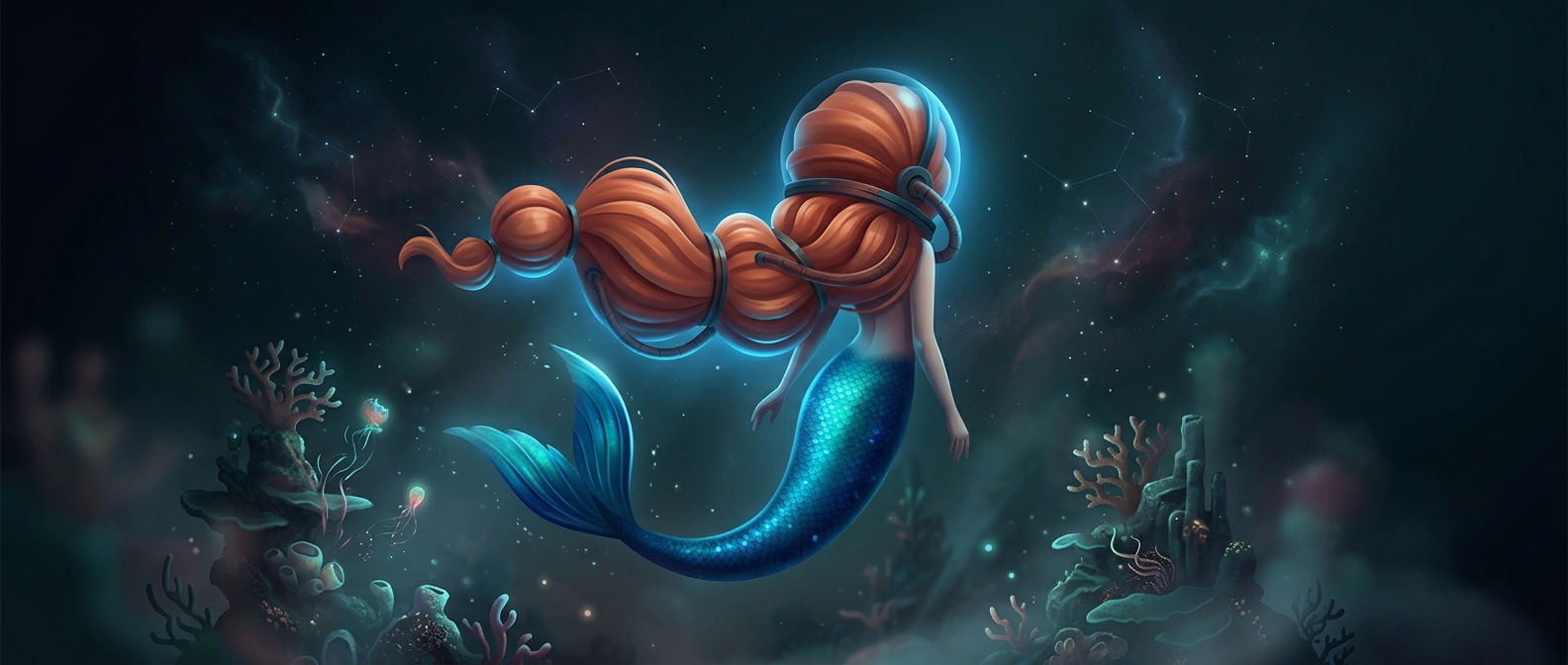
Ariel’s long red hair had to do more than look attractive: it needed to make her feel as if she belonged underwater. If it stayed close to her head, she could seem to be swimming through air; if it streamed rigidly behind her, it would look like a flag. The animators needed motion that felt soft, continuous, and responsive to her turns.
Sally Ride’s movements in weightlessness offered a useful visual clue. Without gravity pulling hair down in the usual way, loose strands can drift and lag behind the body, making movement feel gentle rather than sharply posed. That gave animators a reference for the graceful float they wanted.
A reference, not a literal physics model
Weightlessness and swimming are not the same. In water, drag—the resistance that slows moving objects—shapes how hair trails and settles. The astronaut footage therefore served as an artistic guide, not a precise simulation of underwater physics. Animators could borrow its sense of suspended motion while adjusting the hair to suit Ariel’s gestures and the scene.
That choice also made the hair part of the storytelling. Its sweeping shape helps reveal a turn or a change in direction, even when Ariel’s face is small in the frame. A detail that might otherwise have been decoration became a moving cue that tells the audience, at a glance, that she is underwater.