One mark, a whole awkward moment
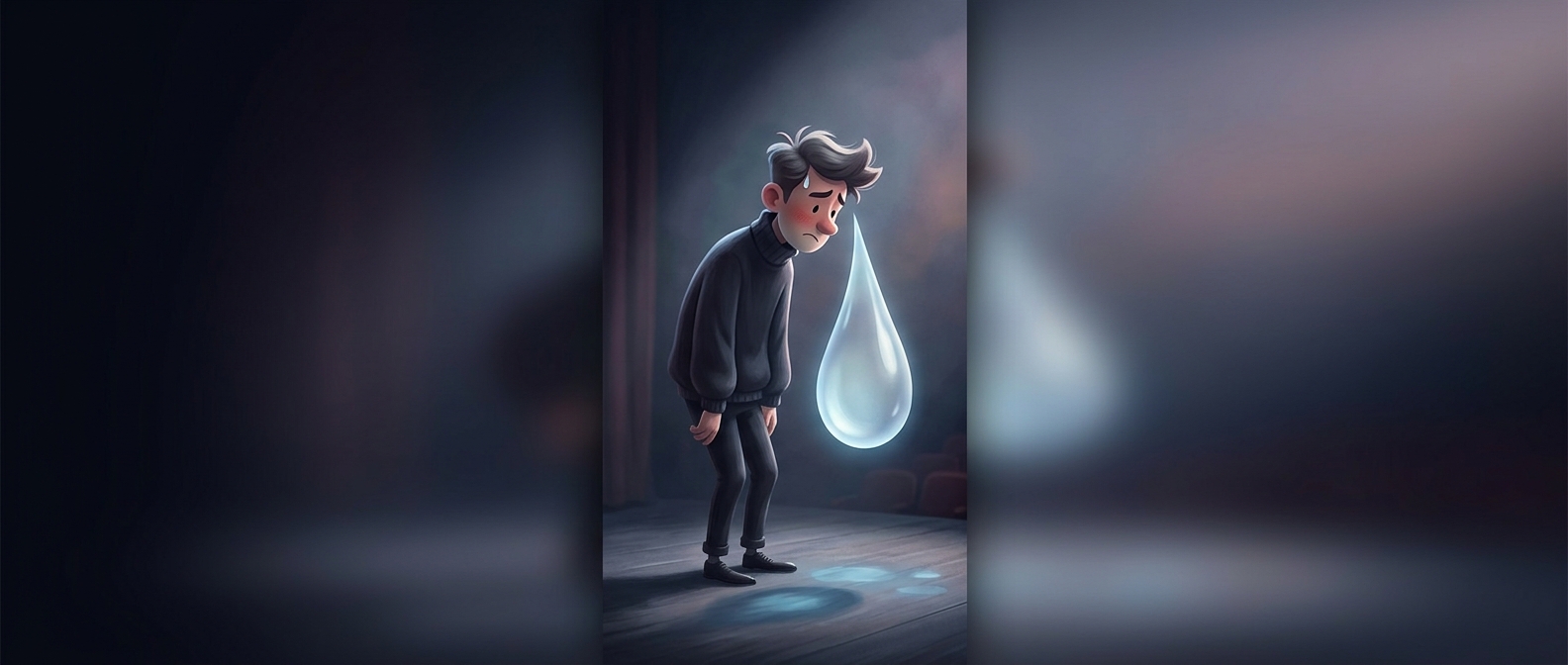
A tiny bead of sweat would be easy to miss in a busy drawing. Enlarge it until it sits beside a character’s head, and it becomes readable at a glance—even when the face is small, the scene moves quickly, or several characters share the frame. The mark works like a visual symbol rather than a realistic detail: viewers learn to read it as a sign that something feels socially uncomfortable.
Why it can do more than a frown
A frown usually signals displeasure, while a blush can suggest embarrassment, affection, or heat. A cartoon sweat drop is more flexible. It can accompany a strained smile, a blank stare, or a character trying to remain composed, adding the sense that the person is inwardly flustered without changing the pose into an exaggerated reaction.
That makes the drop useful for comic timing. A character can say or do something awkward, then the oversized mark supplies the reaction a more realistic drawing might show through several small facial changes. The audience catches the discomfort immediately, and the scene can keep moving. Its size is the message: the drawing turns an almost invisible bodily response into a clear cue about the character’s social situation.