A Trap Turns a Chase Into a Plan
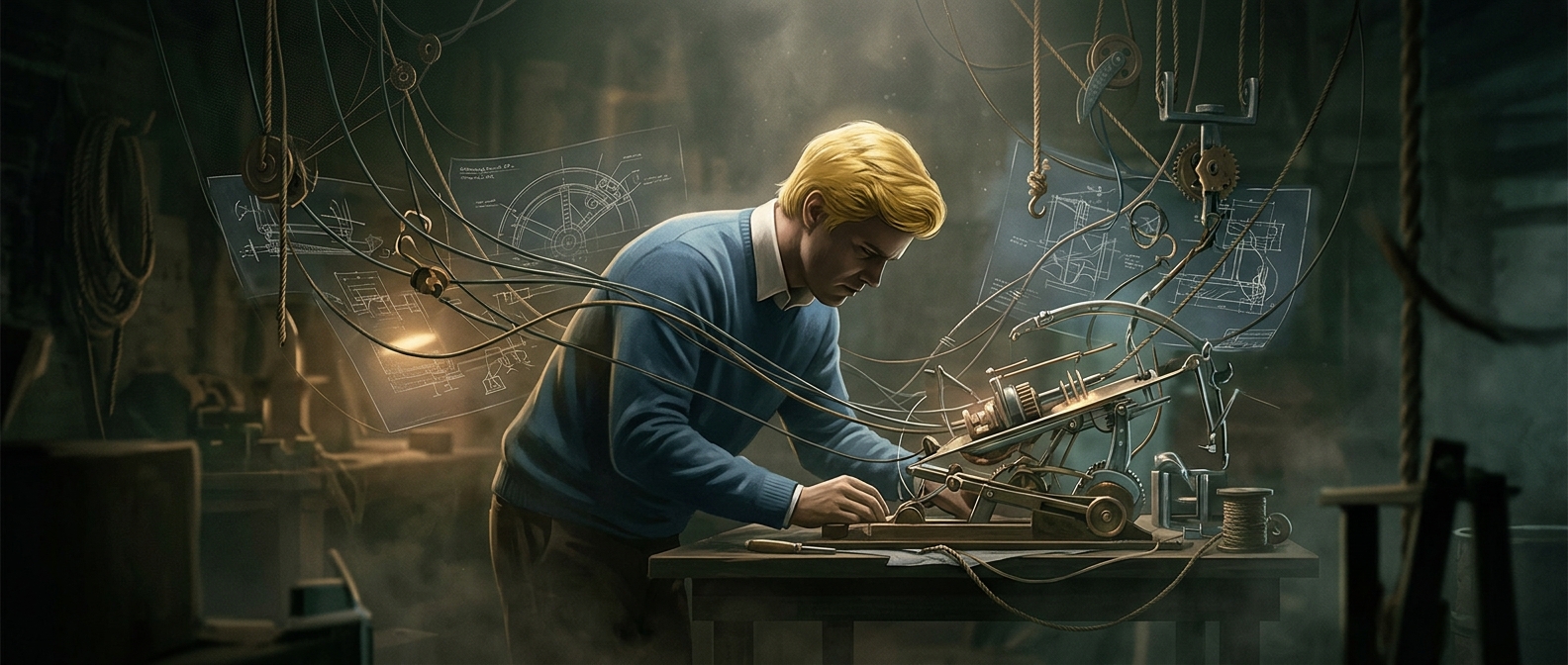
Fred’s traps give the gang a way to do more than run after a suspect: they can shape where the chase goes. A line stretched across a path, a net poised overhead, or some other improvised snare turns an ordinary hallway or room into part of the mystery’s machinery. The setting becomes useful because Fred can make its obstacles work for him.
That design also fits the gang’s limited resources. Fishing line and old nets are not precision equipment, so a trap has to rely on simple forces: tension, gravity, a trip, or a sudden drop. The ingenuity lies less in advanced hardware than in spotting what can be repurposed and arranging it so the target triggers the mechanism.
Why the Plans Make Good Comedy
A trap is a promise of control—and a setup for that control to go wrong. It gives the audience time to see the plan take shape, then creates suspense over whether the target will follow the intended route. When the mechanism misfires or catches the wrong person, the same preparation that looked clever becomes a source of slapstick.
The traps therefore serve two jobs at once: they help move the mystery toward a confrontation, and they make the gang’s teamwork physically visible. Fred contributes the plan, but its success depends on timing, placement, and everyone else being where they need to be. The fun is in watching an improvised scheme turn a familiar space into a carefully staged chase.