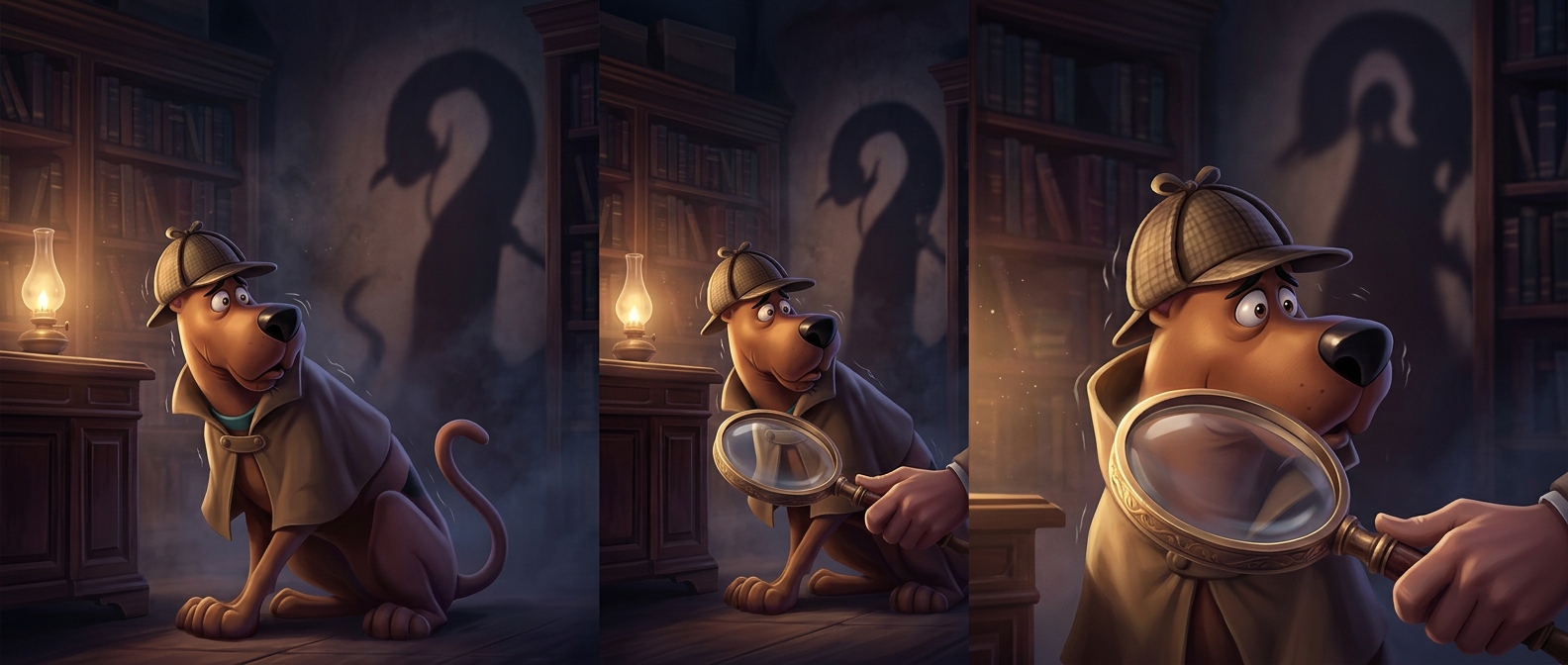
Fear Gives the Mystery Its Comic Engine
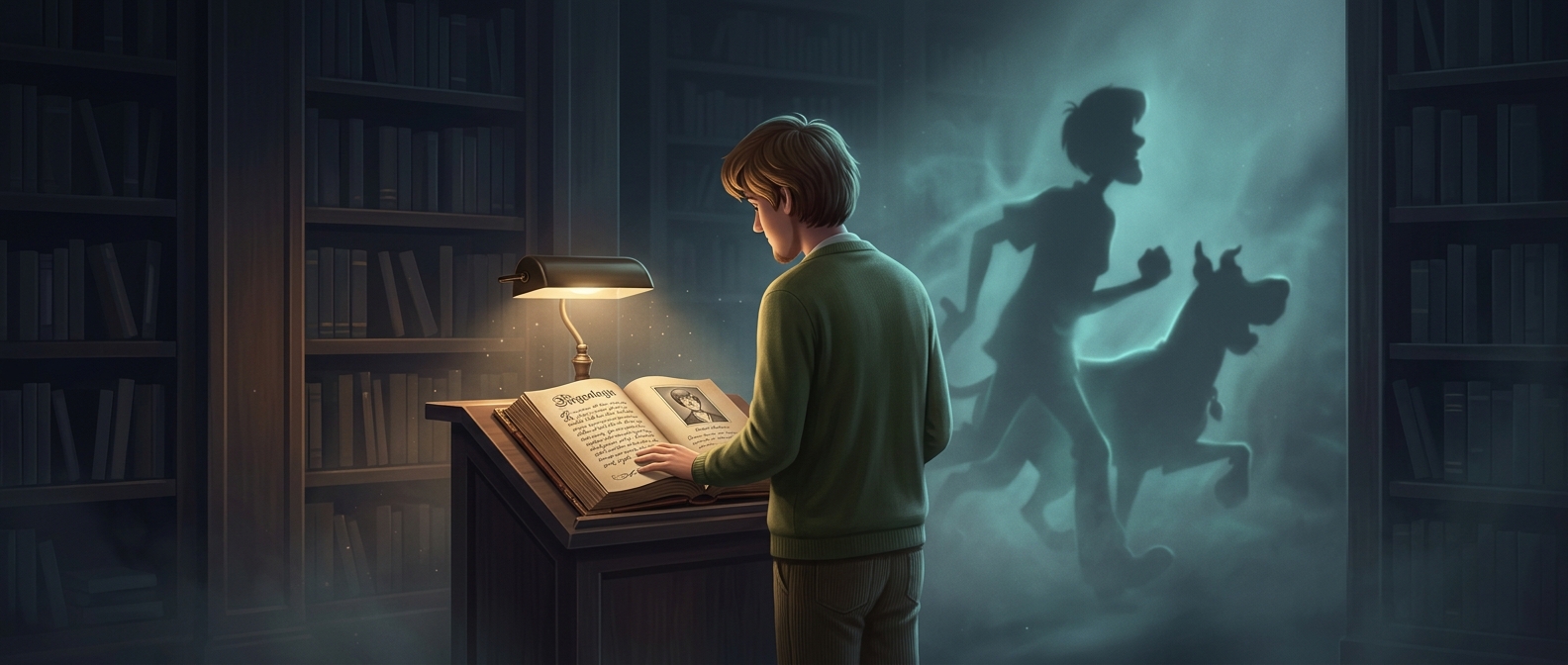
Scooby-Doo’s fright is not just a personality quirk; it shapes how a mystery unfolds. When a supposedly dangerous sound or figure appears, Scooby’s instinct is to flee. That reaction turns a clue-filled investigation into a physical comedy scene: he and Shaggy duck, dash, hide, and sometimes blunder into the next discovery while trying to escape.
The contrast keeps the danger playful. The gang may be facing a “ghost” or “monster,” but Scooby’s exaggerated panic makes the threat feel funny rather than grim. His fear also gives the rest of the group a reason to take the lead, so the mystery can keep moving even when its most conspicuous canine detective would rather be elsewhere.
A Snack Makes Courage Negotiable
The Scooby Snack works as a simple comic bargain. Scooby is reluctant to volunteer for a risky task; the promise of a treat gives him a reason to try. That does not make him suddenly fearless. Instead, the audience gets to watch him approach danger with visible hesitation, often alongside Shaggy, whose appetite and nerves make him a natural partner in the gag.
That repeated hesitation creates a useful rhythm: a threat appears, the pair resist, a snack tempts them forward, and their attempt produces another complication—or an accidental clue. Scooby’s cowardice can therefore generate both the comedy and the next step in the investigation. He does not need to act like a fearless hero to help solve the case; his panicked detours are part of how the team gets there.