A fixed outfit turns clothing into part of the character model
In animation, a character’s clothes are not merely props added at the end. They are part of the design that artists must reproduce across poses, expressions, camera angles, and scenes. A shirt that twists with the body or a jacket that hangs differently from one drawing to the next can make the character seem to flicker—even when the movement itself is smooth.
Keeping the wardrobe fixed gives artists a stable visual reference. Design sheets, which show a character from several angles and in different poses, can define how the clothes fit and where seams, buttons, or patterns belong. The outfit also becomes part of the character’s silhouette—the outline viewers recognize at a glance.
A costume change is a production decision
Changing clothes means more than drawing a new look once. The new design has to remain consistent through every scene in which it appears, including how it folds, moves, and relates to the character’s body. In hand-drawn animation, that adds details to redraw; in other production methods, it still creates extra design and continuity work.
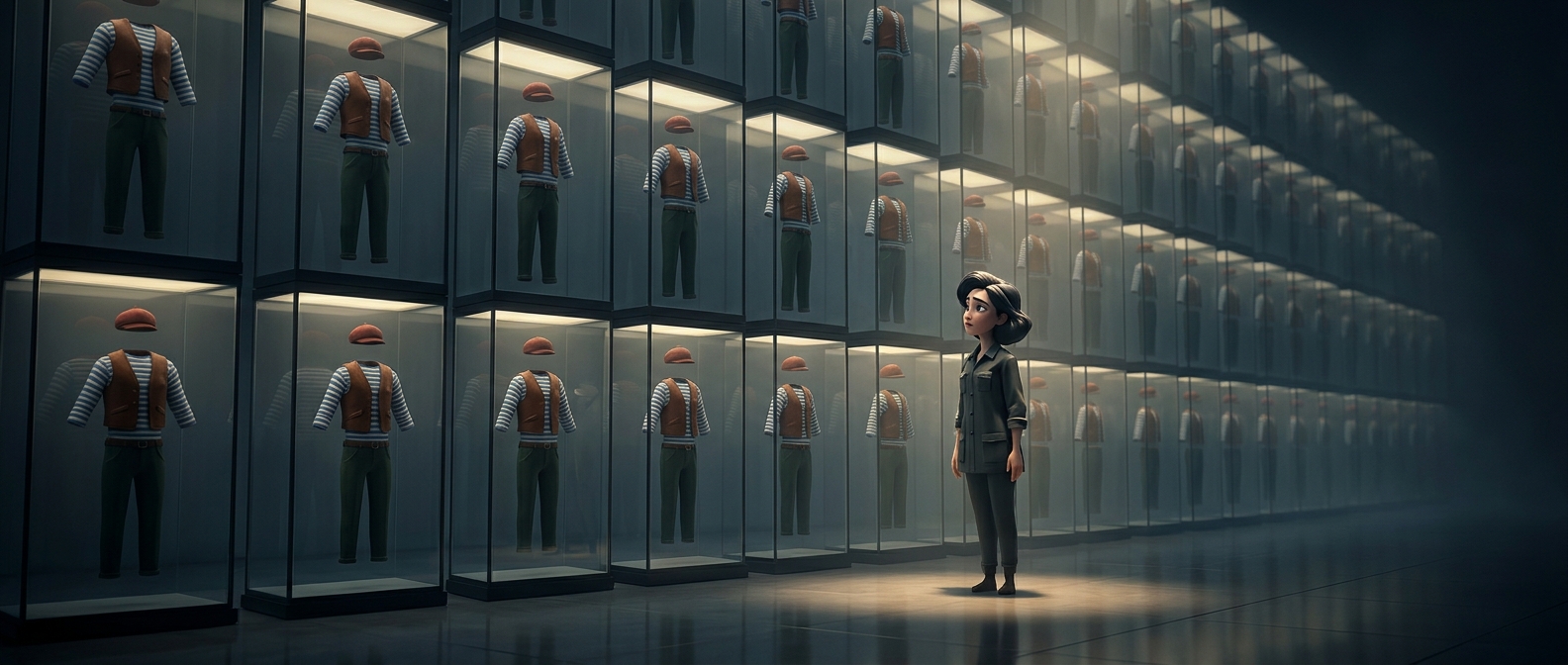
That is why many characters keep a signature outfit even when the story spans many days. A wardrobe change can be worthwhile when it signals a new setting, a special event, or a shift in the story—but it needs to be planned and tracked. The familiar clothes are both a practical shortcut and a visual anchor: viewers can recognize the character instantly, while artists have one less moving design to keep aligned.