Why a Small Figure Can Carry a Big Question
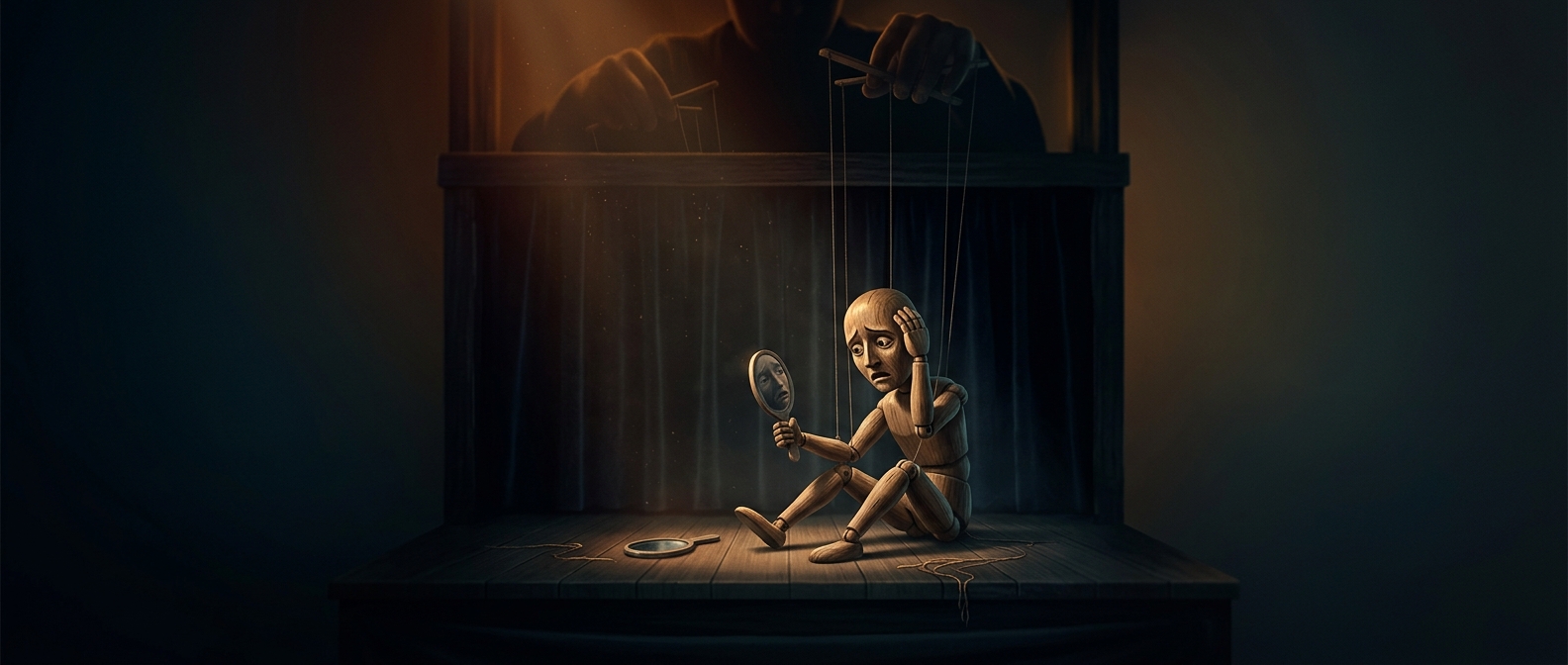
A puppet is visibly an object and, for a moment, a character. That double awareness changes how an audience receives a serious question. A human actor can make despair feel psychologically realistic; a wooden figure cannot hide its construction. Its very stillness and limited range make the struggle seem strange—and can keep it from becoming solemn in a familiar way.
The result is a useful tension: viewers recognize the character’s fear or longing while also seeing the simple object being made to express it. The gap between those two perceptions can make an abstract question about meaning feel both comic and surprisingly close.
The Performer’s Limits Become the Character’s Language
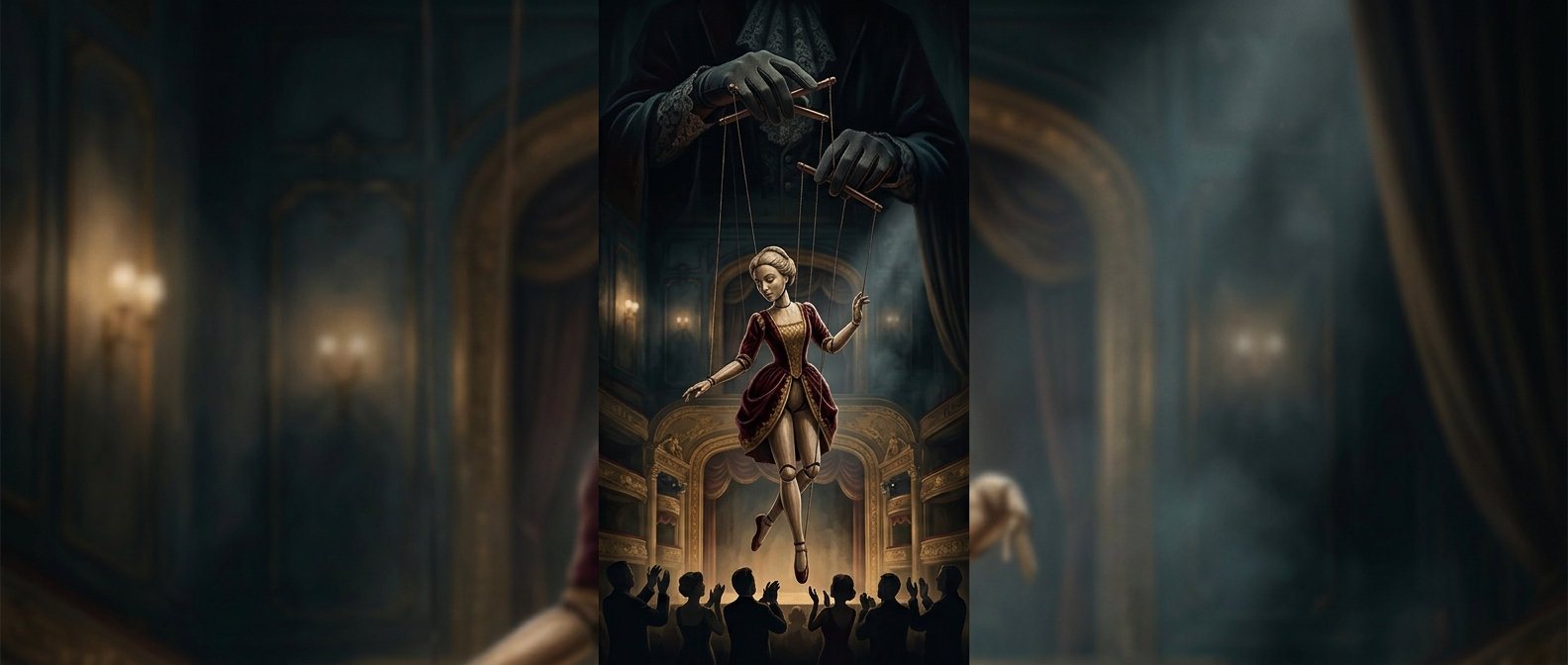
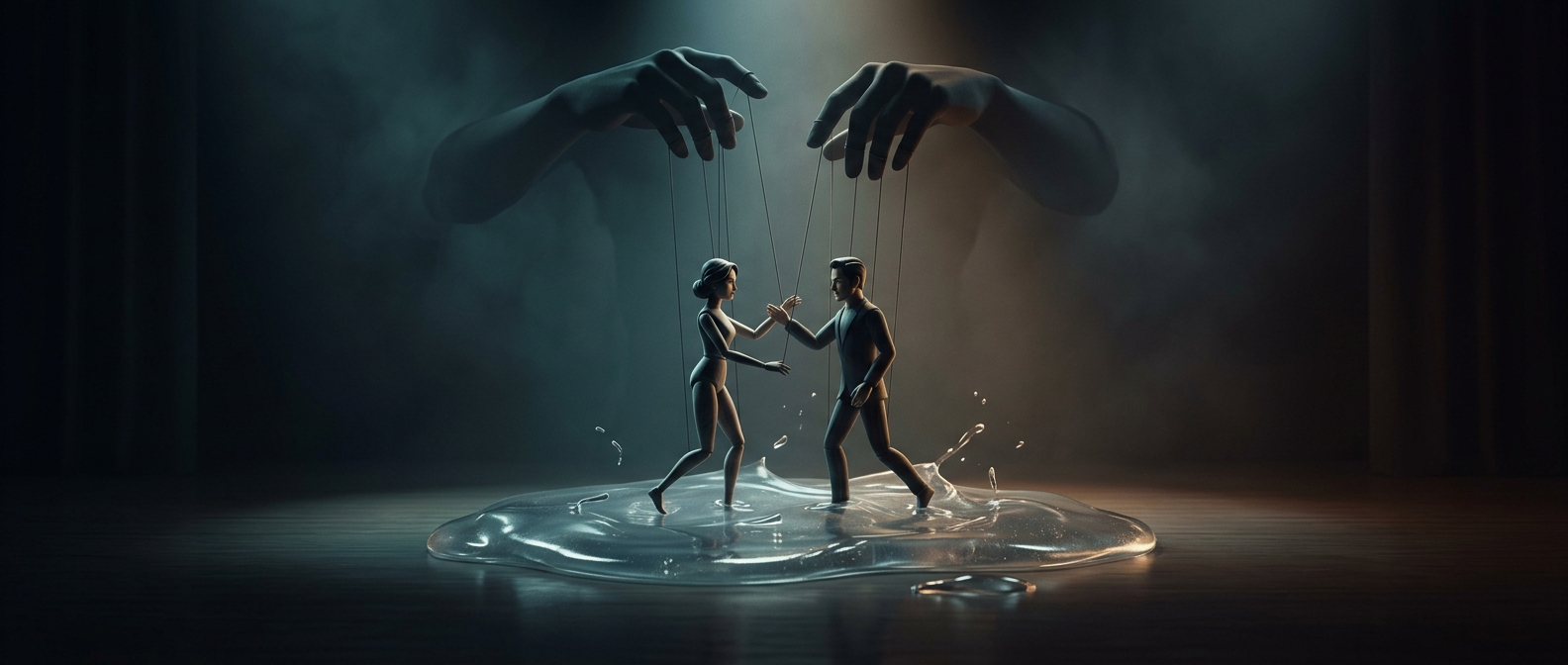
In string puppetry, movement has to be transmitted through cords from a performer above or behind the figure. A turn, hesitation, or reaching gesture is not just an actor’s impulse; it has to be physically produced, often with careful timing. Small motions can therefore become unusually legible. A pause before a step may read as doubt, while a sudden tilt can puncture a speech’s grand seriousness.
That constraint shapes the writing and staging. Long stretches of naturalistic action are difficult to sustain, so a production can make a few deliberate gestures do more work. The audience supplies the emotion between them, much as it supplies a voice and personality to an object that has no face capable of changing expression.
Comedy Leaves Room for the Seriousness
The puppet’s obvious artificiality also gives a show permission to move between registers. A philosophical argument can be interrupted by a clumsy movement or an awkward physical limitation without making the underlying question disappear. Instead, the joke exposes how grand ideas meet ordinary bodies—and, here, an even less capable wooden one.
That contrast is the lasting effect: the audience can laugh at the scale mismatch while still wondering whether the character’s crisis resembles its own.