A Character Performed by a Small Crew
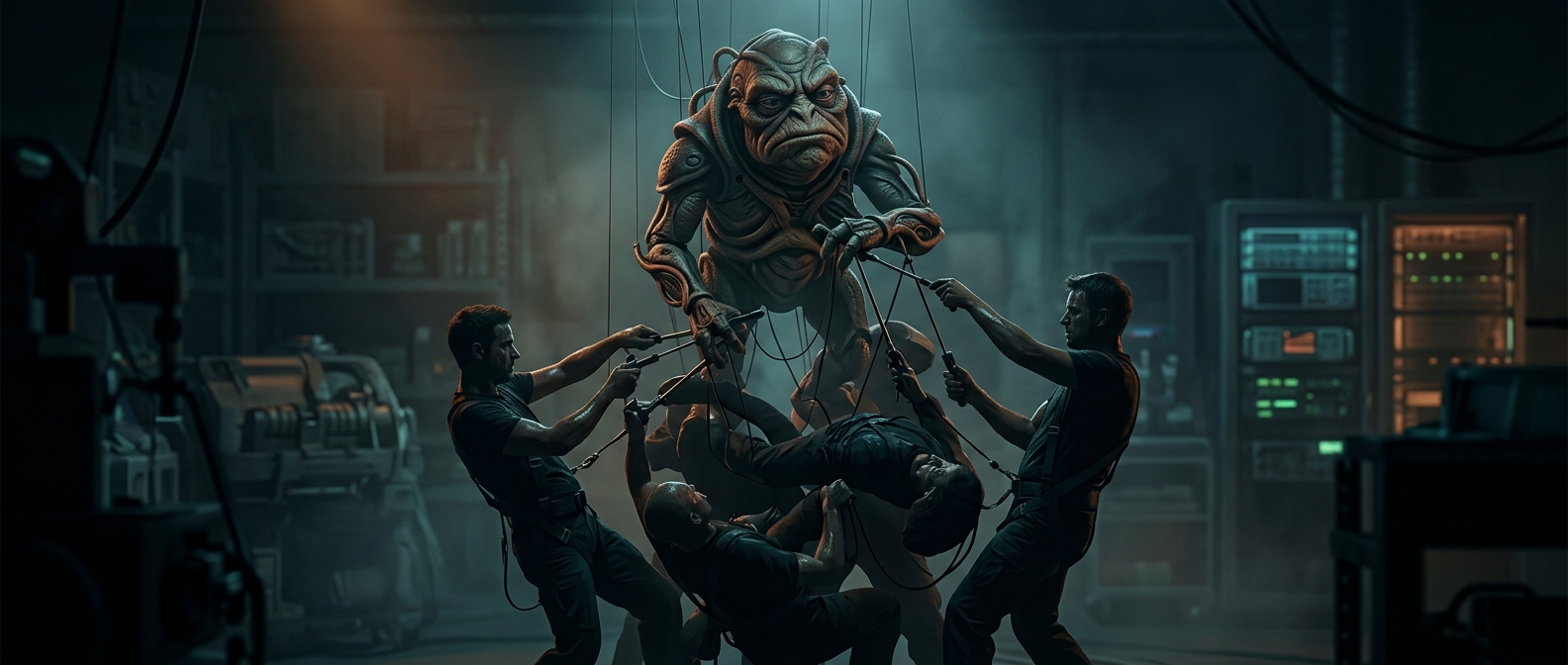
Rygel’s expressions depended on several people acting as one performer. A puppeteer could shape the head and mouth while others supplied gestures and eye movements, so the character’s face and body had to communicate the same thought at the same time. A complaint, for instance, could feel sharper if a mouth movement, a raised brow, and an arm gesture landed together.
That coordination is the hidden craft behind an elaborate puppet. Each operator controlled only part of the performance, but viewers saw one character. The crew had to anticipate one another and follow the scene’s rhythm; a delayed eye movement or gesture could make the expression feel disconnected from the words.
The Set Was Part of the Performance
The puppeteers’ cramped position beneath metal floor grates was not just an inconvenience. It put the people controlling Rygel out of the camera’s view while the puppet remained in frame. In a studio, that kind of concealment can make a practical, physically operated character appear to occupy the same scene as the actors around him.
The tradeoff was a demanding working arrangement: the operators had limited room and had to keep performing through the heat. The result was not simply a puppet with many moving parts, but a character whose apparent spontaneity relied on a crew coordinating every visible reaction.