How a wooden figure acquires a human presence
A puppet does not need a lifelike face to seem emotional. The performer gives it feeling through timing and control: a delayed turn of the head can suggest reluctance; a hand that rises, then stops, can make hesitation visible. Because the figure cannot move on its own, every gesture reads as a choice made by the person operating it.
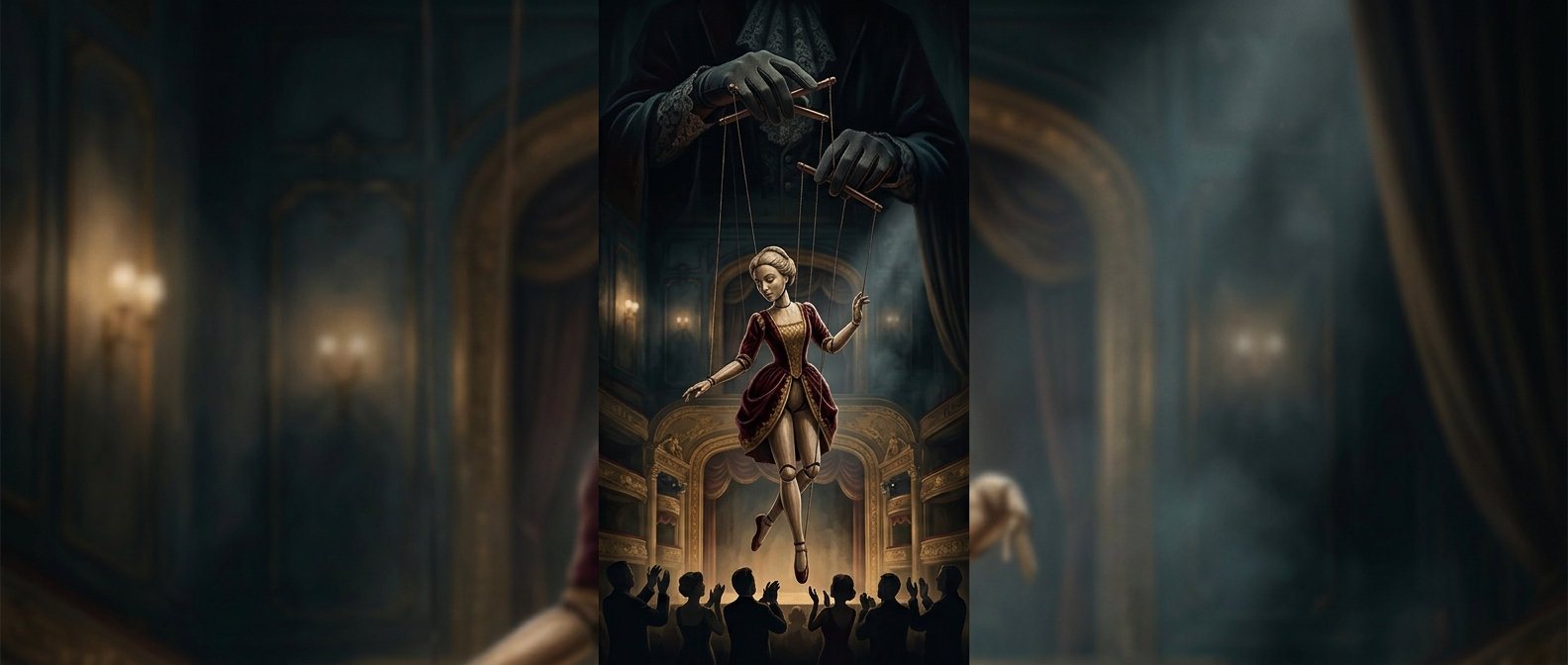
Strings make that relationship especially legible. They transmit small pulls into movements at a distance, so the puppeteer must coordinate several lines without letting the mechanics distract from the character. The task is not simply to make the doll move, but to make each movement appear to belong to the doll.
Why the visible performer can strengthen the illusion
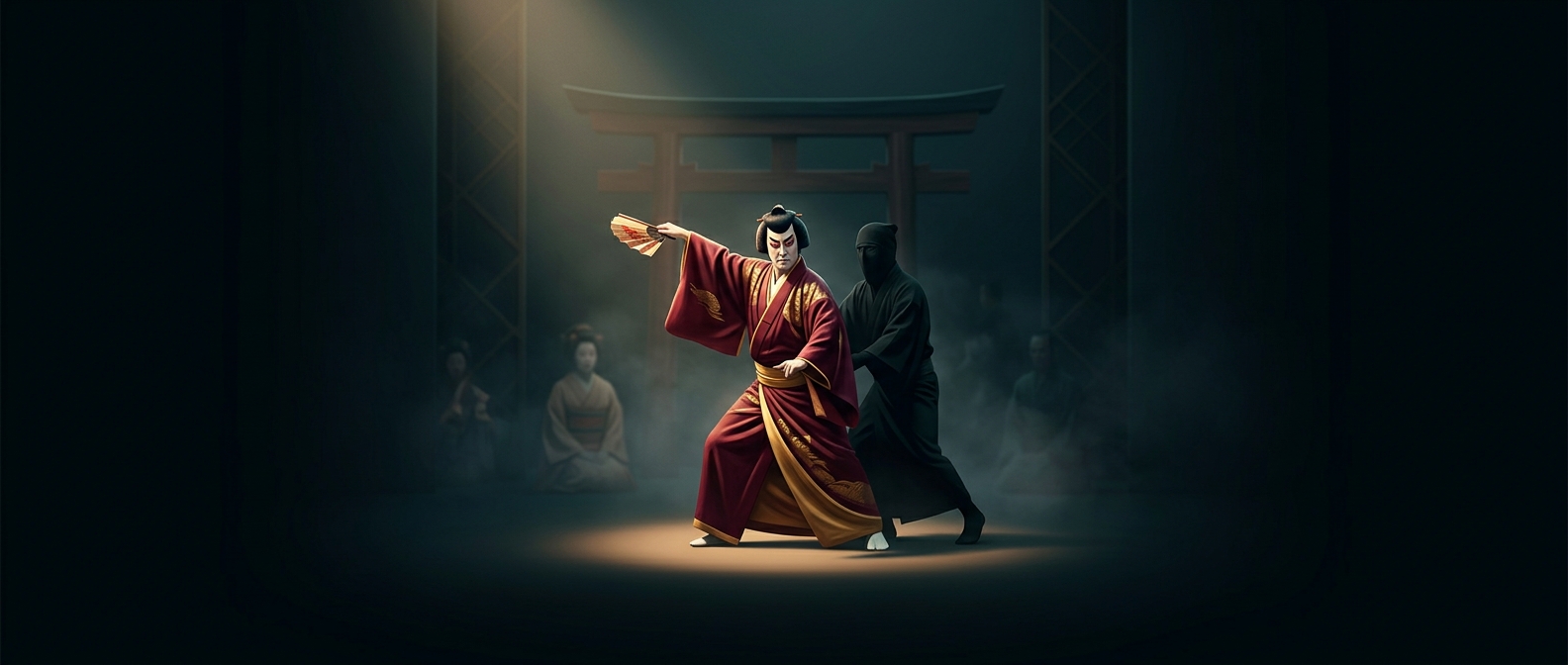
Black clothing helps the operator recede against a dark stage, but the performer may remain visible. That is not necessarily a failure of the illusion. In avant-garde theater, the audience can watch both the human labor and its result: a person’s precise actions produce a separate figure that seems to have its own inner life.
The contrast is part of the art. A wooden body has no facial muscles to soften or tense; its apparent sadness has to be built from posture, pauses, and the angle of its head. The audience supplies the emotion, while the puppeteer supplies the evidence. A still figure can therefore feel intensely present—not because it resembles a person in every detail, but because its carefully limited movements invite viewers to imagine what it feels.