Why one pause creates a crowd surge
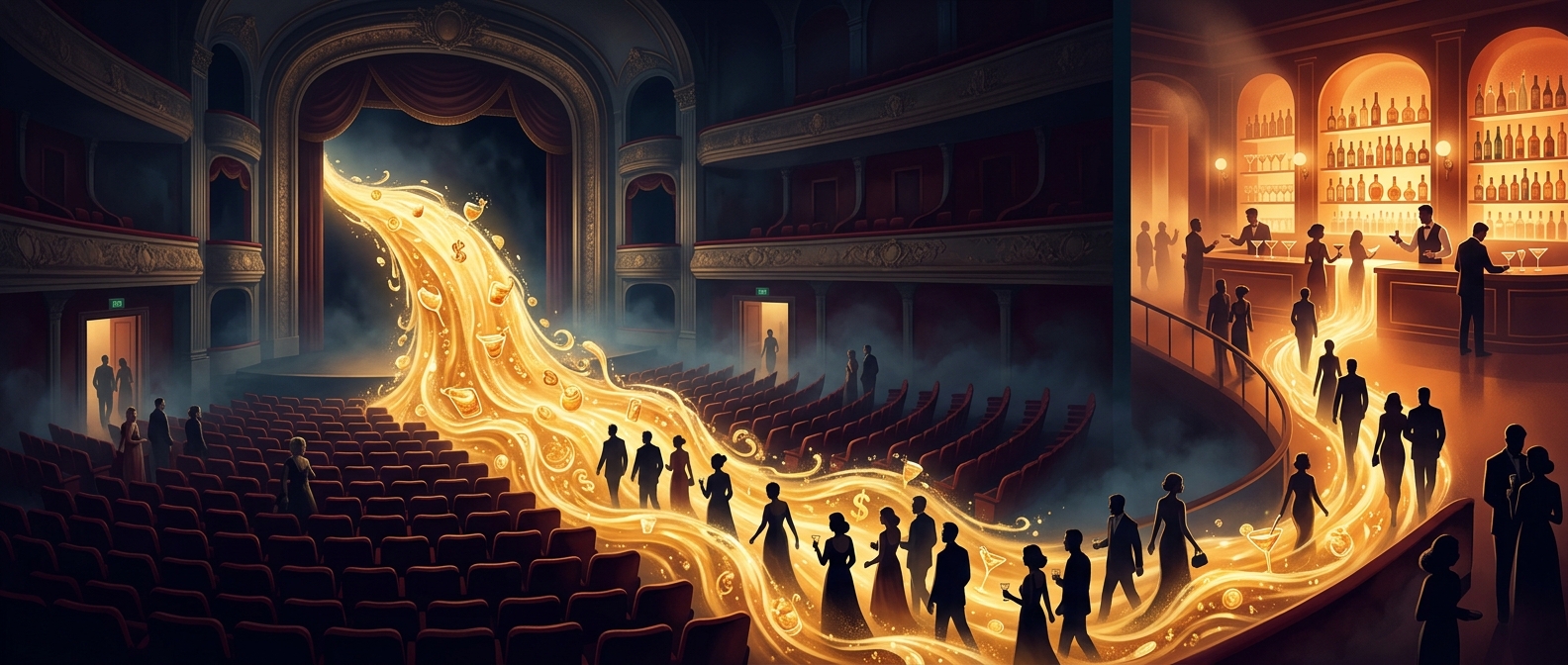
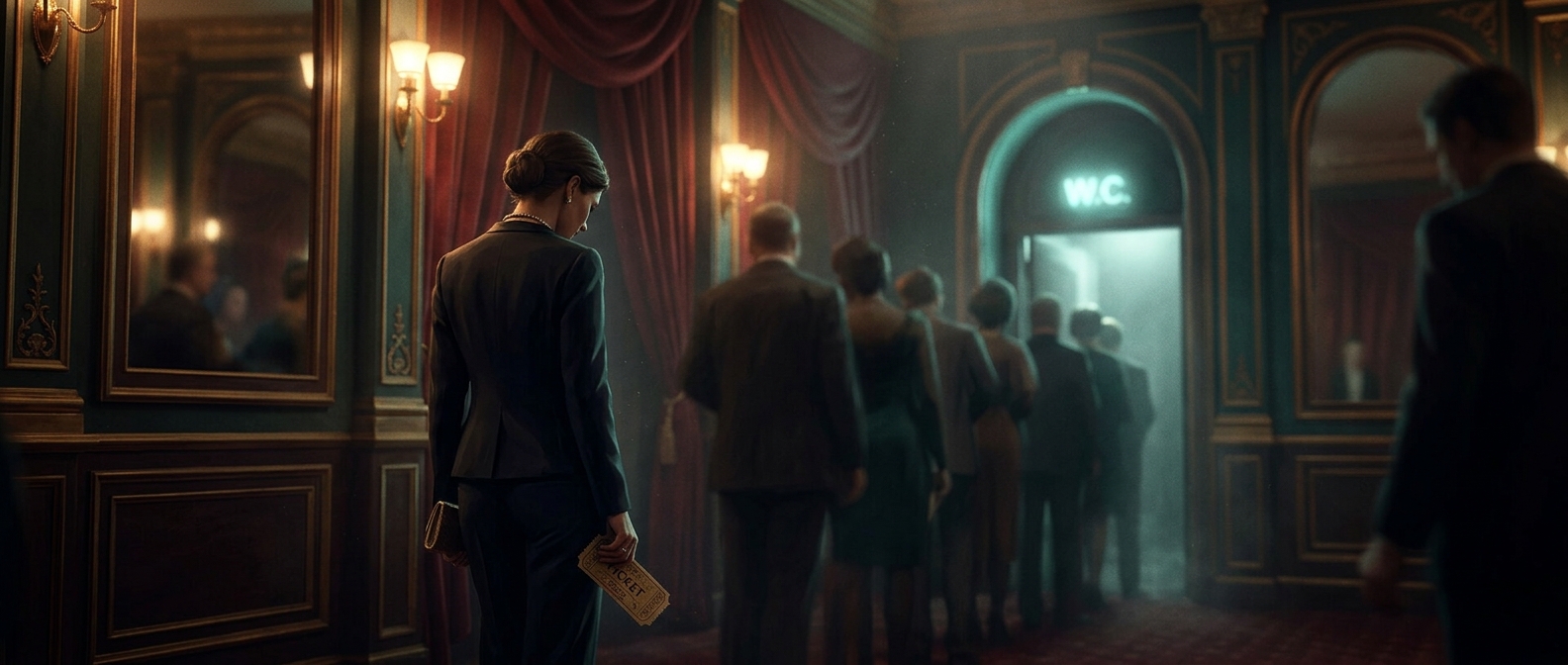
A theater intermission turns a steady stream of restroom visits into a synchronized rush. During the performance, people generally stay seated; once the lights come up, hundreds may decide that the same short window is their chance to go. The crowd is not arriving randomly across the evening—it is arriving in a wave.
That wave can overwhelm even a restroom that works adequately between acts. Each person needs time to enter, use a fixture, wash up, and leave. The room’s capacity is therefore limited not just by how many stalls or sinks it has, but by how quickly those spaces can turn over. When arrivals briefly outpace departures, the queue grows.
The bottleneck is the whole route
The line may begin before the restroom itself. A narrow corridor, a doorway, or a small lobby can slow people down and keep a queue from spreading out. Inside, the flow can also be uneven: people waiting for stalls may block access to sinks or exits, while different restroom layouts and demand patterns can make one side move faster than another.
The intermission clock sharpens the problem. Patrons must leave enough time to get back to their seats before the performance resumes, so they tend to go early rather than wait for the rush to pass. That sensible choice helps produce the rush: many people make it at once.
Why a short break cannot fix it
Adding more time might ease the pressure, but it does not automatically make the crowd disappear. If most patrons still choose the same moment to leave their seats, the arrivals remain concentrated. A smoother flow depends on spreading those trips out or increasing how many people can move through each part of the route at once.
That is why the queue can look startlingly long within minutes. The restroom is serving an audience-sized burst of demand through spaces designed for people to pass through one at a time.