How a line can reach the front row
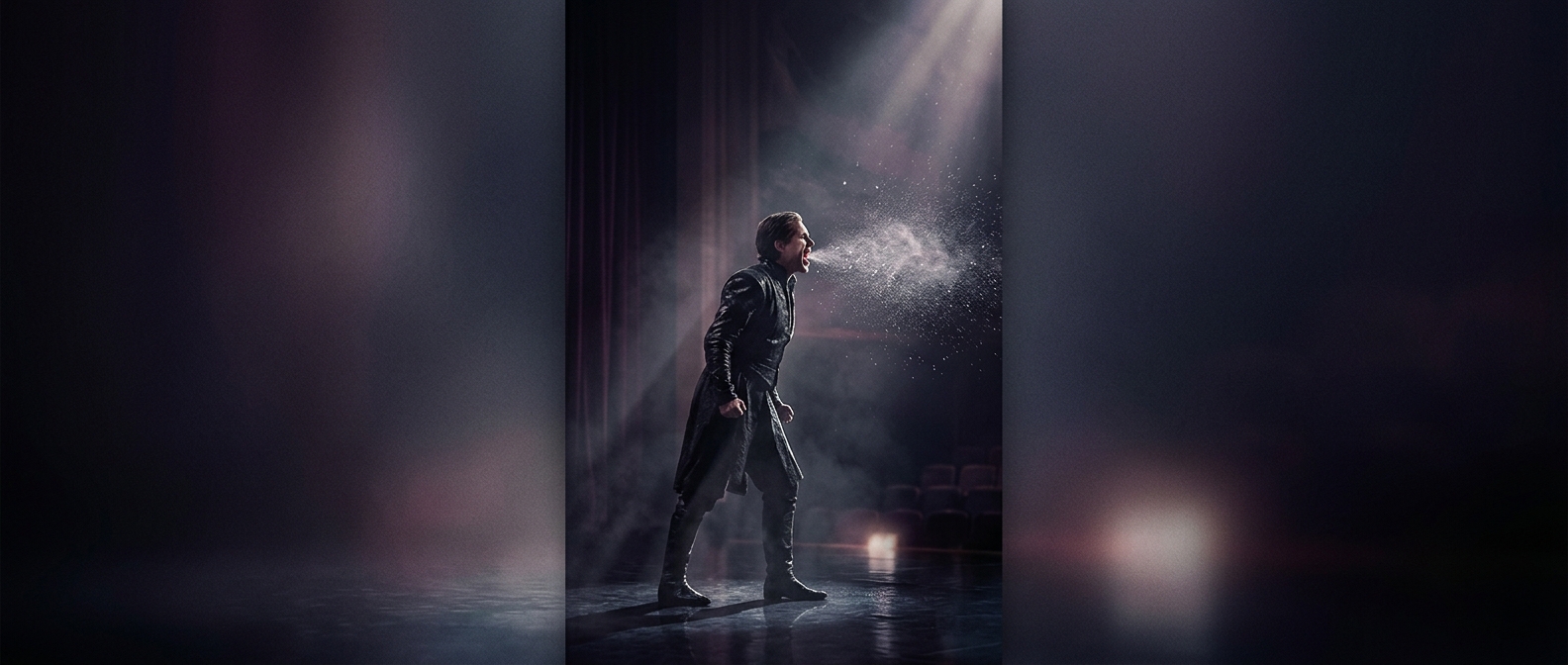
Speech is a stream of moving air, and speaking can release tiny droplets from the mouth. Some form as air passes over moist surfaces; others are produced when parts of the mouth briefly close and open during sounds such as “p” and “t.” A forceful delivery can push more air outward, carrying droplets beyond the stage edge.
The droplets are not all alike. Larger ones tend to fall relatively quickly, while smaller ones can remain suspended longer and move with the air. A person in the first rows is simply much closer to the speaker than someone farther back, so even a modest spray has less distance to disperse before reaching the audience.
Projection is not just shouting
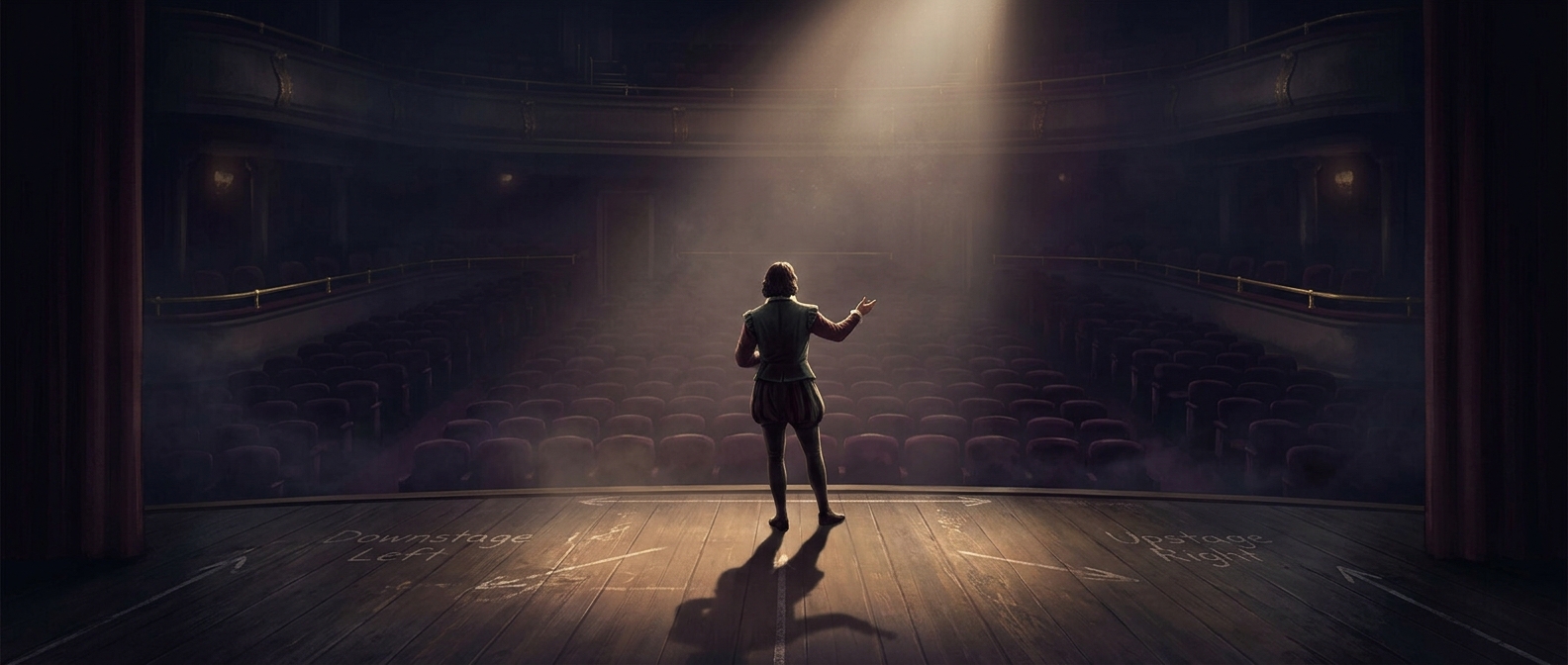
Before microphones became a routine part of performance, actors often had to make their voices carry through a large room. Good projection relies on breath and resonance—making the voice sound strong and clear—rather than merely yelling. But an especially intense scene, close speaking, or a naturally wet articulation can still send droplets forward.
That makes the front row a tradeoff: it offers an unusually direct view of the performance, along with the ordinary physical closeness of being near a live speaker. The “spit zone” is not a guaranteed feature of every show; it is a small, literal consequence of placing an expressive human voice just a few seats away.