How a two-person scene becomes separate shots
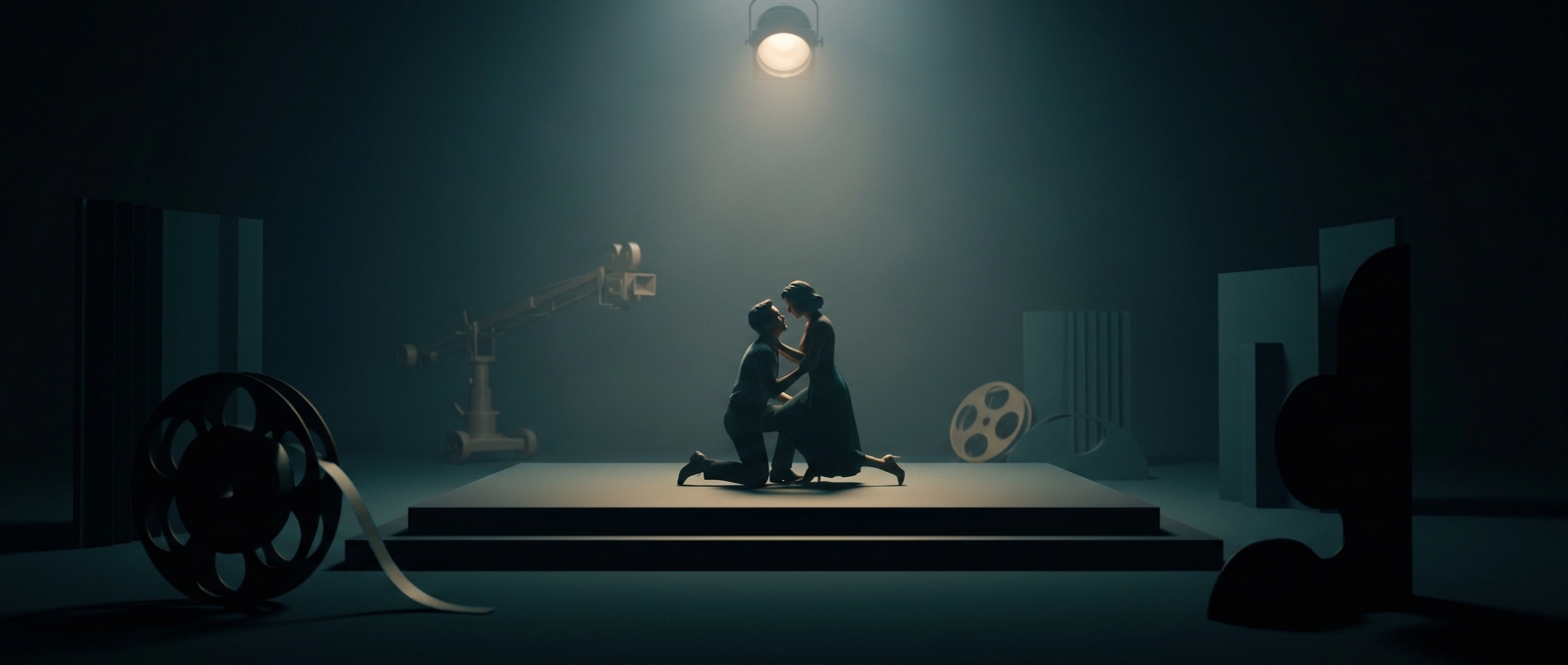
When actors cannot be on set together, a scene can still be filmed as a series of individual shots. The camera records one performer delivering a line and reacting, then records the other performer’s side—sometimes on another day. In the finished movie, those shots are cut together so the exchange feels continuous.
The key is matching the details that tell the viewer where everyone is. A performer may look toward a mark near the camera rather than directly at a scene partner. The camera can then be placed on the corresponding side for the other actor, preserving the sense that their gazes meet. Framing, lighting, posture, and the actors’ pauses also need to fit closely enough that the cut does not call attention to the gap.
Editing supplies the shared moment
A scene is not assembled simply by alternating lines. Editors choose among the recorded takes, fitting a spoken response to the other actor’s words and deciding when to show a face listening, hesitating, or reacting. Those reaction shots can make the exchange feel reciprocal even though the performers were not sharing the moment in real time.
That approach gives a production flexibility when schedules do not align, but it shifts some of the work onto coordination and editing. The intimacy the audience sees is built from separate performances, carefully matched so that a glance or pause appears to pass between two people.