Why a Flying Cape Can Cost a Scene Its Dialogue
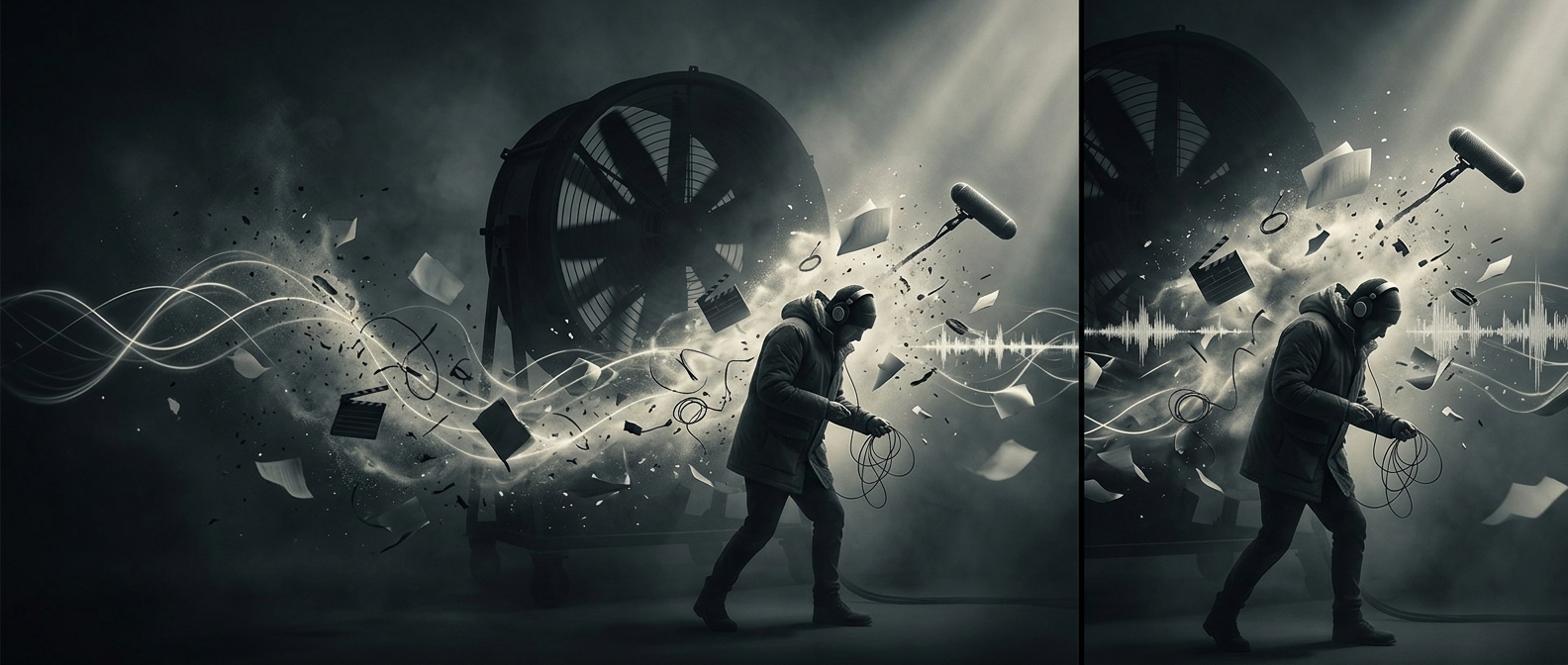
A cape does not need a literal jet engine to look as if it is caught in a gale. Film crews use powerful wind machines—large fans built to move enough air to lift fabric and drive it dramatically behind an actor. But the same spinning blades and rushing air that create the image also make a loud, uneven roar.
That noise is a problem for production sound. A microphone can capture an actor’s voice along with the fan, but it cannot cleanly separate every spoken word from a wall of mechanical rumble. Wind can also buffet the microphone, adding low-frequency thumps that obscure speech. Moving the microphone farther away may reduce some of that disturbance, but it also makes the dialogue quieter and lets in more noise from the set.
The Performance Is Recorded Twice
When usable dialogue cannot be captured, actors return to a quiet recording space and perform the lines again while watching the filmed scene. This process is called automated dialogue replacement, or ADR. The actor matches the original timing, emotion, and mouth movements so the new recording can be synchronized with the picture.
ADR is not necessarily a sign that a scene went wrong. It is one way filmmakers separate two competing goals: getting a convincing physical effect on camera and getting clear speech on the soundtrack. A cape may need a strong, steady blast of air to billow convincingly; a spoken line needs a microphone signal that is not buried under that blast.
The tradeoff is tangible: the audience sees the wind in the fabric, while the actor’s voice may be captured later in a silent room. The scene’s apparent weather and its audible dialogue can come from two different moments of production.