Why a Real Uniform Can Be Cheaper Than a Replica
A production dressing a large crowd may need dozens of uniforms that look alike from a distance and hold up through repeated takes. Making each one from scratch means paying for materials and sewing time; when suitable vintage garments are available to rent or reuse, they can be the less expensive option. Their worn fabric, seams, and small variations can also look convincing on camera without extra distressing.
That bargain comes with limits. A vintage uniform may not fit every performer, and the wardrobe team has to keep track of which garment goes to whom. If an actor changes costumes between scenes, the pieces must remain consistent enough for the scene to cut together. Replacing a damaged or missing item can be harder than ordering more newly made clothing.
The Heat Is Built Into the Fabric
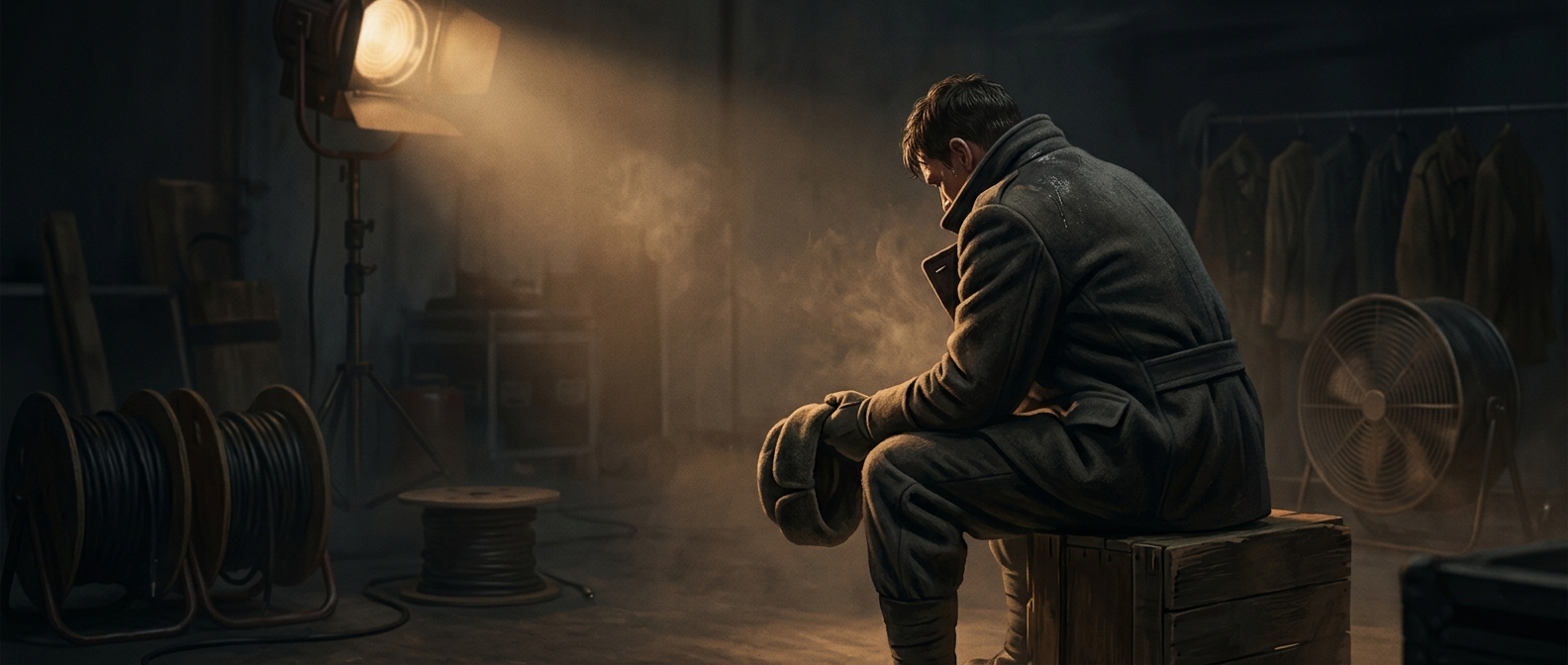
Many older uniforms are made of thick wool. Wool can help retain warmth, but a dense garment also holds body heat and makes it harder for sweat to evaporate quickly. Under hot lights or during repeated marching, an extra can therefore overheat even when the uniform looks ordinary on screen. The camera records the period silhouette; it does not show how much heat the layers trap.
Wardrobe choices are thus a practical tradeoff: authenticity and lower upfront cost on one side, fit, replacement, and comfort on the other. For the performer in the ranks, that tradeoff can mean that a scene lasting only minutes on screen requires enduring a heavy uniform through repeated takes.