Why a Beard Has to Survive the Close-Up
A fantasy beard is not just a costume accessory: it has to read as hair when the camera comes close. Coarse yak fibers give makeup artists an uneven, wiry texture that can suggest a life outdoors more convincingly than a uniformly smooth mass. That roughness also helps the beard hold a deliberately unruly shape, rather than looking neatly groomed or freshly manufactured.
Building the Look One Fiber at a Time
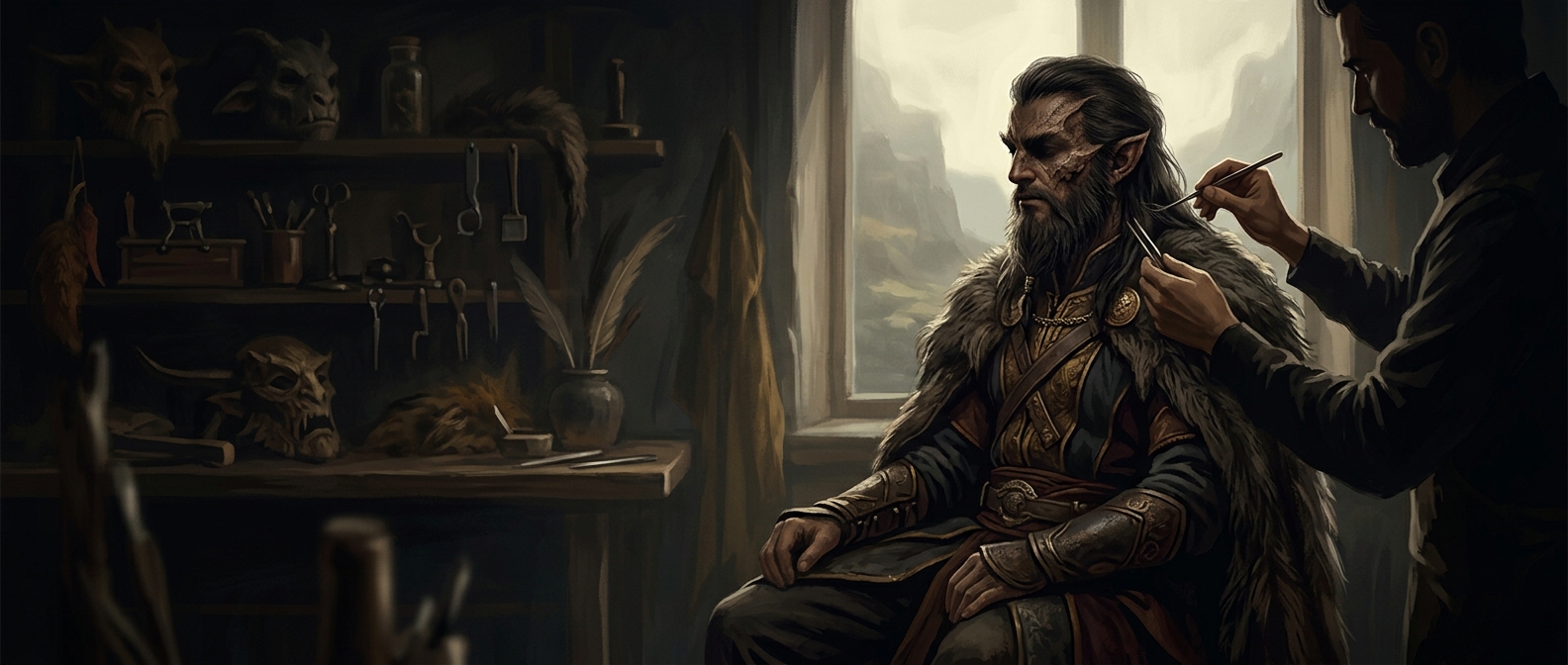
For facial hair applied directly to an actor, the challenge is making the disguise follow a moving face. Artists attach the fibers with skin-safe adhesive, placing them in the direction and density needed to create a believable beard or moustache. The handmade process takes time, but it lets them control the outline and texture around expressive areas such as the mouth and cheeks—places where a rigid, pre-shaped piece can look less natural.
The material and the method work together: yak hair supplies the coarse visual character, while hand application lets the makeup team shape it to the performer. The result is designed not merely to look rugged in a still image, but to keep that impression as the actor speaks and moves.