A Hidden Surface Takes the Wear
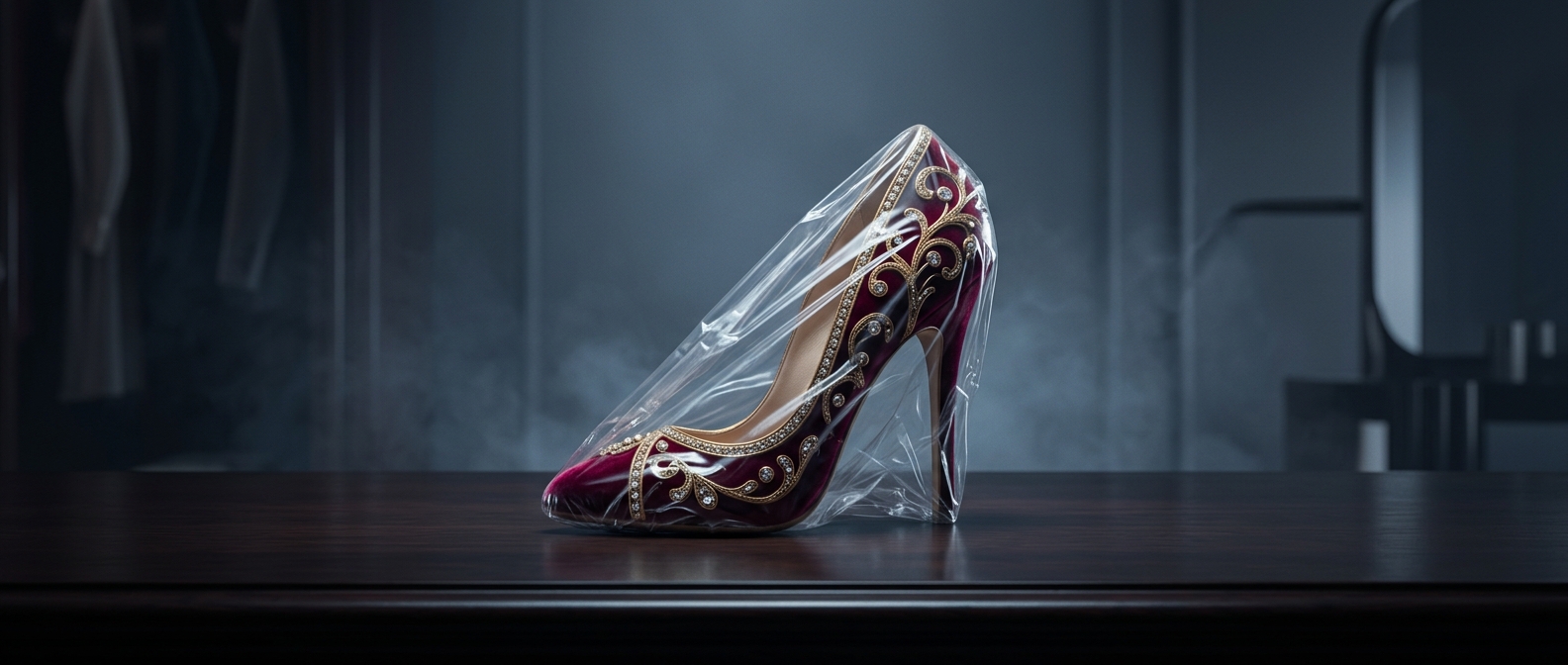
A shoe’s sole is easy to overlook because it usually faces away from the camera. But it is the part that repeatedly meets floors, pavement, and grit—and small abrasions can accumulate as actors walk through takes and scenes. A clear layer over the sole acts as a sacrificial barrier: the floor rubs against the covering rather than directly against the shoe’s finish.
That matters especially when footwear is borrowed rather than owned by the production. A rental has to leave the set in returnable condition, and damage can complicate its return. Protecting the underside helps keep ordinary on-set use from becoming permanent wear.
Protection Has to Stay Out of the Picture
The covering is useful precisely because it is placed where it is least likely to show. It can help preserve the shoe without changing the look the audience sees, an important distinction when a costume must match across repeated shots. If the sole is visible in a scene, though, any protective layer would need to be considered against that shot’s appearance and the actor’s footing.
It is a small piece of production problem-solving: preserve the part of a costume most exposed to friction, while keeping the protection itself out of view.