The shell was a wearable effects rig
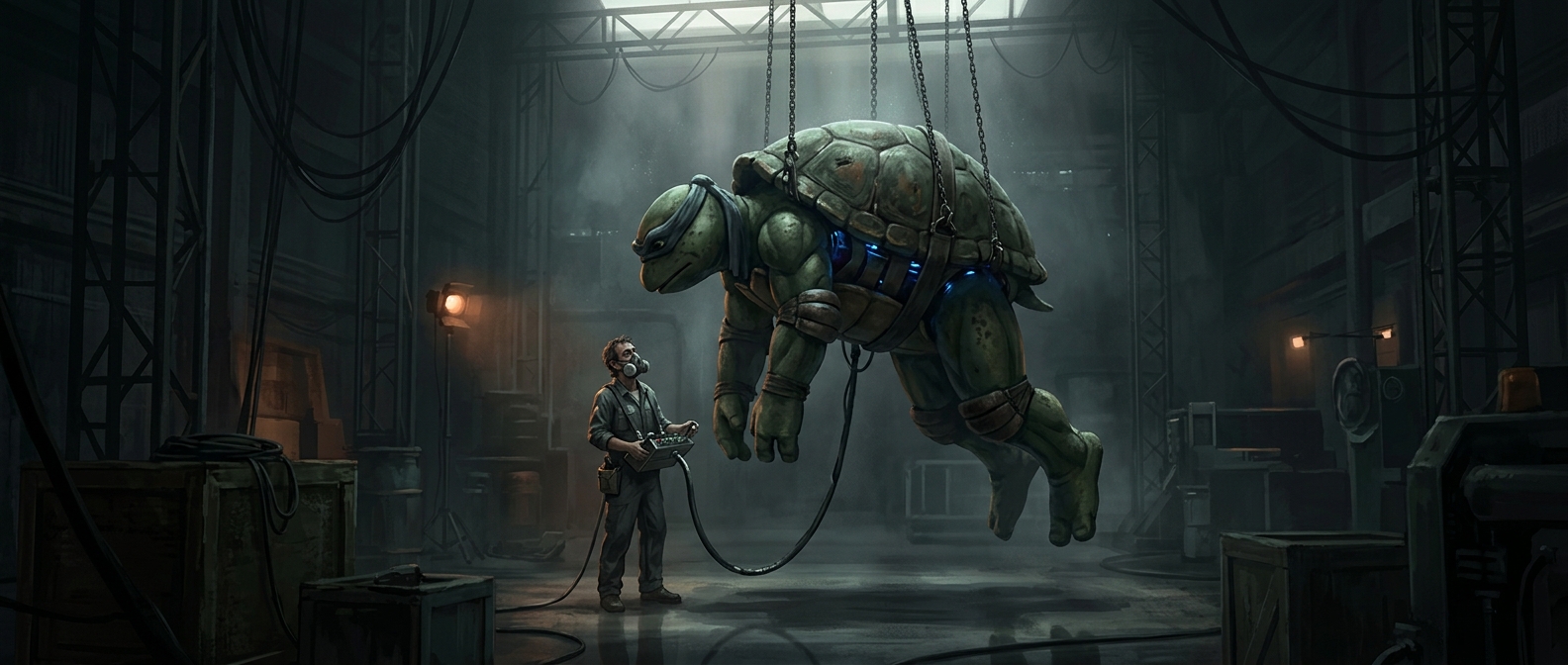
The 1990 film’s Turtle costumes had to do more than cover performers in foam and fabric. Their faces needed to move—especially the eyes and mouths—so the shells also housed animatronics: small mechanical systems that make a puppet’s features move. That machinery added weight and made the suits less like ordinary costumes and more like compact, wearable props.
The load changed how the performers could work. A suit weighing more than 70 pounds was cumbersome to carry, and its enclosed shape limited comfort and movement. The actors also faced claustrophobia inside the shells, where getting out was not as simple as slipping off a jacket between takes.
Keeping the performers going
The production’s workaround was as practical as the costumes were elaborate: cold air was pumped into the suits through the turtles’ snouts. That gave performers some relief from the heat of working enclosed inside a heavy costume, while preserving the characters’ recognizable appearance on screen.
The compromise captures a basic challenge of live-action creature effects: every mechanism that makes a character look more expressive can add bulk, weight, or discomfort for the person inside. The turtles’ animated faces depended on machinery, but their movement and performance still depended on actors carrying that machinery through the scene.