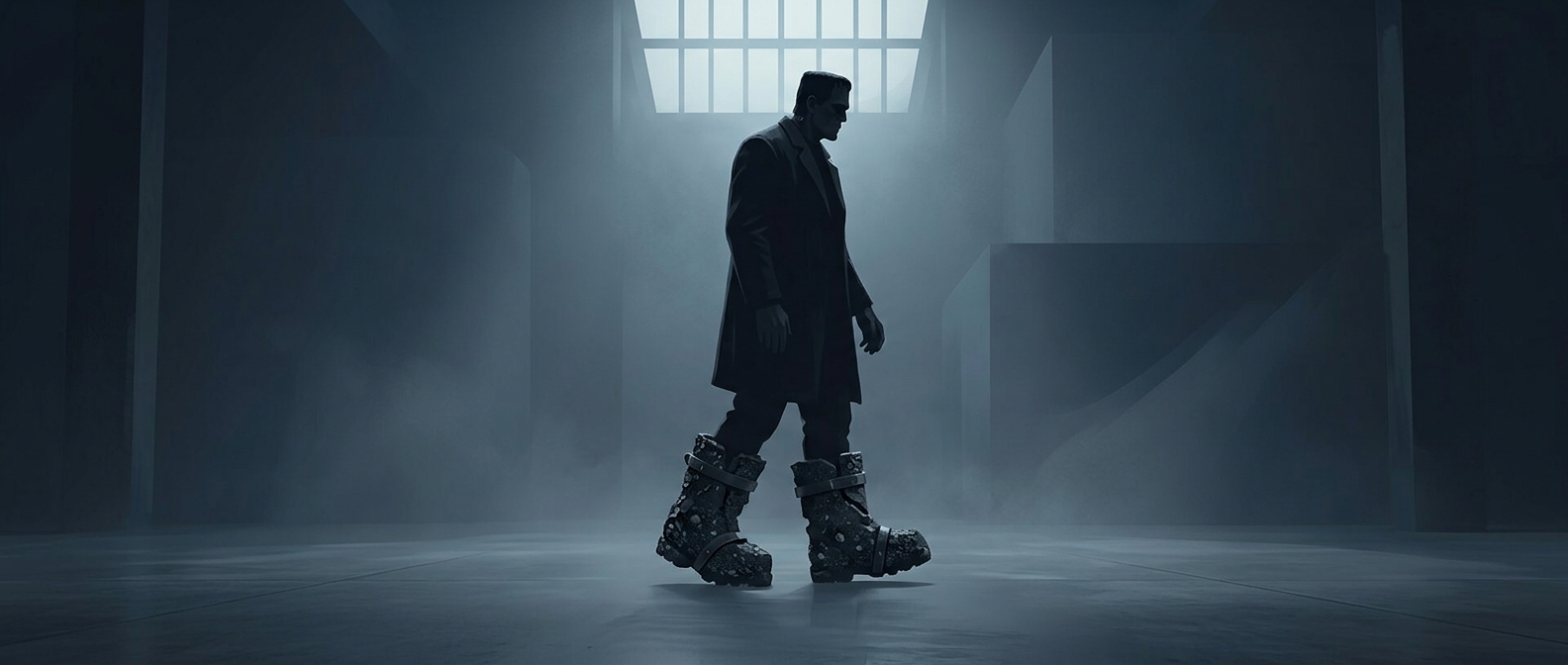
Heavy boots shaped the monster’s walk
For the 1931 film Frankenstein, Boris Karloff’s footwear did more than complete the creature’s look. Each boot weighed about 13 pounds and had been adapted from gear used in asphalt paving. That extra load made every step a physical effort: Karloff had to lift and swing substantial weight, helping produce the slow, uneven gait audiences associate with the monster.
A practical effect built into the costume
The boots turned a performance choice into a mechanical one. Instead of relying only on Karloff to imitate a heavy shuffle, the costume itself resisted quick, light movement. The weight encouraged a deliberate pace and gave the creature’s walk a cumbersome quality that fit his imposing appearance.
That is a useful distinction in screen acting: a prop can shape movement, not merely signal character. Here, the footwear imposed a real constraint on the actor, making the monster’s lumbering motion part of the costume’s physical design. The result was a memorable detail produced not by elaborate machinery, but by making each step genuinely harder.