How Plumbing Pipe Becomes Costume Armor
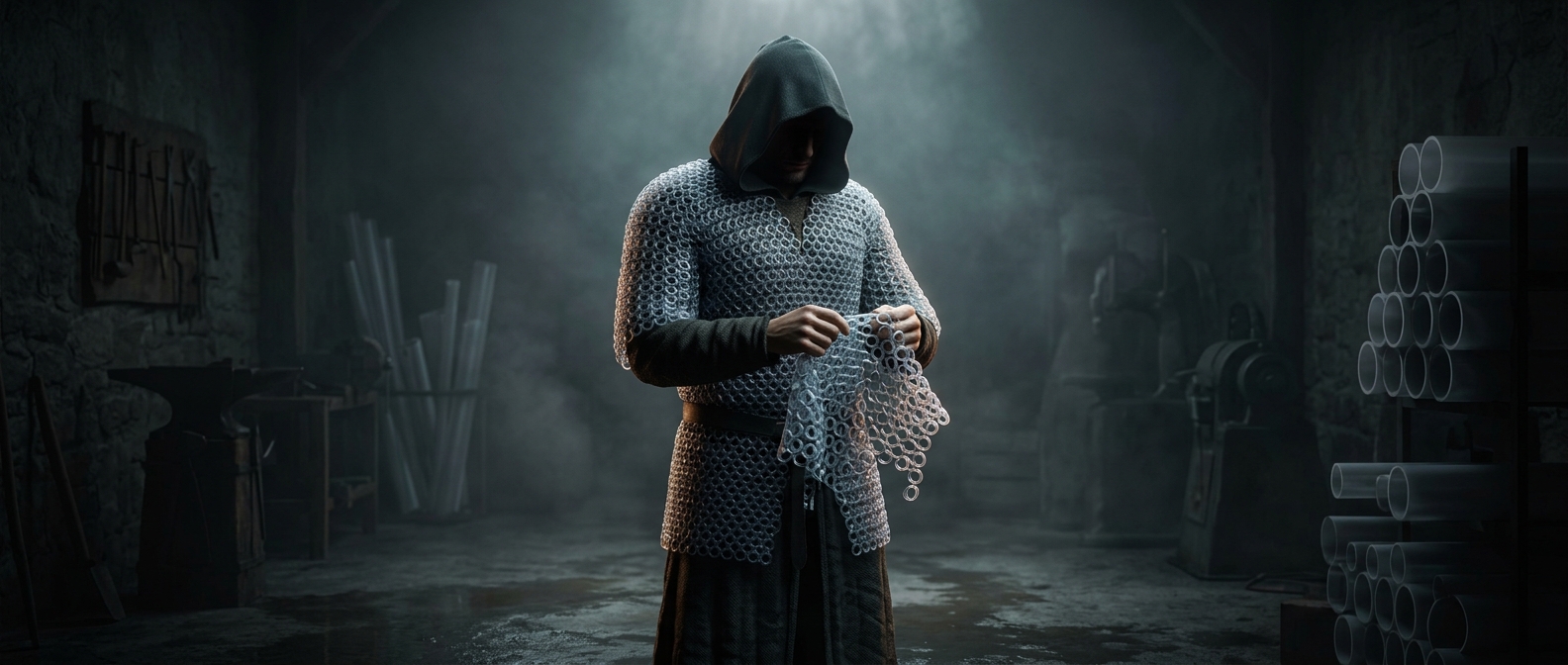
Real chain mail is made from interlocking metal rings. For a film costume, though, the goal is often to suggest that look on camera without putting the weight of metal on an actor. Costume makers can start with PVC plumbing pipe, cut it crosswise into many small rings, and link the rings into a flexible mesh.
The Useful Trick Is in the Shape
A pipe is already hollow, so slicing it produces rings rather than requiring each link to be bent from wire. The rings can be joined in a repeating pattern that hangs and shifts like chain mail. A coat or shirt takes thousands of pieces, but each plastic ring weighs far less than a metal one. That matters during long shoots, when performers need to move, rehearse, and wear layered costumes under hot lights.
Painting the surface silver gives the plastic the reflective appearance viewers associate with armor. The result is not meant to withstand a sword; it is a visual material, designed to read clearly at the camera’s distance while remaining manageable on set.
A Screen Effect With Practical Limits
Plastic rings can make a costume lighter and cheaper to handle, but they do not automatically look convincing in every shot. Their size, spacing, finish, and movement all affect whether the mesh resembles metal. Close-ups may call for different materials or construction, while a wider shot can sell the overall silhouette.
The clever part is the conversion: ordinary pipe becomes thousands of repeated links, and those links become a garment that moves with an actor. On screen, a familiar glint of “armor” can come from plumbing rather than a forge.