Why a Background Gown Can Demand Weeks of Work
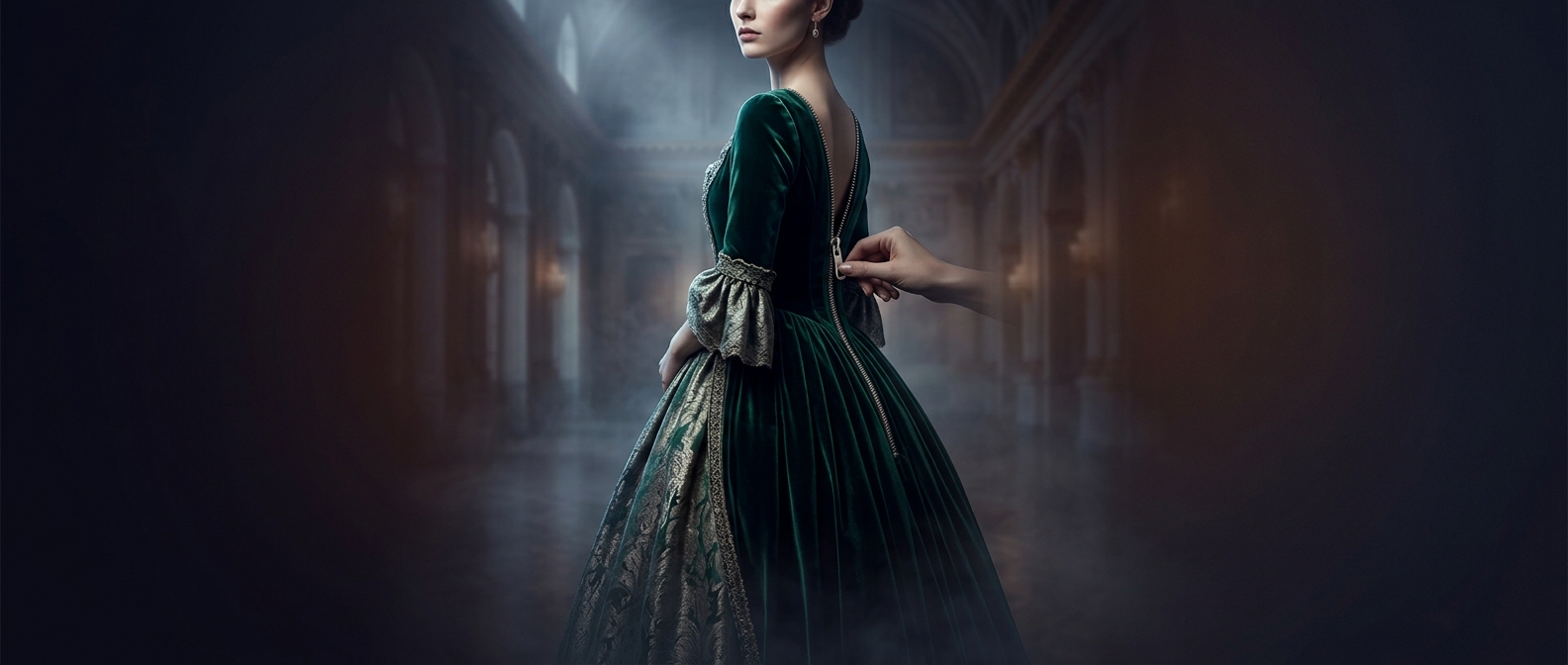
A costume is built for the whole scene, not just the seconds when the camera holds it in sharp focus. Even blurred in the background, a gown can add color, texture, and movement to the frame. Beads catch light differently from plain fabric, helping a figure read as ornate or formal without pulling attention from the main action.
Handwork Has a Slow, Practical Logic
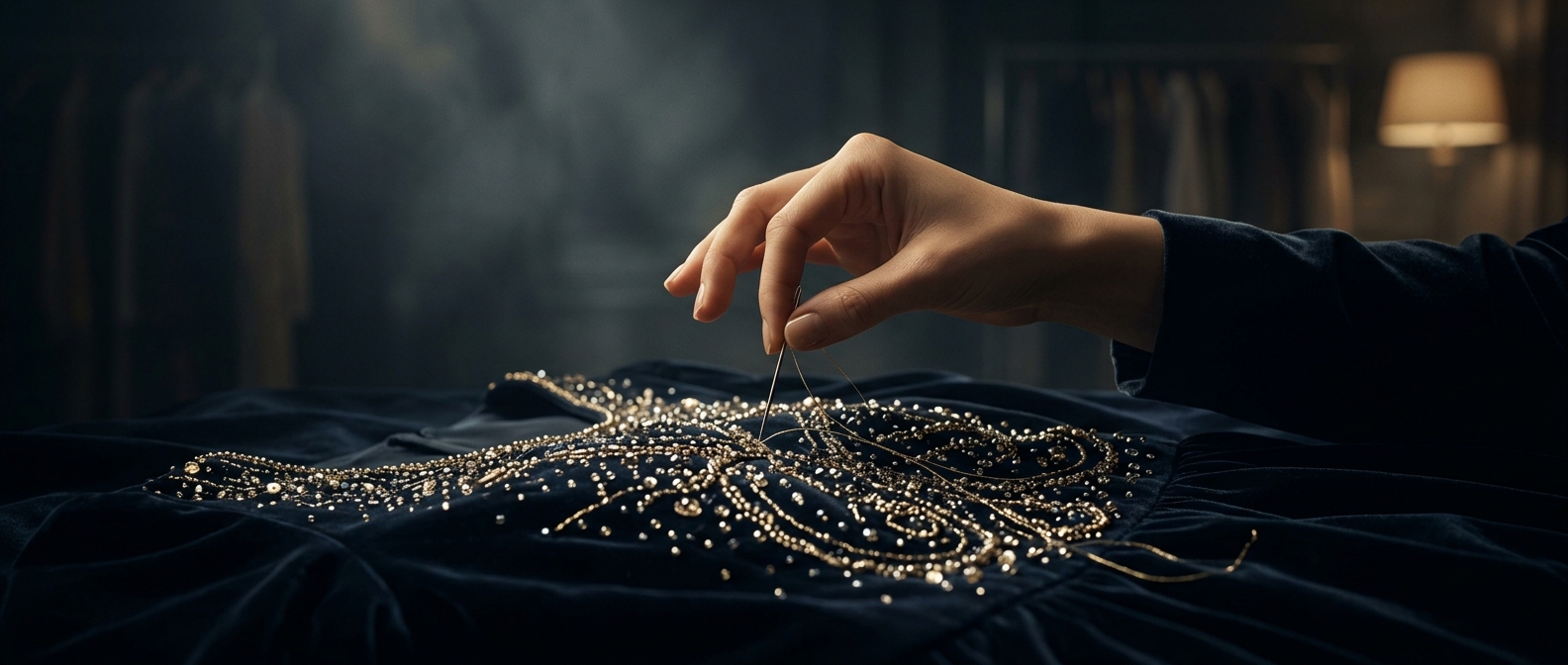
Beadwork is attached piece by piece, and the arrangement has to suit the garment’s shape. The maker must account for seams and folds so the pattern does not break awkwardly when the wearer moves. The gown also has to remain wearable: decoration that is too heavy or poorly secured can tug at the fabric or come loose during a scene.
That makes the work more than filling a patch of cloth. Each stitch helps the surface look intentional from the camera’s distance, while the garment still needs to behave like clothing on set. A close-up may reveal individual beads; a soft-focus shot may register only their shimmer. Either way, the material affects what the camera sees.
Screen Time Is a Poor Measure of Labor
Film production divides attention among many departments, and costume work often happens before a scene is filmed. The finished gown must be ready when needed, regardless of how briefly it appears in the edit. A few seconds on screen can therefore contain weeks of preparation, compressed into a fleeting detail that helps make the fictional world feel fully dressed.