A hidden closure keeps the scene moving
A costume can look right for the camera without being built exactly like a garment from the period. In a tightly scheduled production, getting an actor dressed quickly—and repeating the same look after every take—can matter as much as reproducing historical construction. Lacing a fitted garment takes time, especially when it must be tightened evenly and adjusted to the wearer.
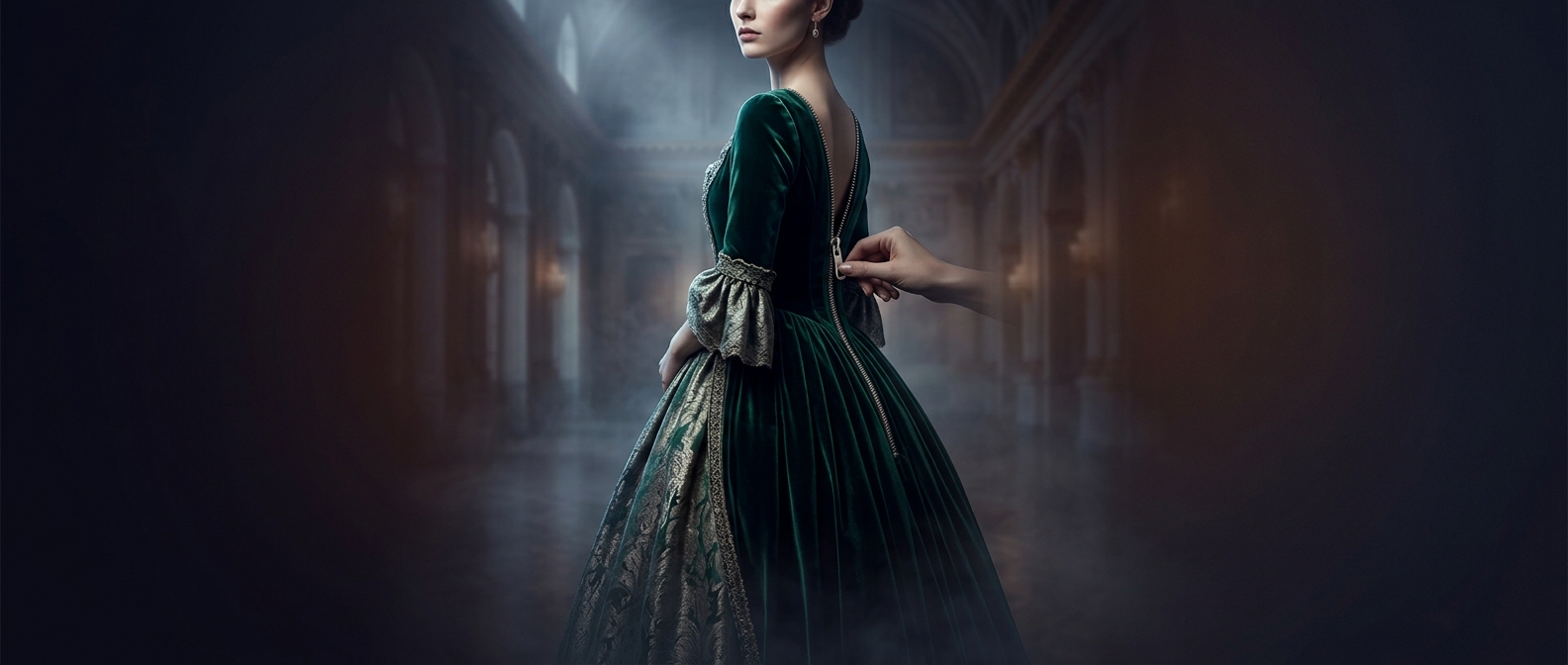
A zipper offers a faster way in and out. Costumers can place one along a seam or beneath an overlapping strip of fabric, so the audience sees the period silhouette rather than the modern fastening. The flap also helps conceal the zipper’s teeth and pull, which might catch the light or show in a close shot.
The outside sells the period
The trick is to preserve the features viewers notice: the garment’s shape, fabric, trim, and how it sits on the actor. A concealed zipper changes the dressing process, not necessarily the visible design. From the camera’s perspective, a costume that closes quickly can still read as carefully made historical clothing.
That practical choice also helps with continuity—the effort to make a costume look the same across separate shots. If an actor can get dressed again quickly, the crew can reset between takes without repeatedly working through long laces. The modern detail stays under the fabric; the scene keeps its historical illusion.