Why a Weighted Hem Makes a Cape Read as Menacing
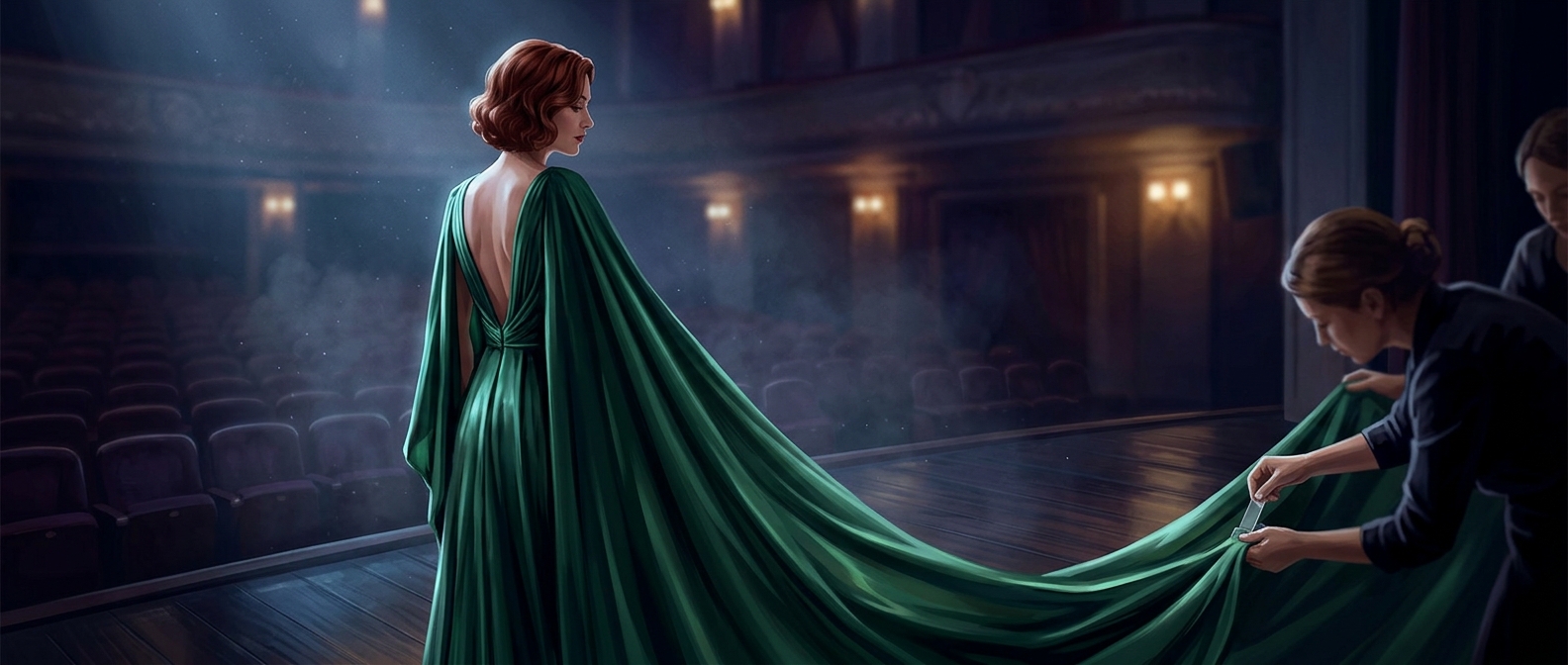
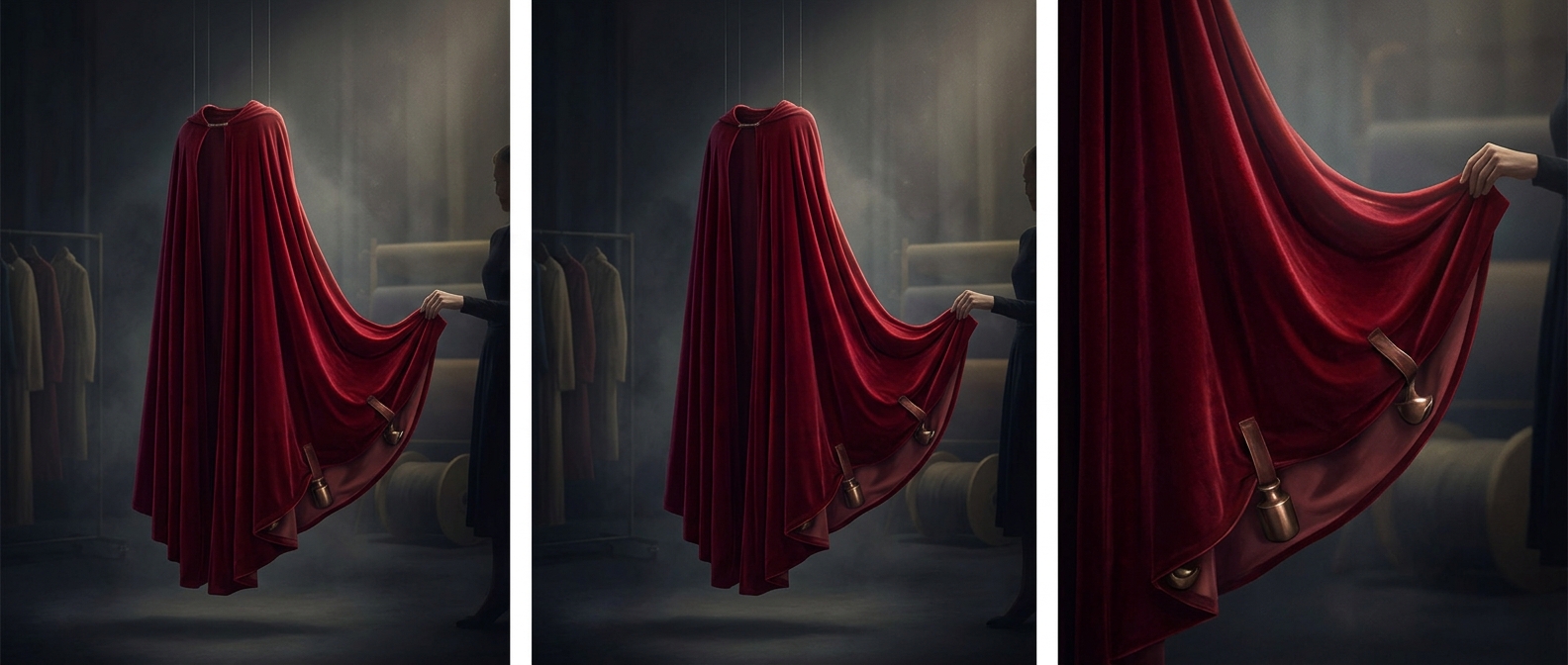
A cape has to do two different things on screen: hang in a clear silhouette when the character stands still, then move in a way the audience can read when the character turns or strides. Lightweight fabric may flutter at the slightest air current, breaking the outline into distracting ripples. Weight near the bottom gives the cloth a steadier fall.
The key is where the weight sits. A weighted hem acts like a low anchor: gravity draws the fabric downward, while the moving body pulls the cape sideways. That push and pull can produce a broad, delayed sweep rather than a quick flutter. The cape seems to follow the villain’s movement, making a turn feel deliberate and amplifying the gesture without changing the actor’s performance.
A Small Costume Choice With a Visible Tradeoff
The effect depends on the fabric, cut, and movement. Too little weight may leave the cape twitchy; too much can make it cumbersome and slow to settle. The costume team has to balance the desired drape against the actor’s ability to walk, turn, and perform safely. A hem that looks dramatic in a still photograph may behave differently once the performer is moving under lights or in front of a fan.
That is why the swish is not simply a matter of choosing a “villainous” fabric. The hem helps choreograph the cloth: it shapes how quickly the cape responds and how cleanly it falls back into place. A brief turn can therefore leave a visual after-effect—the cape still moving after the character has stopped—that makes the entrance feel larger than the movement itself.