Why a wet shirt is hard to keep wet
A bead of real water is an unreliable prop. Under hot lights, on a warm body, or simply while a crew resets the camera, it can shrink, run, or disappear. That creates a continuity problem: two shots meant to happen seconds apart may be filmed hours or days apart, and a damp patch that changes shape can make the edit feel as if the character’s shirt has suddenly dried.
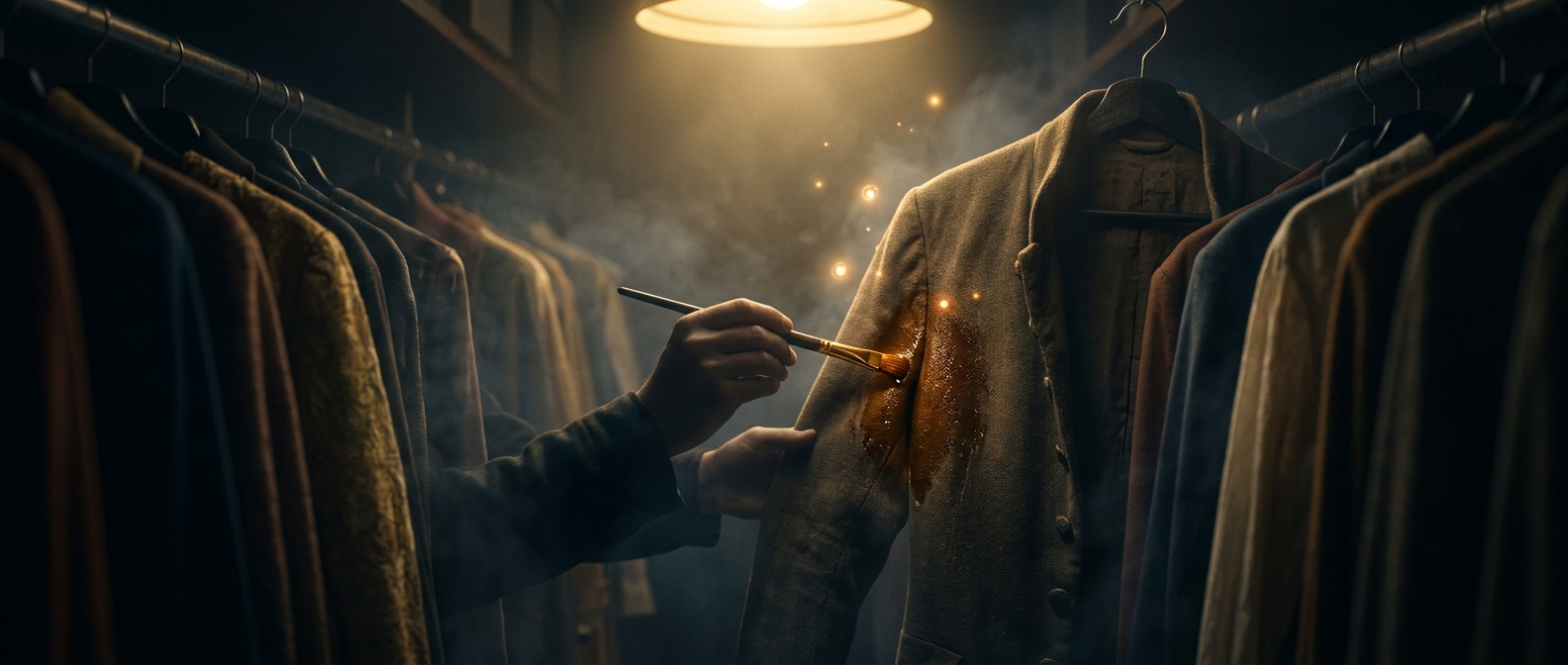
Costumers solve this by treating sweat as a repeatable pattern, not a liquid that must stay fresh. They place the stain where the story calls for it—perhaps under the arms or across the back—and use a material that holds its look longer than water. A dark mineral-oil mark or a diluted-paint stain can remain in place while the crew resets, giving later shots a more dependable match.
The stain becomes part of the costume record
The trick shifts the challenge from keeping water alive to reproducing a design. Placement, size, and darkness all matter: a stain that spreads between setups can suggest a different level of exertion, while one that vanishes can break the scene’s timeline. The costume therefore has to be tracked alongside other visible details, such as how a sleeve is rolled or a collar sits.
There is also a practical tradeoff. A convincing mark must read as sweat on camera without behaving like fresh moisture, and it must suit the garment and the shot. The result is less a spontaneous bodily detail than a carefully maintained visual cue—one that lets a character look exhausted on Monday and still match the same moment when filming resumes weeks later.