Playing Dead Means Controlling Tiny Movements
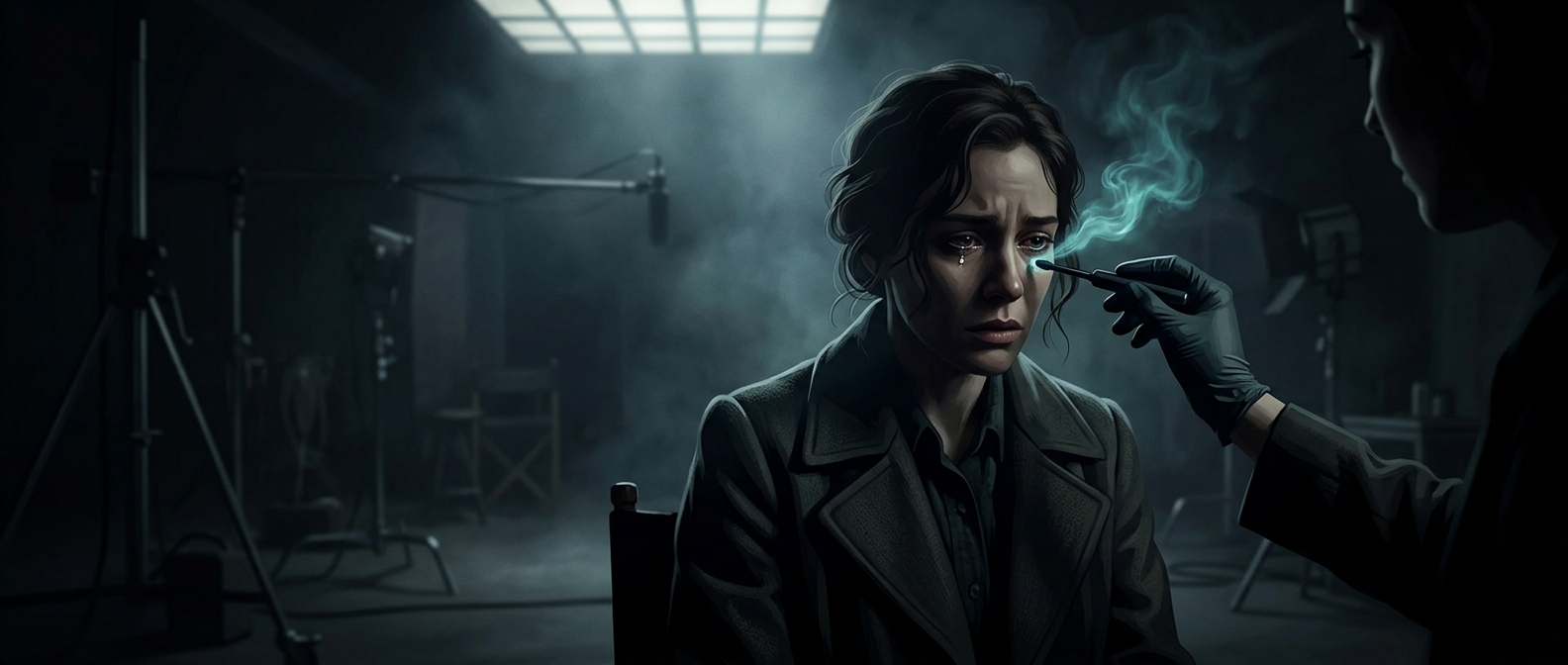
A camera can make stillness more demanding than it looks. When an actor plays a newly dead person, even a shallow breath may lift the chest or shift the fabric over it. In a quiet close-up, that motion can draw the viewer’s eye and break the illusion that the body is lifeless.
The actor therefore has to manage ordinary movements that usually happen without conscious effort. Holding a breath can keep the torso still for a short take, while relaxed, steady facial muscles help prevent small changes around the eyes from suggesting alertness. The goal is not dramatic stiffness so much as the absence of the subtle signs audiences read as life.
The Camera Makes Small Details Matter
How difficult the performance is depends on the shot. A wide view may hide a slight movement; a close shot gives the audience more detail to notice. Lighting, clothing, and the camera’s angle can also make breathing easier or harder to see. Directors may work around the problem by framing the body differently or keeping a take brief, rather than expecting an actor to remain motionless indefinitely.
That practical constraint helps explain why a convincing corpse can require active performance. The actor is not simply lying still: they are suppressing the body’s automatic cues long enough for the camera to record stillness as death.