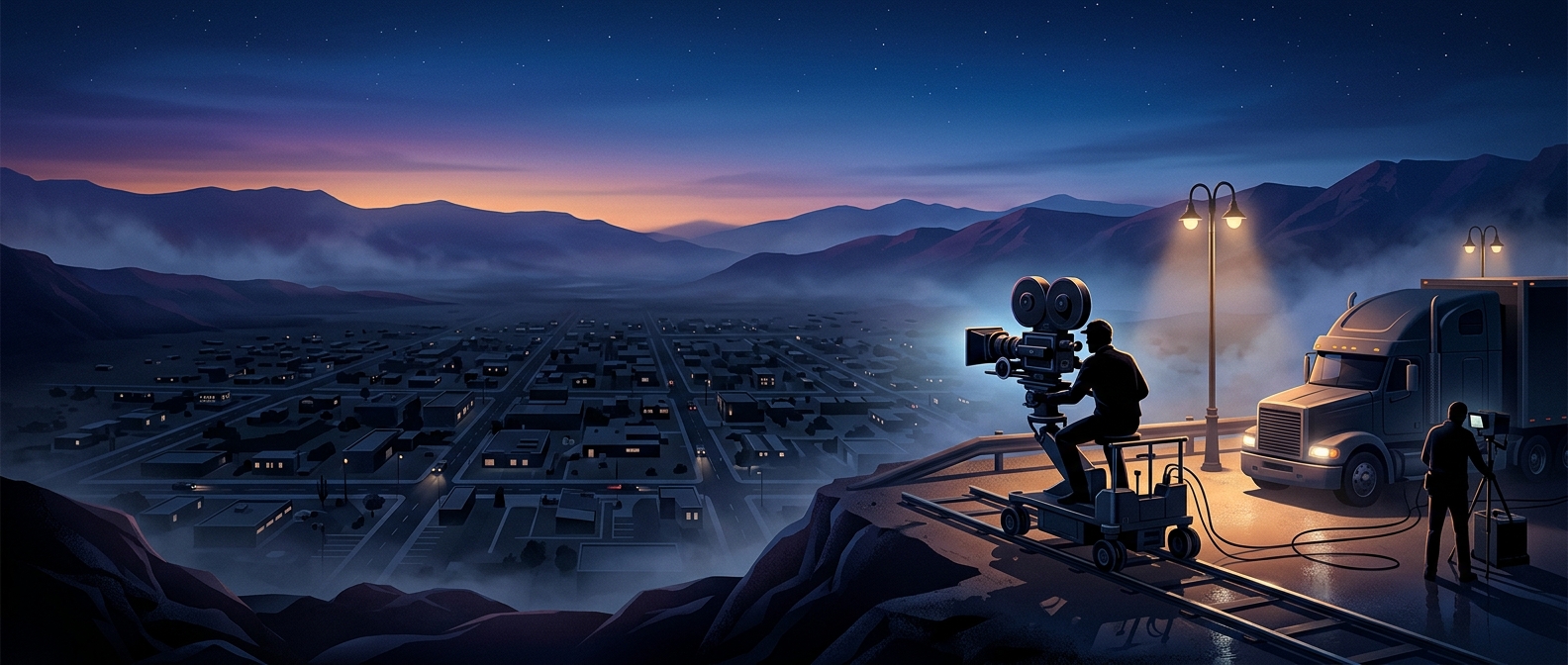
Why a dark street changes the scene
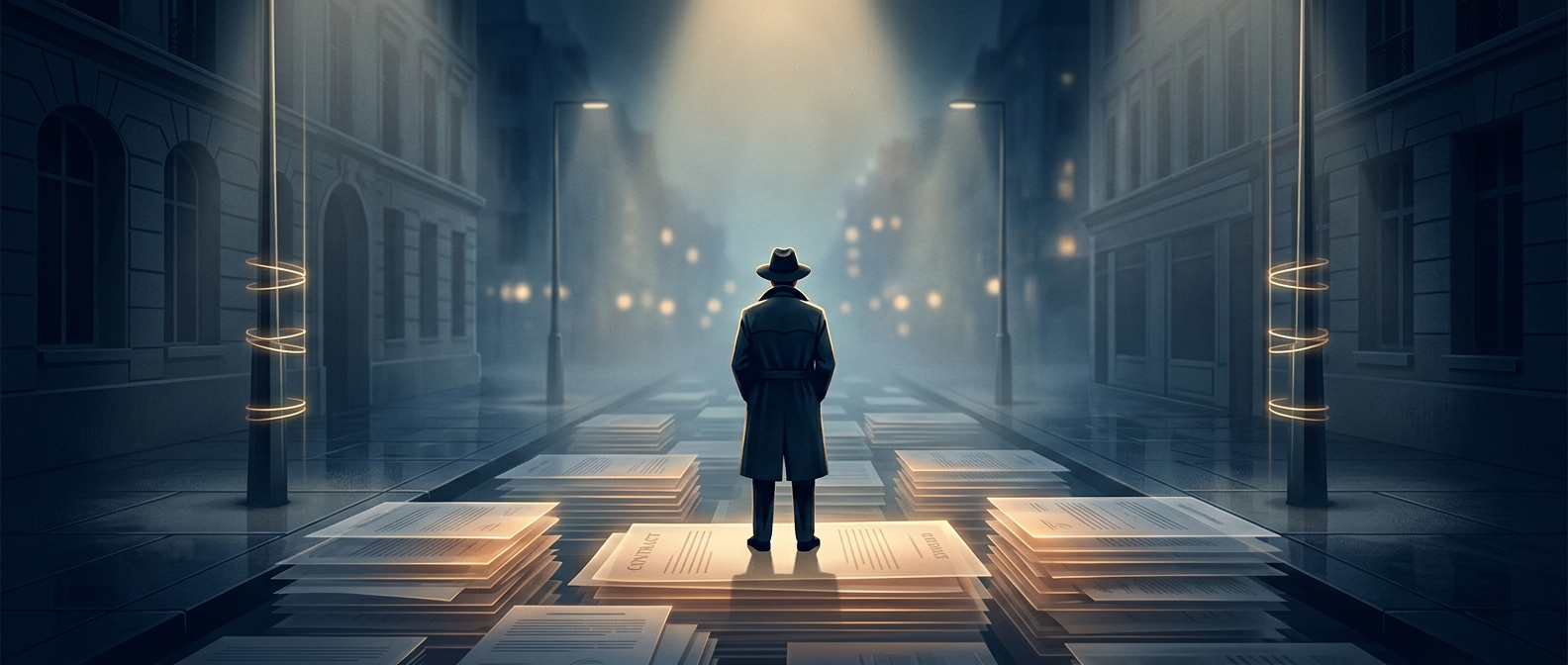
A period drama can build an old street from convincing façades and costumes, yet a modern streetlamp may still give the setting away. Its bright, often cool-toned light can spill across roofs, windows, and pavement, making the whole frame feel contemporary. Turning off public lights removes that unwanted glow, so the street reads more like a place without electric lighting.
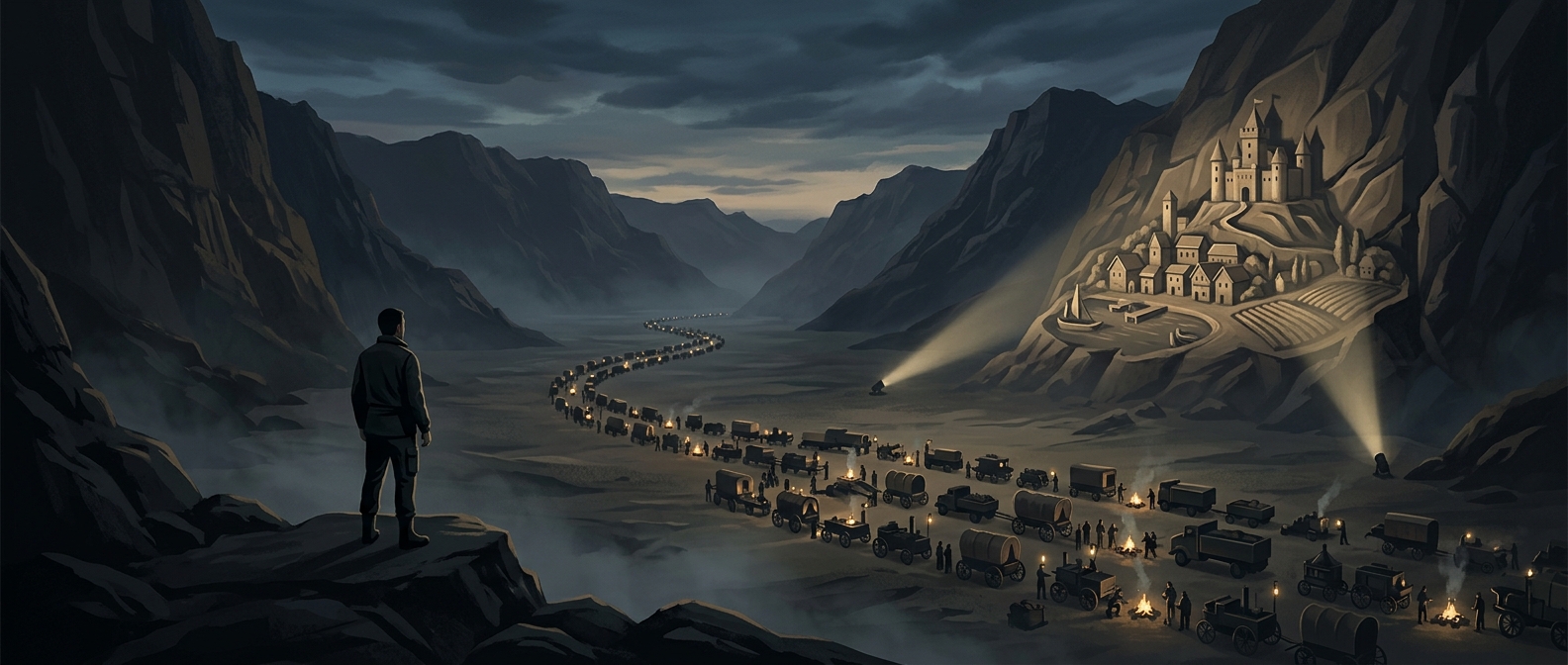
Darkness also gives the cinematographer more control. Instead of fighting fixed pools of municipal light, the crew can illuminate the scene with sources that fit its time period—such as lanterns, candles, or carefully positioned film lights made to resemble them. Those sources can guide the viewer’s eye toward a face or doorway without making the surroundings look evenly lit like a modern road.
A night of filming needs a plan
The switch is not simply a matter of finding the right street. Public lighting affects people who still need to walk, drive, or get home, so a shutdown has to be coordinated with the municipality. The production and local officials must account for the filming area, timing, and public safety; payment helps make the temporary disruption possible, but it does not remove those practical constraints.
Crews also have to work within the limited window. A darkened block may be useful only for particular shots, while nearby streets can remain lit and operational. That makes preparation important: cameras, performers, and equipment need to be ready before the lights go out.
The result is a small, temporary change to public infrastructure with a visible effect on screen. When the street is genuinely dark, the audience can focus on the period lighting in the scene rather than noticing the modern system the production had to switch off.