A snake’s movement depends on its surroundings
Snakes are ectotherms: they get most of the heat that powers their bodies from the environment rather than producing a steady internal temperature the way mammals do. Their muscles and nerves work differently as body temperature changes. In conditions that are too cool, a snake may move slowly; within a suitable warm range, it can respond and move more readily.
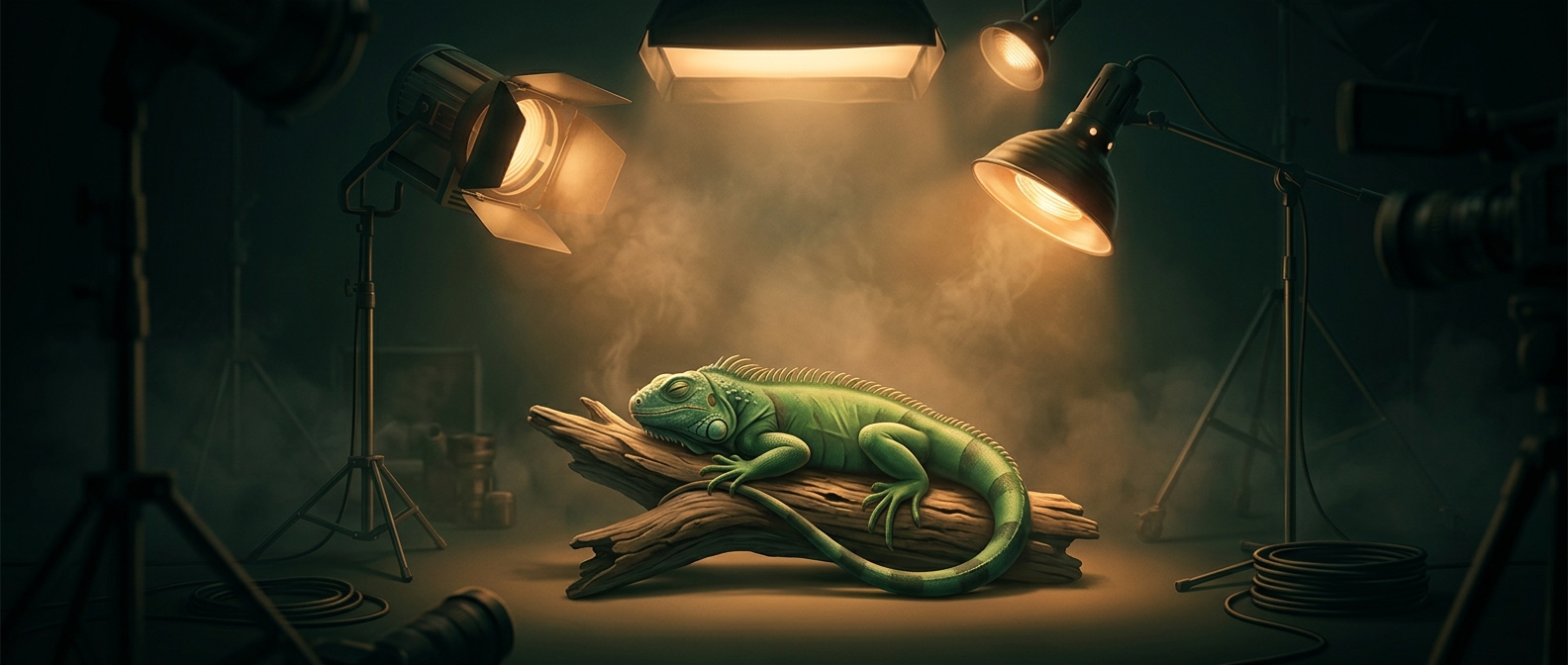
That makes studio temperature part of the scene’s practical setup. A crew may warm the space so the animal is more likely to behave as needed on camera—not because warmth guarantees a particular action, but because it affects how ready the snake is to move.
Heat is a production constraint, not a simple cue
The useful temperature depends on the species and the individual animal. Too much heat can be harmful, so “make it tropical” does not mean turning the whole set as hot as possible. The animal’s handlers have to balance the conditions needed for the shot with safe limits, while the crew works around the animal’s pace and behavior.
That can shape blocking—the planned positions and movements in a scene—and how long a take is practical. A snake is not a prop that can be switched on for each camera roll: its surroundings influence what it can comfortably do. The climate on set is therefore part of directing the scene, even when viewers never notice it.