How filmmakers make one dog look consistent
A movie scene may be filmed in pieces rather than in the order viewers see it. The camera might record a wide shot of a dog running, then close-ups, then another angle. In the edit, those separate recordings must feel like one continuous action: the same dog, at the same point in the run, reacting in a believable way.
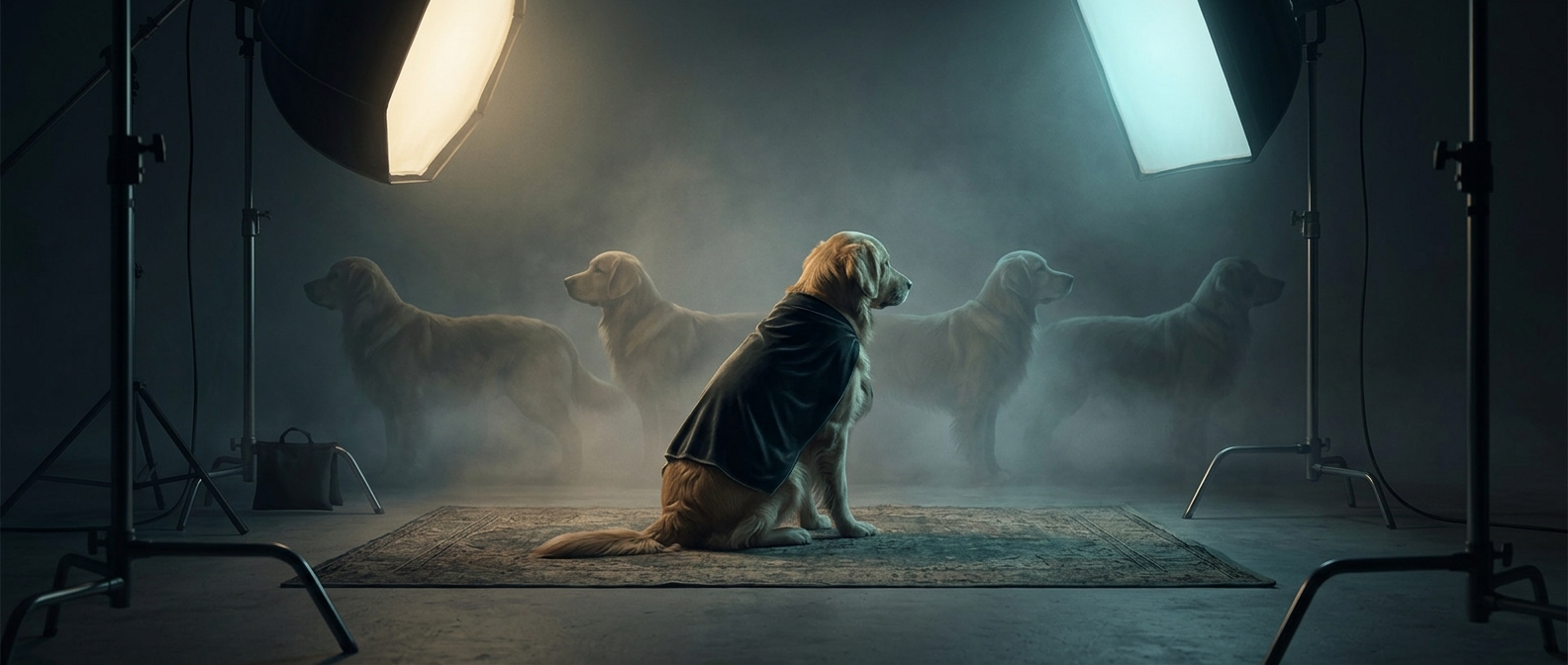
That is difficult to reproduce on cue. A dog may run faster, look toward a trainer, or lose interest from one take to the next. Using several dogs with similar appearances gives the crew alternatives when one animal is tired or no longer responding reliably. The editor can then choose the takes that fit together, instead of asking a single dog to repeat the action indefinitely.
The match happens on set—and in the edit
The dogs do not need to perform identically in every shot. They need to look close enough that viewers accept the cuts. Fur color and markings matter, but so do the direction of movement and the dog’s position in the frame. If one take ends with the dog moving left, for example, a shot of a similar-looking dog moving right may make the edit feel abrupt.
Trainers help the animals perform manageable actions in a controlled setting, while the camera and editing shape those actions into a longer scene. A cut can hide small differences between dogs, especially when the next shot changes angle or distance.
The practical payoff is not just more usable footage. Swapping performers can give each dog a chance to rest while the production continues, and it reduces pressure to demand the same behavior over and over from one animal. On screen, the result may look like a single uninterrupted run; behind the camera, it can be a carefully assembled sequence of short, well-matched moments.