Making a flock look spontaneous
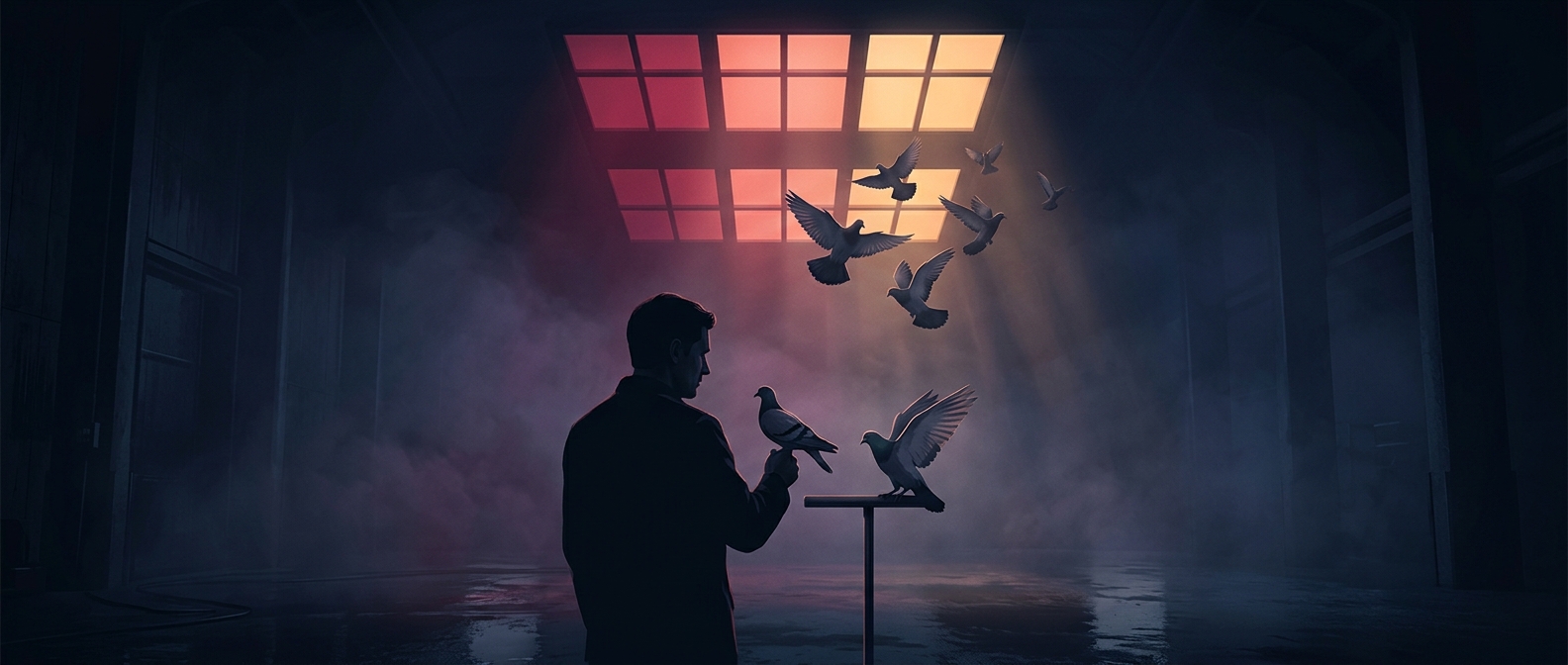
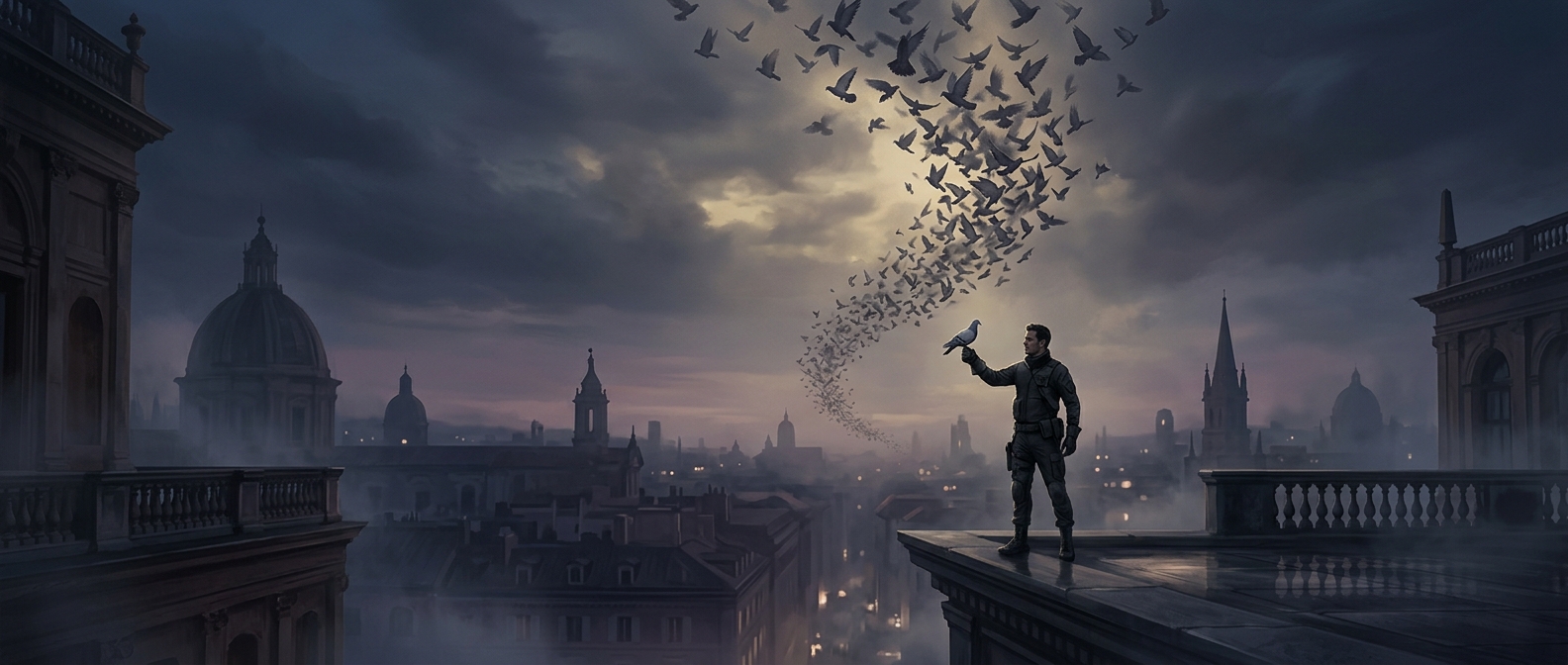
A mass takeoff may look like one clean burst on screen, but live birds do not move like a single prop. Each pigeon can hesitate, turn, or launch at a different instant. A pigeon wrangler helps make that unpredictable movement usable: the specialist handles the birds and coordinates their release with the crew’s planned action.
That timing matters because a camera records a brief slice of a much longer setup. If the flock lifts before the actor’s gesture, the moment loses its cause; if it rises too late, the shot may miss the intended image. The handler’s job is to help the birds take off within the window the camera can capture, while the crew is ready to roll.
Live movement, with practical limits
The goal is not to make every pigeon fly in identical formation. A flock’s appeal comes partly from its uneven, rippling motion. The wrangler instead helps produce a takeoff that reads clearly and can be repeated well enough for filming. If a shot needs another try, the team must account for the fact that live animals may not reproduce the same pattern on demand.
That is a different kind of control from an animation: the crew can plan the cue, but the birds supply the details. A specialist bridges those two worlds, turning a flock’s natural movement into a moment the camera can use.