How a Flash Becomes a Food Cue
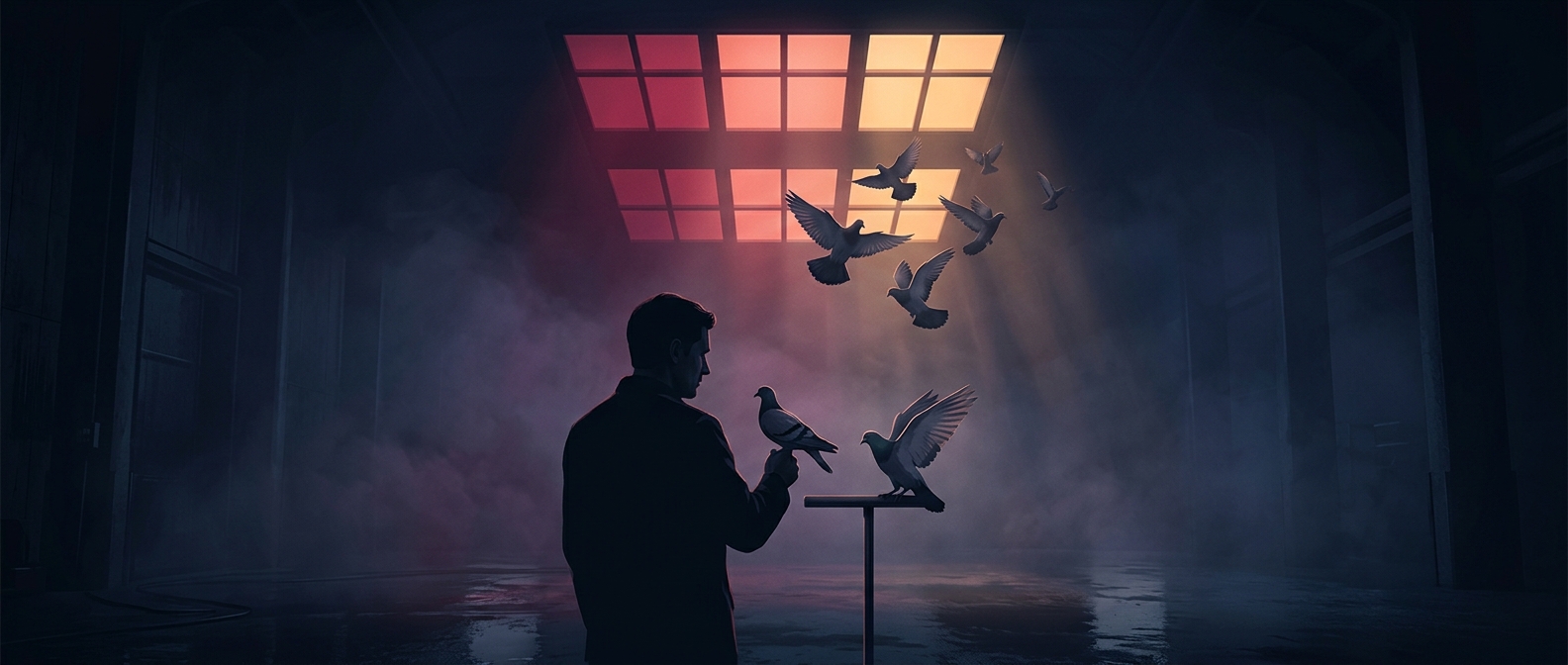
A flashing light has no built-in meaning to a pigeon. Its meaning comes from what repeatedly follows it: food. During training, a trainer makes food available at a location marked by a light and rewards the bird for flying toward that spot. Over repeated trials, the flash becomes a predictive cue—a signal that food is likely to be there.
Learning the Route, Not the Message
The process relies on two kinds of learning. The pigeon learns to associate the light with a reward, and it learns which action—flying toward the marked place—leads to that reward. If several lights or possible hiding places are involved, the trainer can reward the bird for choosing the location indicated by the cue.
This is not the pigeon interpreting a signal as a human instruction. It is responding to a learned relationship between a visible event, a place, and food. Consistent timing matters: if the food appears somewhere else, or the light flashes without a reliable reward, the cue can become less useful.
Why It Works on Camera
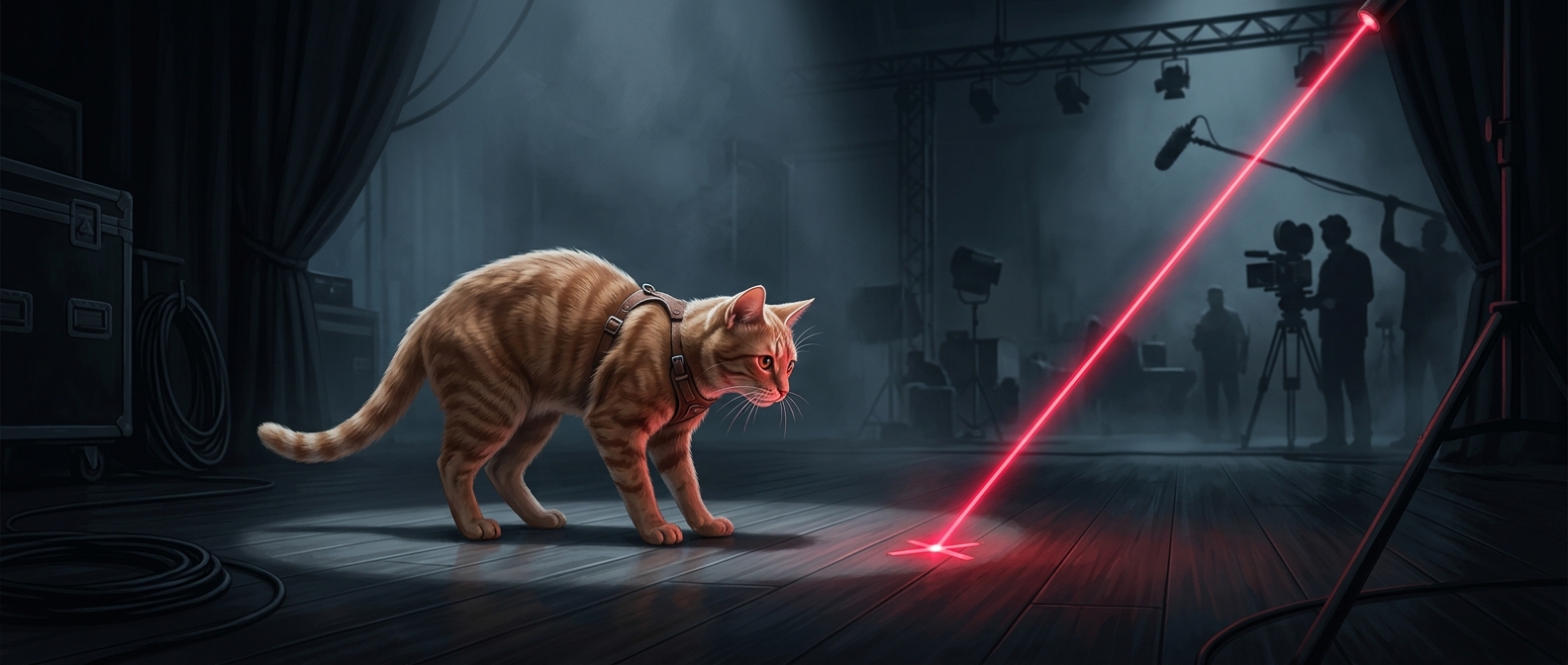
For a performance, a light gives trainers a clear way to direct a bird’s attention and movement without physically guiding it along the route. The audience sees a flash followed by a purposeful flight; the pigeon is following a practiced food cue. The apparent decision can be real in the sense that the bird chooses and moves toward the target, even though training has made that choice predictable.