Why a Raven Can Fit a Scene Better Than a Parrot
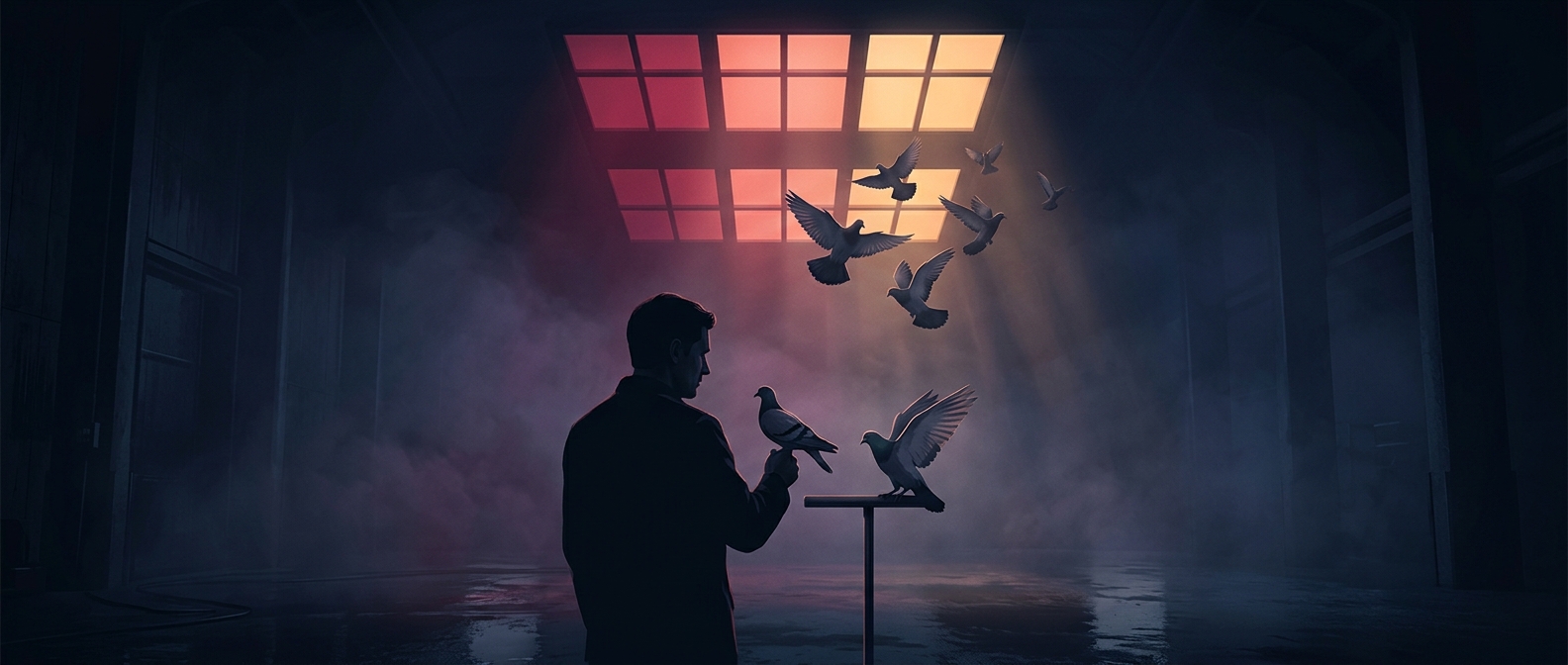
A film bird has to do more than look convincing. It may need to land on a mark, pick up an object, or move when an actor gives a cue—then do it again from the same camera angle. Ravens can be trained to perform such actions, which makes them useful when the scene calls for a bird whose behavior, rather than speech, carries the moment.
Training Turns an Action Into a Repeatable Cue
Animal trainers build a behavior in small steps. A raven might first be rewarded for approaching an object, then for touching or carrying it, and eventually for doing so after a consistent signal. The reward teaches the bird which action earns a payoff; repeated practice helps the crew capture the movement in separate takes.
That is different from simply hoping for a striking bit of natural behavior. A bird that acts on cue gives the director and camera team a better chance of getting the needed action while the set is ready. It does not make the animal a mechanical prop: timing can vary, and the trainer still has to work around the bird’s attention and comfort.
The Bird Is Chosen for the Job
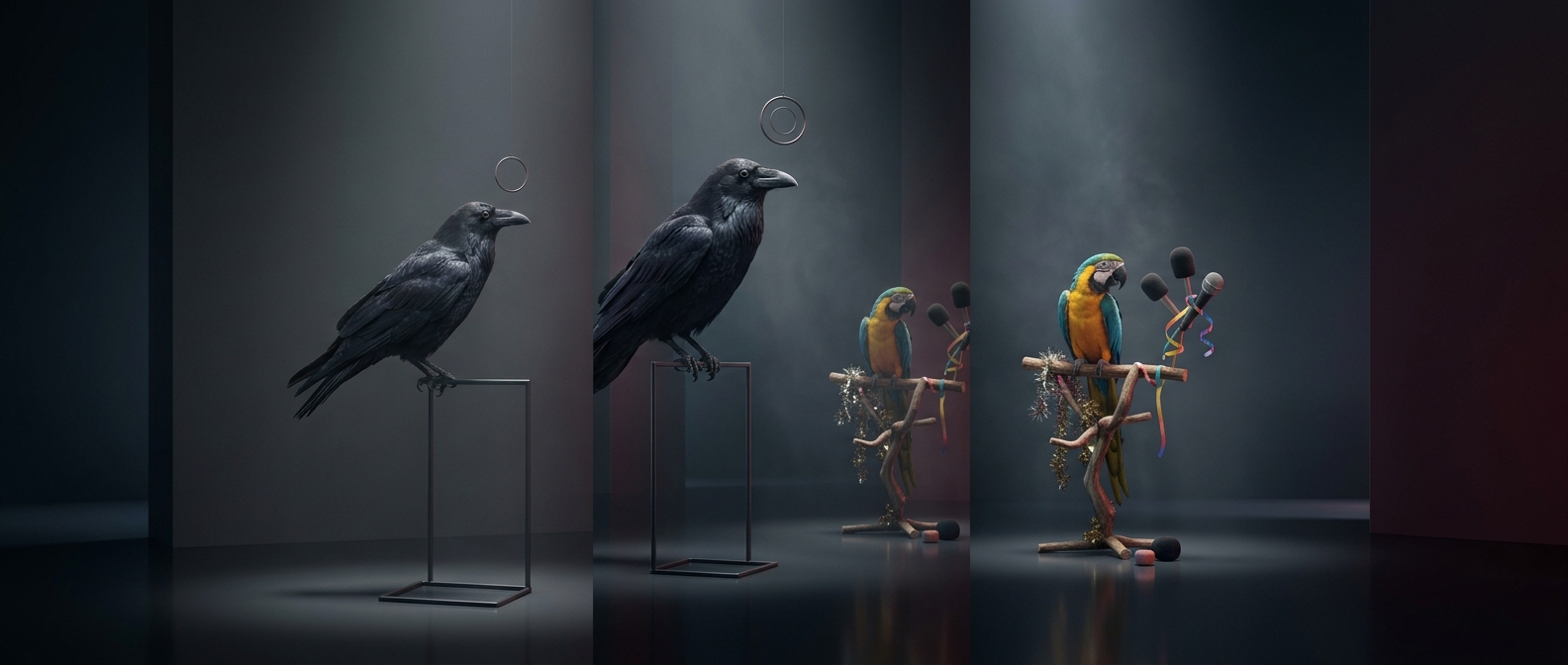
Parrots are often associated with speech and mimicry, but that is not automatically an advantage in a scene built around a precise physical task. The choice depends on what the bird must do, how the scene is staged, and what a trained animal can safely perform. For a raven, the appeal is not a guaranteed trick; it is the possibility of shaping a complex action into a cue the production can use.
That difference can change how a scene is filmed: instead of waiting for a bird to do something interesting by chance, the crew can build the shot around a behavior it has practiced with its trainer.